


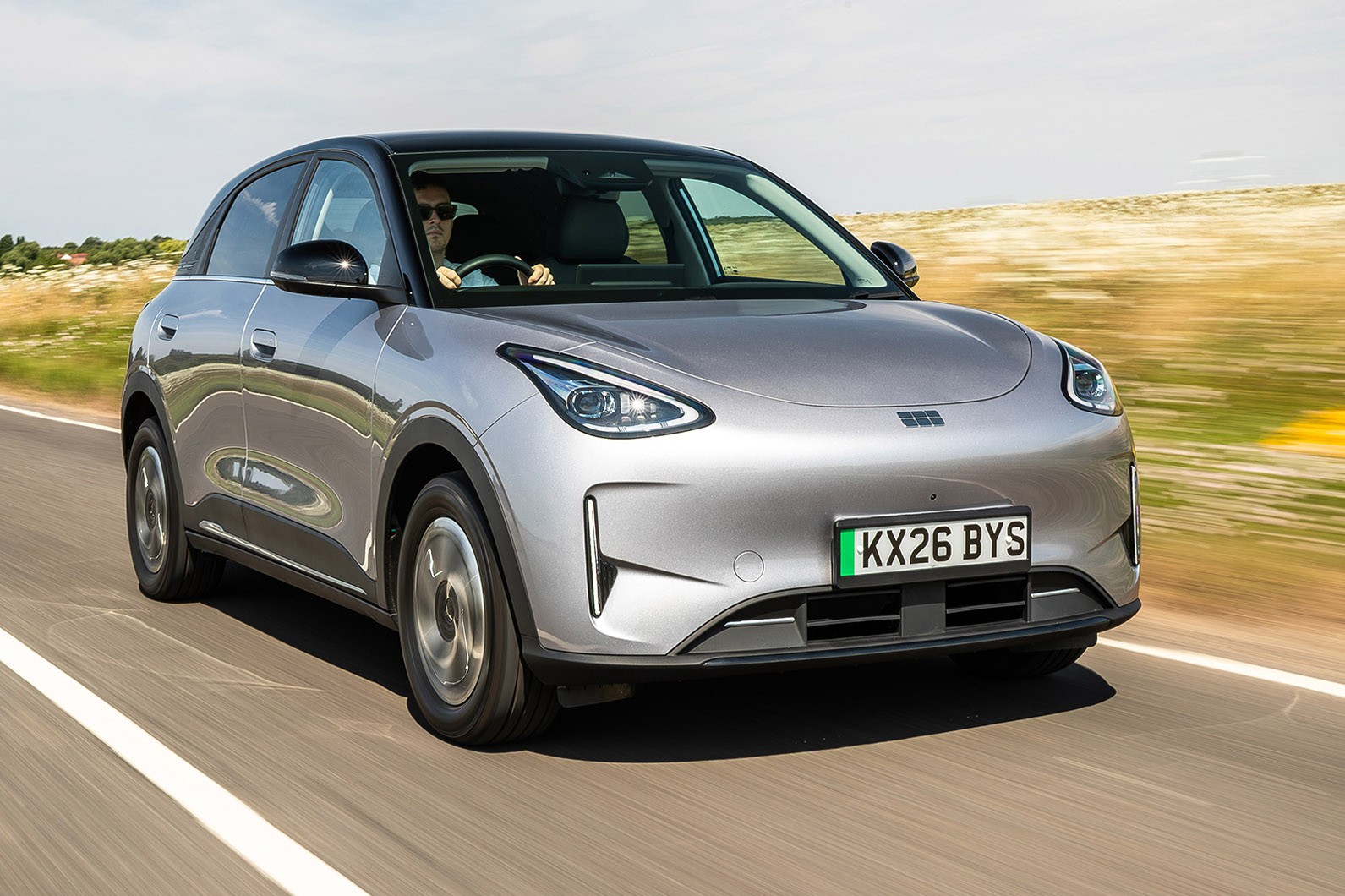
You buy the base Geely Ex2, you get an electric go-kart designed for gentle napping.
0 to 62 mph in 14.2 seconds.
I haven’t tested the entry-level 81bhp version yet, only the rear-drive 114bhp model. And let’s get this out of the way immediately: it is neither fun to drive nor dangerous. It sits in that vast, unremarkable middle ground. It works well enough until you try to use it.
Power delivery is painfully timid
Geely engineers seemed terrified that this specific rear-wheel-drive powertrain might fishtail off the line. The result? They coded the torque to ramp up like a snail crossing a warm towel, even when you pin the throttle to the floor.
This feels alarming slow. Try using it to merge into a busy roundabout. You wait. The car waits with you. The power creeps in like it’s afraid of startling anyone.
The regeneration system doesn’t help. Set it to High and it yanks the wheel away from smooth driving. It slams on the brakes the moment you lift your foot off the accelerator, then tries to capture energy afterward. There is no one-pedal mode here either. You’re left with a braking curve that makes sense on paper and makes your passenger nauseous in reality.
Steering is where this car gets weird. It is incredibly tight on lock. I literally spun the car in a parking lot circle just to verify it. Low-speed agility like a supermarket trolley, but on four wheels.
Rear-wheel drive often promises drifting thrills. Here, it only promises confusion, because there is no power to drift with. If your local drift school runs out of junk BMWs, put the EX2 on your wishlist. For everything else? Keep driving.
It handles like a shopping basket, rides like a cloud
Despite the lackluster performance, the turning circle is genuinely impressive. If you live in a dense urban grid, the lack of space to swing around becomes your primary worry. The EX2 laughs at it.
Drive it normally. Drive it like the budget-conscious commuter who buys this car will. It does the job.
It isn’t sophisticated. It doesn’t have the polish or driver-assist refinement of European alternatives like the Ford Puma Gen-E. But it doesn’t actively dislike you, either. It just plods along.
Motorway driving? The ride quality is competent. Noise isolation is adequate, though that largely depends on the tyres. European units get Yokohama rubber. Spec-wise, that is a small win against the generic alternatives usually paired with Chinese EVs.
However, the steering feedback remains confusing. It floats in a void for most highway speeds—light but vague. Then, without warning, it gets heavy and vague again at high speeds. There is no consistency here. Just a sensation that you are being lied to by the steering wheel.
The ADAS nightmare you didn’t ask for
This is the part where you want to drop the car on its head.
Adaptive cruise control is passable. But the mandatory driver-assist tech is actively hostile to the human operator. Lane keep assist is split into three separate systems. All of them are intrusive. All of them tug at the wheel without precision. And you cannot disable them from the main menu.
Every time you turn the car on, you have to navigate sub-menus just to turn the annoyance off. Press. Confirm. Another press. Another confirm. Speed limit warnings? Separate menu. Driver monitoring? Another separate menu.
Geely insists an over-the-air update is coming that allows faster disablement.
I wouldn’t buy it for a day until I knew for sure. You know how these things work. Updates break. Features shift. Do you want your commute dictated by a software patch schedule? Probably not.
The price trap of the “Ultra” trim
You expect this car to be dirt cheap because it is from China. You are wrong.
There are three tiers:
- Pro (£20,990): 81bhp, 157 miles of range. Adequate, but not great.
- Max (£23,490): 114bhp, 214 miles. The jump in range matters.
- Ultra (£25,490): Adds heated seats, a heated steering wheel, wireless charging, and a better speaker system.
Realistically? Buy the Ultra.
Why? Because for £500 more than the Max, you actually get a usable interior environment. The base trims in this class usually feel like plastic boxes designed by accountants. Heated elements are not a luxury; they are a necessity in the UK climate.
But does £25k make sense? Look at the competitors.
You cannot spec a standard Renault 5 Zoe to Ultra levels at that price point, but the Max is cheaper than the rival. The Fiat Grande Panda La Prima offers comparable features for less. A Ford Puma Gen-E equipped with a Winter Pack sits only marginally higher on the price list, and Ford still knows how to tune a chassis.
If space is your priority, you might look at an MG 4. The MG matches the Ex3 Ultra price, has a superior interior finish, and generally feels like a car built by engineers rather than app developers.
Charging reality vs claimed efficiency
Don’t let the numbers fool you. Geely claims 4.0 miles per kWh efficiency.
During summer driving, it actually matched that.
In reality, EVs are heavier than ICE cars. Air resistance matters more. This car is likely going to fall short in winter, much like every other electric car on the planet.
On the plus side, the lithium iron phosphate battery is resilient. It doesn’t suffer the degradation headaches of older lithium-ion tech. Charging it to 100% regularly is safe for the cells. It handles rapid charging up to 80kW. It isn’t fast—wait 45 minutes for a full top-up at a highway station—but it works.
The final verdict
Geely Ex2 reviews often miss the point about its positioning. It’s not trying to beat the Tesla Model Y. It’s trying to sell to someone who finds a Golf too expensive.
It is currently overpriced for what it delivers.
Expect Geely to panic-launch before the September release date. Aggressive monthly deals will likely follow. If the price drops by £2,000 overnight, this car becomes a legitimate contender. At the current sticker price? The options that follow.
Perhaps Geely fixes the lane assist before it matters. Perhaps they lower the price.
But for now? Drive a Mazda. Or an MG. Leave the trolley-wheels behind.


