


Tesla had a head start. The Model S arrived in 2014. The Model 3 followed six years later. For a long time, copying Tesla was the only strategy that made sense. The American brand had years of lead time. It set the baseline for everything. Even as BYD surged in power, Tesla remained the template. Other manufacturers still look to it for reference.
Honda is no longer just following. It is circling.
With the Prologue—built alongside GM—the Japanese giant became the top-selling electric vehicle brand in the United States last year. That was just the warm-up. Now, Honda is bringing two serious concepts to the CES show floor in Las Vegas. They are not just pretty renderings. They are production prototypes. You will see them on the road starting in 2026.
The Saloon and the Series 0 Philosophy
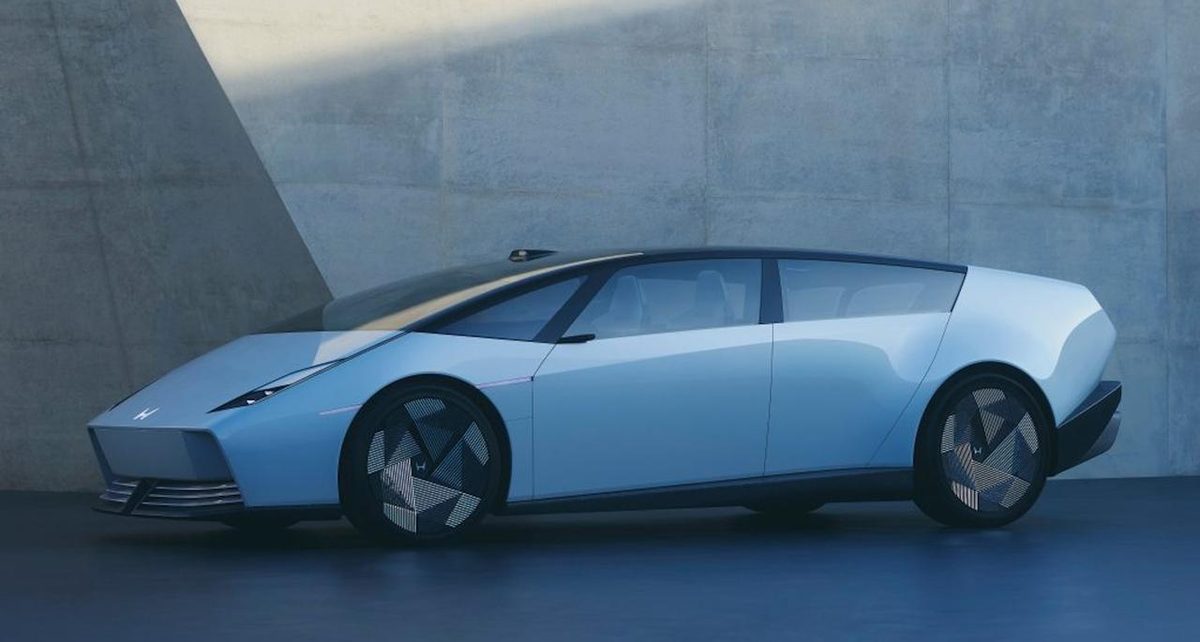
One concept is a sedan called the Saloon. The lines are sharp. Angular. It looks a bit like a chubby Lamborghini Countach from the eighties. The other is an SUV. Both are part of what Honda calls “Series 0.”
These cars are built on a philosophy called M/M. That stands for Man Maximum and Machine Minimum.
Honda has stripped away the clutter to focus entirely on the human experience inside the cabin.
The result is a lightweight vehicle with a drag coefficient low enough to squeeze out maximum efficiency and range. The design isn’t just about aerodynamics. It is about reducing the noise and complexity of the machine so the passenger can breathe.
Asimo OS and the Drive for Autonomy Level 3
Under the hood, or rather under the software layer, Honda is rolling out a new operating system named Asimo. It is named after the company’s famous humanoid robot.
This “brain” of the car is designed for longevity. It will accept future updates for autonomous driving capabilities. Honda already has Level 3 autonomy mastered.
What does that mean for you as a driver? It means the car can handle complex driving tasks on its own. But the driver must be ready to take over if the system asks. It is not a free pass to sleep in the back seat. Yet.
Honda is optimistic. They believe they will soon allow drivers to take their eyes off the road entirely within the system’s designated zones.
The Tesla Comparison
This sounds like a direct shot at Tesla’s Full Self-Driving (FSD) claims. Tesla markets a system that feels close to Level 4 autonomy. Total independence.
The reality on the ground is different. Tesla’s actual performance often dips below true Level 3 reliability. There are hiccups. Glitches. The “experimental” label fits their rollout better than “complete.”
Honda’s approach is steadier. Less hype. More engineering caution.
Why This Matters in Europe and America
In the US, Honda is using the Prologue’s sales momentum to challenge Tesla directly. The strategy could easily copy-paste to Europe.
Here is the key advantage Honda holds that Tesla cannot match.
Honda still makes internal combustion engines. They still make hybrids. And now, they make pure electrics.
This diversification is a shield. If EV demand dips, Honda survives. If gas prices spike, the hybrids sell. Tesla has no such buffer. It is all-in on electricity.
The Saloon and its SUV sibling will be the spearheads of this new offensive. They are futuristic, sure. But they are grounded in a reality Tesla often ignores: cars are tools for people, not just rolling tech demos.
2026 is a long way off. But Honda is already setting the pace.


