You picture high-mileage bikes as huge touring rigs. Hard luggage. Windshields. Highway pegs. Electronics that could control a drone. That’s a way to put miles on a meter.
It’s not the only way.
Plenty of riders don’t want an airport runway on two wheels. They want a cruiser that feels comfortable at the grocery store and ready for a weekend blast. They want something they won’t fear repairing later. Something that starts every time. No four-figure surprises. No mysterious warning lights. Just rides.
High Mileage Starts With Use
Durability means nothing if you park the bike because it’s annoying to ride. Machines that hit big odometer numbers aren’t kept in showrooms. They’re ridden. To work. To the store. Spontaneously on Sunday afternoons.
Mileage accumulates through ordinary, repeated action. It’s easier when the motorcycle doesn’t require a prep session every time you turn the key. Consistency drives the counter up, not adrenaline. Or horsepower. Mostly consistency.
Honda learned this the hard way, over decades. Reliability wasn’t an accident or a marketing slogan. It was a result. Engines that started. Components that tolerated a bit of neglect. Designs that didn’t need reinventing just to generate social media buzz. That track record makes them a default choice for people who prioritize predictability over specs.
Why Refinement Beats Reinvention
The motorcycle industry loves constant change. Honda sometimes prefers to just… refine. Take a working platform. Polish it. Add modern bits where they help, leave the proven core alone where it doesn’t hurt.
It looks conservative. It’s actually smart. It lets mechanics know exactly what’s inside. Parts are everywhere. Maintenance isn’t a puzzle you have to solve fresh every few years. That Shadow Phantom you’ve been eyeing? It’s the poster child for this approach. Mature engineering. Modern enough to be relevant. Solid enough to last.
Enter The Honda Shadow Phantom
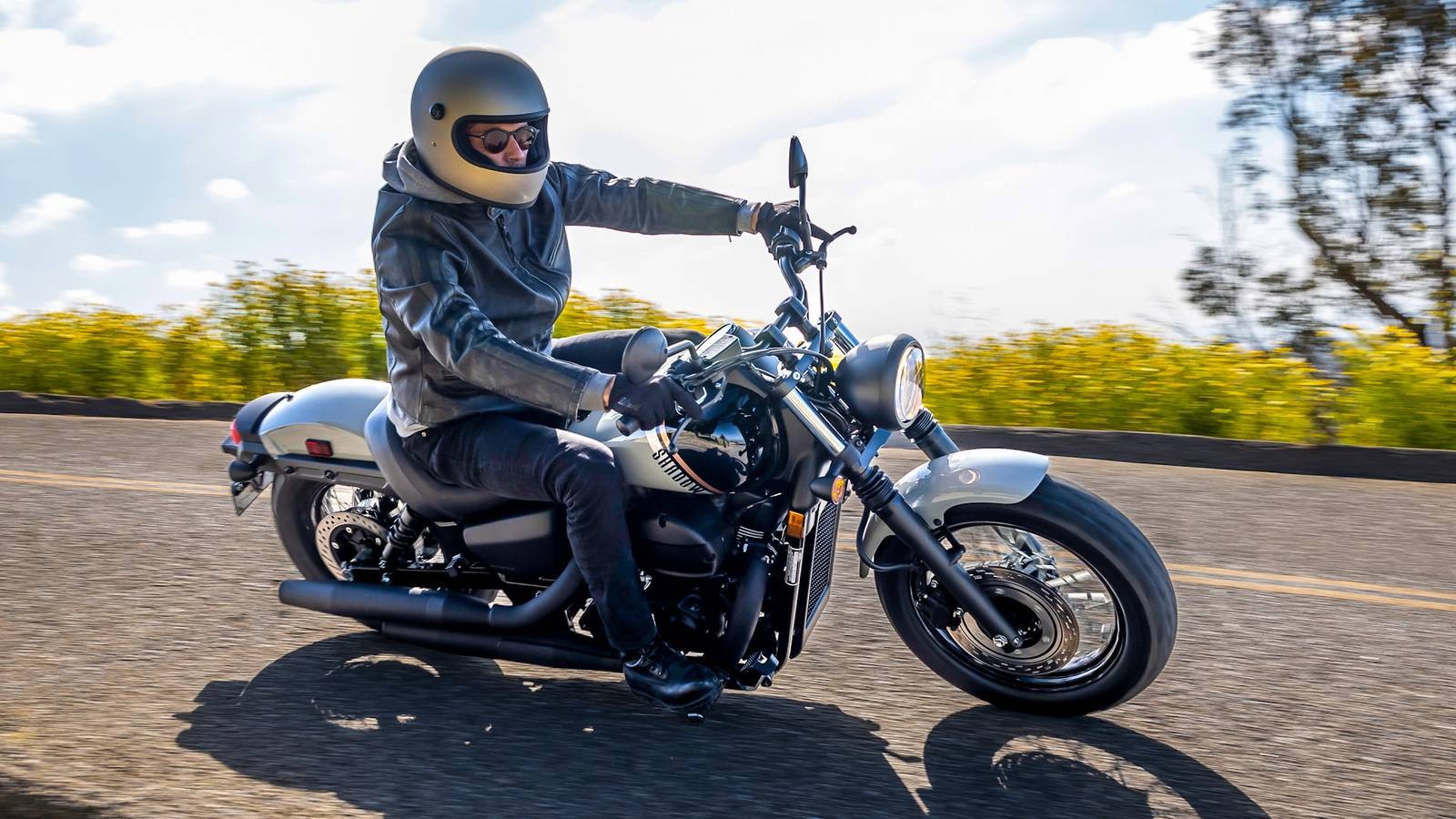
Let’s get specific. The Honda Shadow Phantom sits in that sweet spot for many commuters and weekend warriors. Base MSRP is $8,699 (plus $600 for destination, because shipping isn’t free). You pick Deep Pearl Gray or Flare Orange, and everything underneath stays matte black. The engine, frame, forks, wheels. It’s got that bobber aesthetic going for it without looking like a prop.
But here’s the thing: the bike doesn’t try to win on a single spec. It wins on synergy. Fuel injection. Wide-ratio five-speed. Shaft drive. Low solo saddle. A chassis that doesn’t fight you. It starts. It stops. There are no menus to scroll through to understand the bike’s personality. Just you, the throttle, and the road.
The Heart of The Machine: A Calm 745cc V-Twin
Underneath sits a liquid-cooled, 54-degree (not 52, Honda corrected the spec to 54 for later iterations, though the source said 52—let’s stick to the text: 52-degree ) V-twin. Displacement: 745cc. Single overhead cam. Three valves per cylinder. Dual-spark. 9.6:1 compression. It’s a lot of engineering aimed at one goal: smoothness.
Honda doesn’t brag about peak numbers. Independent testing finds about 44.6 horsepower and roughly 47.9 lb-ft of torque. That’s not for track days. It’s for getting out of intersections confidently. It’s for relaxed cruising where you aren’t wringing your wrist at 8,000 RPM on the highway. Less scream. More usability.
The Shaft Drive Advantage
If you plan on high mileage, look at the drive train. Specifically, the lack of a chain.
Chains demand maintenance. Clean. Lube. Adjust tension. Check for wear. Replace eventually. It’s a chore list that grows over time. The Phantom uses a shaft final drive. Once every 30,000 miles or so, you check the oil in the case. That’s it.
This matters. For daily commuters. For rain-riders. For people who hate scrubbing grease off a rear tire. It’s unglamorous? Absolutely. Effective? 100%. Fewer parts to fail means more miles in the bank.
Comfort And Geometry That Makes Sense
The suspension setup is standard fare but tuned for this purpose. 41mm forks with 5.5 inches of play. Dual shocks out back with 3.5 inches. ABS on both discs helps you stop when it gets slippery. You’ve got a 120-series tire out front and a chunky 160 on the back.
Here’s where the weight matters less. Sure, 553 pounds is heavy on paper. But the seat is low at 25.6 inches. The tank is narrow. Your feet touch the ground comfortably. You feel grounded. At a stoplight, that confidence is free insurance. The fuel tank holds 3.9 gallons. Good range. No bulky tank farm either.
And it’s a solo seat by default. Keeps the bobber look clean. You can buy a pillion kit if you need it. Most Shadow Phantom owners don’t, but it’s there if life changes.
Why The Phantom Holds Up
Is it the fastest cruiser? No. Is it the lightest? Definitely not.
It’s the opposite. That’s why it survives. Fuel injection replaced the need for carb tuning. Liquid cooling handles the traffic jams. ABS gives you a margin of error. The styling looks modern without being tied to a specific year’s fad. It’s not trying to prove it’s an electric superbike in leather. It’s trying to be a reliable machine that starts in January.
When you’re building toward 100,000 miles, you don’t want a technology demo. You want a tool. A partner.
The Shadow Phantom doesn’t ask for anything but gas and occasional brake pads. And for many, that simplicity is the whole point. Maybe the odometer ticks up slowly. That’s okay. You’re actually using the bike. Isn’t that better than riding something fancy twice a month because you’re afraid of the maintenance?