Converting a vehicle to run on propane isn’t a weekend hack. It demands real knowledge of automotive systems. If you don’t have that expertise, don’t guess. Find a local mechanic who has actually installed LP-gas systems before. You need someone who knows the risks.
Propane is safe. But only if the installation is correct. A botched job introduces serious safety hazards.
The first real decision is the tank. Most people choose a dual-fuel conversion. You aren’t ripping out the gas engine. You are adding a second system. This means your trunk space shrinks. That is the trade-off.
Why Dual-Fuel Conversions Are the Standard
Most conversions are dual-fuel conversions. This setup keeps your original fuel system intact. You simply add a second layer of infrastructure. The propane tank takes up space. Usually the trunk. That is the price of having two options.
You keep the gas tank for emergencies. Or long trips. The propane handles your daily commute. It is a backup plan. Or a primary source. Depending on how you use it.
Tank Placement and Space Trade-offs
Where does the tank go? The trunk is the standard location. It keeps the engine bay clear. It doesn’t interfere with cooling or intake. But it eats into storage. You lose cargo space. Period.
Some conversions use underbody mounts. That is rare. More complex. Harder to service. The trunk is easier. More accessible. More common.
Safety First: Why Professional Installation Matters
Propane is safe. As a fuel. But only if installed right. A leak is dangerous. An incorrect valve setting is dangerous. You need a pro. Someone who knows LP-gas. Not just any mechanic. A specialist.
Safety isn’t optional. It’s the baseline.
The Decision: DIY vs. Professional Help
You can buy kits. Full kits. All the parts. But do you know how to assemble them? Do you understand pressure ratings? Valve types? Line routing? If not, hire out. The risk isn’t worth the savings.
A professional ensures compliance. They ensure safety. They ensure it works.
What to Expect After Conversion
You gain a second fuel source. You lose trunk space. You gain lower emissions. You gain potentially lower fuel costs. You lose some simplicity. The system is now more complex.
It is a trade-off. A conscious one.

Picking a Tank: Donut vs. Torpedo
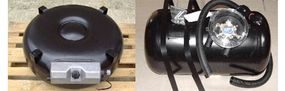
The shape of your fuel container dictates everything from range to trunk space. You are looking at two main forms: the donut and the torpedo.
Donut tanks are the pragmatic choice for daily drivers. They slide right into the spare tire well. You save space in the cabin, but you lose your spare. And you are stuck with a smaller capacity.
Torpedo tanks are the opposite. They offer significantly more storage volume. The trade-off? They are bulky. They eat up cargo space or require creative mounting solutions in larger vehicles. If range anxiety is your thing, you might mount multiple tanks to stretch that propane supply. But expect to lose interior room.
Routing and Filling
Bolt the tank down and you still have work to do. The first step is drilling a fill point into the body.
Do not guess the location. You want it near the existing gas cap or at the rear of the trunk. The goal is simple: minimal piping. Every inch of pipe you add is a potential leak point and a hassle to install.
The lines themselves are copper tubes. Copper has a nice property here. It offers flexibility. You can bend it to fit tight spaces without kinking, provided you are careful not to crush it flat.
You run this line from the tank, up the underside of the chassis, all the way to the engine bay. It is a straightforward route, but it demands precision.
The Solenoid Valve
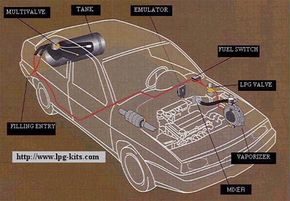
Between the tank and the engine, you need a solenoid valve. In LPG systems, this is often just called the LPG valve.
It has two jobs.
First, it acts as a shut-off. When the engine is off, this valve closes. No propane leaks into the engine bay while you are parked. Second, it cuts flow when the car switches back to gasoline. It ensures you are not burning two fuels at once.
There is a bonus feature built in. This valve contains a filter. It catches dirt and debris before that grime can clog the rest of the system.
The Regulator and Vaporizer
The next big hurdle is the regulator. Some call it a vaporizer.
Gasoline engines burn liquid. Propane enters the tank as a liquid under pressure. You cannot burn liquid propane in a standard engine. It needs to be a gas.
The regulator uses heat from the engine’s cooling system to boil that liquid propane into vapor. It is essentially a heat exchanger.
The regulator does the heavy lifting that a carburetor used to do for gasoline, but with a focus on phase change rather than just metering.
It also serves as a critical safety device. An electronic circuit inside monitors the engine. If the engine stalls or dies, the circuit cuts the gas flow instantly. No propane pooling in the intake manifold.
Size-wise, these units are compact. Smaller than a traditional carburetor. Fitting it into the engine compartment is rarely an issue.
Metering the Mix
The regulator handles vaporization. It does not handle the exact amount of fuel for each cylinder. That job falls to the mixer.
The mixer mounts directly into the intake manifold.
It is not a passive part. It works in tandem with the car’s sensors and the ECU (Engine Control

The Electronic Brain and Safety Reality
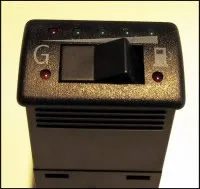
You can’t just bolt on a tank and expect the car to run. The system needs to marry with the vehicle’s electrical system to keep the fuel gauge honest. More importantly, it has to handle the switching between propane and gasoline. This isn’t just about the fuel rail; it requires a dashboard-mounted manual switch for driver control. But the real handshake happens at the ECU. You need solid connections to the engine controller so the computer knows which fuel is burning and adjusts timing and air-fuel ratios accordingly.
If you are dealing with electronic fuel injection, you are likely staring down the barrel of needing an emulator. Here is why. When the car switches to LP gas, the fuel injectors stop spraying gasoline. They also stop sending their normal electrical feedback to the car’s sensors. Without that signal, the ECU panics. It thinks the injectors are dead. The result? A flashing “check engine” light and a dashboard full of incorrect diagnostic data. The emulator steps in to fake the signals. It mimics the resistance and pulse width of gasoline injectors, allowing the ECU to operate normally while the engine is actually running on propane.
Conversion kits come with detailed wiring diagrams, but this is the core logic. Wire it right, fake the signals where needed, and let the ECU manage the mix.
Then there is the question of danger. Is propane actually safe? That is the next layer to unravel.
Note : Do not attempt this at home unless you are a seasoned pro. This is an overview, not a blueprint. Incorrect installation can lead to leaks, fires, or engine damage. Have a certified professional test and approve the system before you ever turn the key.