The French car world is changing, and the newest entrants don’t come from Stuttgart or Bavaria. Enter the Mazda6e. It’s a great combination of stylish design, great performance and really meaningful technology. For French consumers, this electric sedan offers an attractive alternative. It joins Mazda’s lineup alongside the MX-30 EV, but is aimed at a completely different audience.
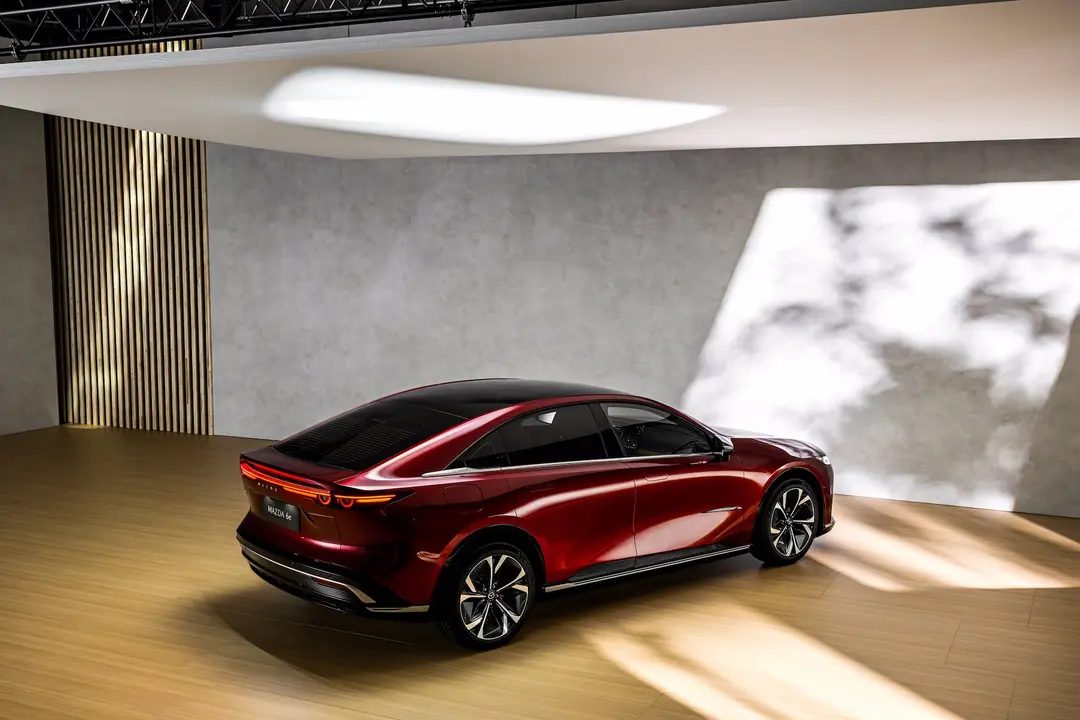
Uncompromising coupe silhouette
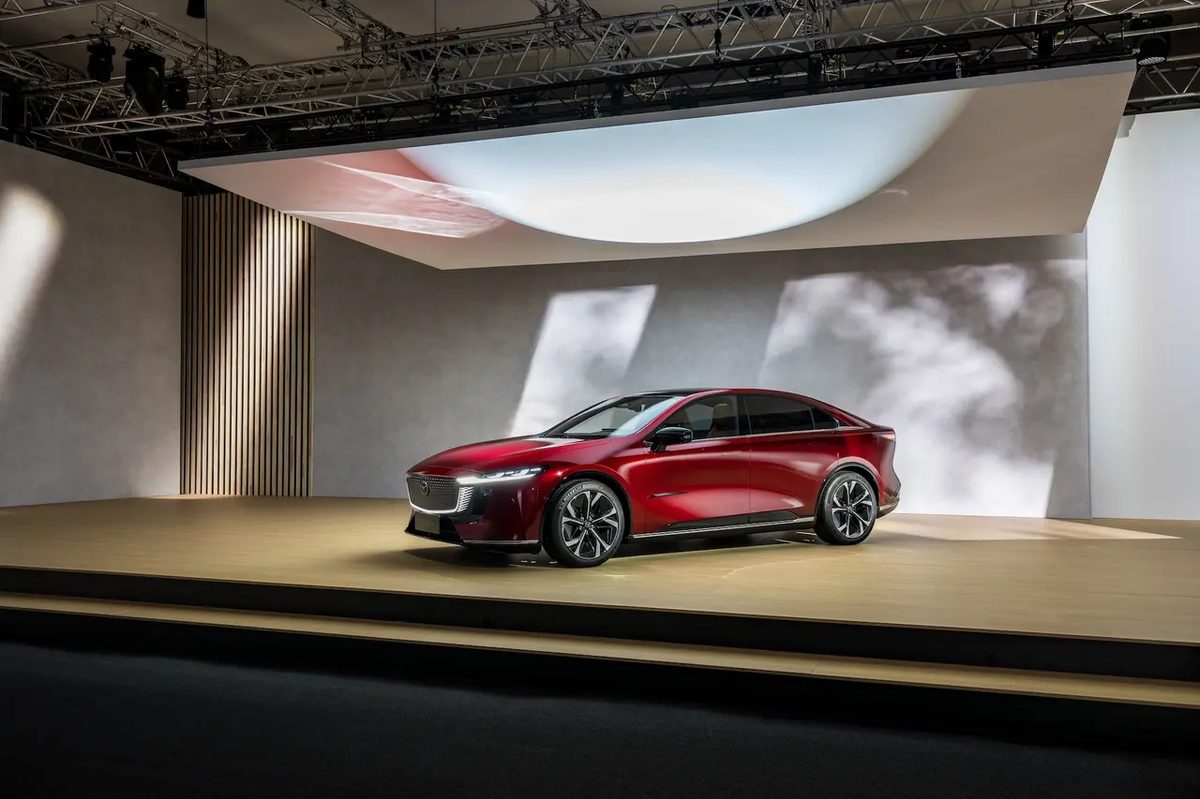
If you look at the profile, you can see where Mazda is aiming. Although it is a sedan, it has the soul of a coupe. We are talking about frameless doors and recessed door handles that give a nice shape. The goal? To emphasize dynamism. That puts Mazda squarely in a field dominated by German heavyweights like Volkswagen, BMW and Audi, all competing to define what an electric sedan should be.
The footprint is substantial. Its total length is 4.92 meters and the body is generous. However, size does not matter if it is not reflected in the interior. The Mazda6e does just that. The panoramic roof increases the sense of volume and makes the cabin feel spacious rather than cramped.
Inside the ‘Ma’ Philosophy
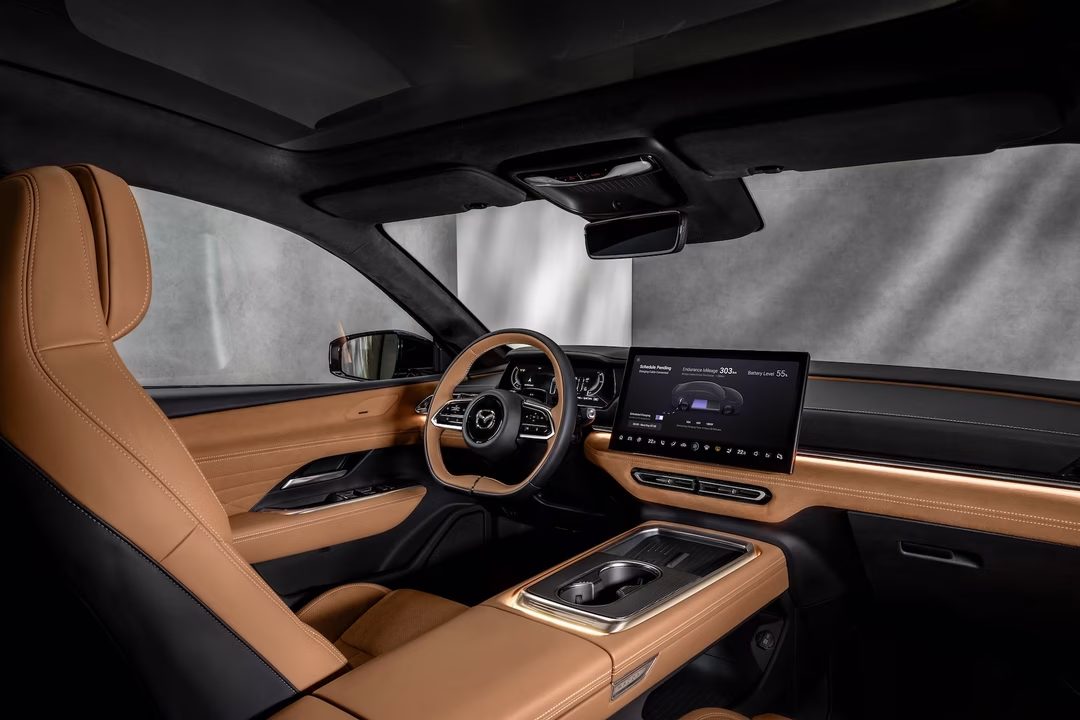
Step inside and the design language changes from aggressive exterior lines to gentler ones. Mazda calls this aesthetic “ma”. It’s a concept rooted in simplicity and balance. This is not just marketing. This is a conscious choice to create a calming atmosphere for the occupants.
In the center of the dashboard is a 14.6-inch horizontal touchscreen. This is intuitive. It handles navigation with a built-in route planner. Neat layout without unnecessary buttons. If you’ve ever driven a Tesla Model 3 or Model Y, this minimalist approach will be instantly familiar. Sure, the hardware is different, but the spirit of optimized, clean interaction is the same.
Mazda6e lineup and powertrain specifications
Your choice depends on the size of the battery and how long you actually plan to drive. Mazda isn’t speculating here. We categorize Mazda6e performance into two different types. A product for the daily commuter looking for efficiency. Another way for travelers who hate range anxiety.
The entry-level model has a 68.8 kWh battery. It produces 190 kW (258 hp). This is enough to reach 100 km/h in 7.6 seconds. It’s not slow, but it’s not crazy either. The cruising range is claimed to be up to 479 kilometers on the WLTP cycle. This can be mitigated in real driving, but is a solid starting point for city and suburban driving.
Long-range variant details
If you need more range between charges, the Mazda6e Long Range Edition can help. It swaps in an 80 kWh battery. result? The range is up to 552 kilometers. For long-distance commuters, this is a huge improvement.
But here’s the problem. Larger batteries add weight. Therefore, the engine tuning is slightly different. The power is 180 kW (245 horsepower). 0-100 km/h takes 7.8 seconds. Two tenths of a second slower. Is this obvious? Barely. You won’t notice any difference in normal traffic conditions.
Charging speed and maximum speed limit
Both versions have the same electronic speed control. Top speed is limited to 175 km/h. Enough for highway cruising. Not enough to racing.
Plugs are important when you need to charge. DC fast charging supports a power of up to 200 kW. The most important information is: with 200 kW, you can increase your range by another 235 kilometers in just 15 minutes. That’s what coffee-break charging. Not a full day at the service station.
“A range of 235 km with a charging time of only 15 minutes will change the conversation about electric road trips.”
Who should choose which? If you drive less than 300 km per day, you can save costs and weight by using the basic model. If you travel across the border or travel 400 kilometers each way, the price of an 80 kWh battery is reasonable. The technology of the battery casing is the same. How is your driving experience? Almost the same.
In the current European EV landscape, the Mazda 6e has a sharper starting point than many expect. Mazda6e Standard Takumi prices from 42,900 euros. If you need more range, prices for the Grande Autonomie (long-range) version start at 44,500 euros.
The battery capacity has increased significantly and the difference is only 1,600 euros.
For the French market, these figures are very positive. Mazda is packing out the base model with what it considers a complete equipment level. You don’t have to look for expensive add-ons to get what you need. The aim of this strategy is to make the Mazda6e a immediate contender against established rivals.
The Takumi trim isn’t a bare-bones commuter. It is loaded with features that buyers typically expect from a premium electric sedan. This includes the technology, safety systems and convenience features that define modern EV ownership.
For buyers weighing their options, the question isn’t just about the initial sticker price. It is the value per euro. The calculations change quickly because the difference between standard and long range is so small.
Most drivers don’t feel the need to increase their mileage right away. But knowing that it only costs a small premium can make a big difference. This removes the fear of running out of range without making a significant financial leap.
Mazda is well aware of the specifics of the French market. It is one of the most mature electric car markets in Europe. Consumers are educated. Let’s compare the specs. They focus on total cost of ownership. By keeping the gap small and the basics high, Mazda radiates confidence.
The Mazda6e is not new to the market. It’s trying to disrupt the pricing hierarchy.
Traditional combustion rivals often force buyers to choose higher trims for the right features. Mazda is flipping the script. You get the good stuff at the bottom. This is a bold move.
Whether it succeeds depends on one thing: real-world driving experience. The numbers look solid on paper. The value proposition is clear. But the road will tell.