


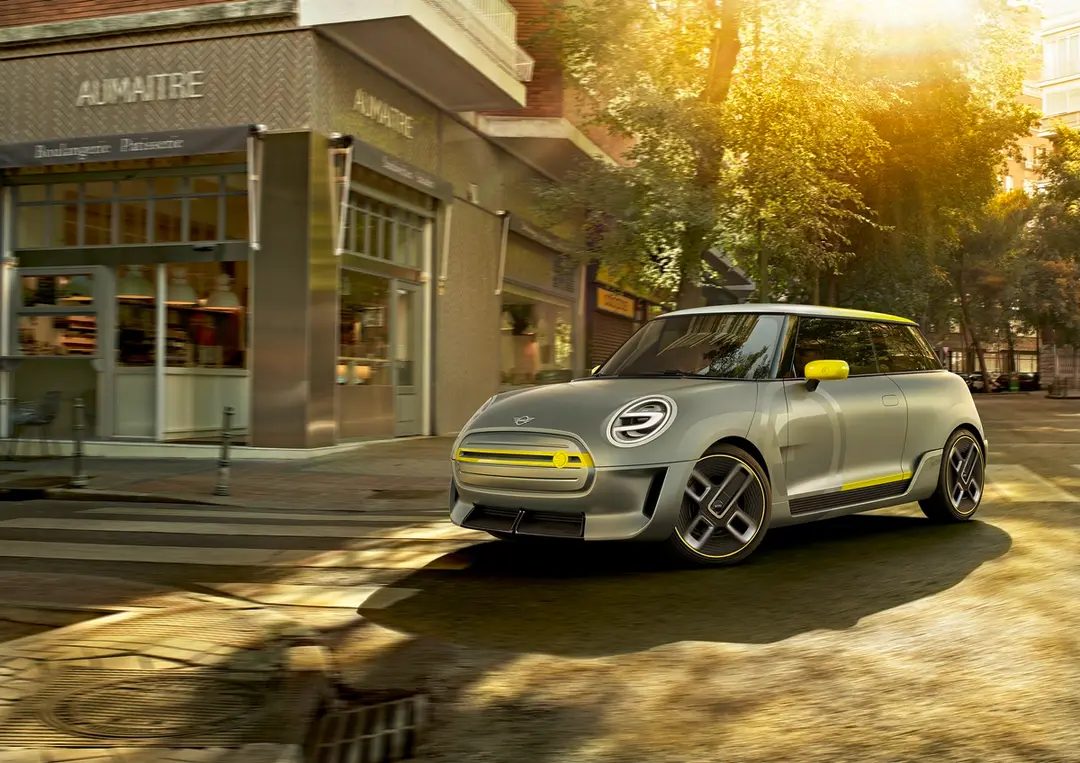
July 9, 2019. That is the date Mini chose to finally pull back the curtain on its first all-electric production car. The public wouldn’t see it until the Frankfurt Motor Show later that September, but a teaser video dropped the clues early. It looks like a Mini. It drives like a Mini. But underneath the classic round headlights and hexagonal grille, the mechanics are entirely different.
Most enthusiasts already know the drill by now, but this car is significant. It marks a shift for the brand that has been hesitant to go full battery for decades.
The Spec Sheet: Power and Range
Let’s talk numbers, because that is where the compromises sit. While official confirmation was pending at the time of the teaser, the consensus pointed to one specific powertrain: the BMW i3S motor.
That means a 135 kW electric motor. For those keeping score in horsepower, that is roughly 184 hp. It is not earth-shattering power, but it is punchy enough for city maneuvering and quick highway merges.
The real constraint is range. Estimates placed the WLTP cycle just over 200 km (about 124 miles). This isn’t a car for a road trip from Paris to Marseille. It is a pure urban runabout. You charge it at home or work. You drive it around the city. You don’t plan a weekend getaway unless you are okay with serious planning.
It is a vehicle strictly restricted to purely urban activity.
Identifying the Cooper SE in the early video clips requires a sharp eye. There are no obvious electric-only badges screaming for attention. The design language remains true to the 60-year heritage of the Cooper. The roundness is intact. The proportions are familiar. The difference is in the details you have to hunt for.
A Historical Context for the Electric Leap
Mini is celebrating its 60th anniversary with this launch. It is a new chapter. It comes two years after the brand introduced the Plug-in Hybrid Countryman ALL4, but the Cooper SE is different. The Countryman hybrid was a bridge. The electric Cooper is the destination for the base model.
The concept car version of this electric Mini debuted at the 2017 Frankfurt Salon. It sat in limbo for two years before hitting the production line. That delay allowed Mini to refine the battery management and thermal systems, though the range limitations remained a hard ceiling.
This isn’t Mini’s first time dipping its toes into electrification. Back in 2009 and 2010, they released the Mini E. It was an experimental fleet car. Only 500 units were built. They were leased to drivers in Los Angeles and London to gather real-world data. That experiment paved the way for the Cooper SE.
Pre-Orders and Launch Timeline
While the full reveal waited for Frankfurt, the sales process started much earlier. Mini opened pre-orders in France on April 3, 2019. France was the first market globally to allow customers to reserve the car.
The manufacturing timeline was tight. Production began in November at the Plant Oxford in the United Kingdom. First deliveries were slated for early 2020.
The priority was clear. The first 100 customers who pre-ordered would get the first look and the first keys. It was a way to build hype and manage the initial supply chain bottleneck.
The first 100 candidates will have the privilege of discovering this novelty in advance and receiving their Mini in priority at the start of launch.
Prices were not announced in the initial teaser phase. Customers could only secure their spot on mini.fr. The anticipation was palpable. Enthusiasts who had waited years for a go-kart with a zero-emission badge finally had a concrete product to discuss.
The car arrived. The range was short. The power was adequate. The look was classic. It was exactly what Mini promised, and exactly what

The Mini Cooper SE’s Electric Heart
Visually, the Cooper SE doesn’t break much new ground. It looks exactly like the current gas-powered Mini, and BMW has locked it down to a three-door configuration only. But underneath that familiar styling lies hardware that’s surprisingly familiar. The Cooper SE shares its powertrain with the BMW i3S. That’s the same 184 horsepower motor producing 270 Nm of torque. It’s paired with the same 33 kWh battery pack. Mini has been part of the BMW Group since 1994, so sharing components isn’t a stretch. It’s efficient engineering reuse.
Here is where the numbers shift. The Mini beats the i3S on range. We are talking about 235 kilometers compared to the i3S’s 200 kilometers. Why the gain? Likely better aerodynamics or lighter bodyweight compared to the larger BMW chassis.
Fast charging is practical. You can pull up to a rapid charger and get back to 80 percent in 40 minutes. That’s decent for urban commuting. It’s not an all-day highway cruiser, but it fits the city car profile perfectly.
Driving Impressions and Pricing Reality
International automotive journalists recently got their first hands-on time with the Cooper SE. The feedback was unanimous. Everyone loved the driving pleasure. The car feels like a Mini should feel. L’Argus put it best: “Vive mais douce” (Lively but smooth). They noted that the electric Mini seems to take pride in maintaining the brand’s driving spirit. It’s not just an appliance. It’s a driver’s car.
Of course, one test drive doesn’t make it perfect. Long-term reviews are still pending. We need to see how that 33 kWh battery ages. How does the regen braking feel over 50,000 kilometers? We’ll know soon enough.
Then there’s the price. BMW hasn’t officially confirmed the sticker yet. But the consensus among observers is clear. Expect to pay between 30,000 and 35,000 euros. That’s not cheap. Buying an electric Mini won’t be a budget purchase. You are paying for the badge, the handling, and the electric drivetrain.
Is It Worth The Premium?
For enthusiasts, the appeal is clear. You get the i3S’s punchy motor in a smaller footprint. The range bump is a welcome surprise. It extends the usability window just enough to make daily trips less stressful.
But that price tag looms large. 30,000 euros puts it in competition with other premium electric options. The question isn’t just about specs. It’s about brand loyalty. Do you care enough about the Mini heritage to pay extra for the electric version?
The driving experience seems to be the selling point. The “lively but smooth” characterization suggests BMW nailed the calibration. The motor responds well. The chassis is tight. It doesn’t feel like a compromised gas car with a battery taped to the floor. It feels intentional.
Still, the market is crowded. Tesla, VW, and even Hyundai are pushing hard in this segment. The Cooper SE has to justify its cost through feel and form. If it delivers on that front, the range advantage might be enough. If not, it risks being just another expensive electric car.


