



The cab smells like stale coffee and diesel. Your new foreman points a calloused finger at the rear of the yard, ordering you to move a semi-trailer so another truck can back into the dock. You have a driver’s license for your Honda Civic. You have never touched a commercial vehicle. But you are desperate to prove you aren’t just another rookie who can’t handle the heat.
You climb into the seat. The dashboard is a jungle of gauges. You ignore the loud, piercing buzzer and the flashing red warning light that screams at you before the engine even catches. You don’t have a commercial license. You don’t care. You slam the clutch down. You grab what looks like the first gear. You let out the clutch.
In your car, this might have stalled the engine. Here, it ends in a catastrophic metal-on-metal slam. The engine dies. You are thrown forward against the seatbelt.
Panic sets in. You restart the motor. Maybe you picked the wrong gear. You try again. The buzzer screams. The light flashes. You can’t find a parking brake lever anywhere. There is no hand brake in the traditional sense. You just let the clutch out again, hoping for the best.
It hits the ground with a violent thud.
You jump out. The foreman is jogging toward you, his face turning a shade of red that matches the warning light you ignored. This is the unforgiving reality of air brake systems. These machines do not behave like the cars you grew up driving. They operate on physics you likely haven’t studied. And if you don’t understand them, you get fired. Or worse.
Westinghouse and the Birth of Air Power
Why do we use compressed air instead of hydraulic fluid? It comes down to one simple fact: air is everywhere. Hydraulic fluid is not. If a hydraulic line bursts on a passenger car, you lose braking power. You stop. Dead. On a 80,000-pound tractor-trailer or a 2,000-ton train, that’s not just inconvenient. It’s deadly.
Before the mid-19th century, trains were chaos. A brakeman had to be physically present in every single car. The conductor would yell a signal. The brakeman would crank a wheel. It was slow. It was inefficient. It was prone to human error.
Then came George Westinghouse.
In 1869, Westinghouse, an engineer obsessed with railroad safety, invented the first triple-valve air-brake system. He didn’t just make brakes faster. He made them safer by changing the fundamental logic of how they engaged.
How the Triple-Valve System Actually Works
Most people think brakes are applied by pushing. In a Westinghouse-style air brake system, the opposite is true. The system is designed to fail safely.
The triple-valve performs three distinct functions:
- Charging : When the truck or train is idle, the system builds pressure. This pressurized air is stored in tanks. Crucially, the brakes are engaged when there is no air. The air pressure is what releases the brakes.
- Applying : When you step on the pedal, you are actually letting air out of the reservoirs. As pressure drops, the springs inside the brake chamber push the brake pads against the drums. Less air equals more stopping power.
- Releasing : You press the pedal again to release. This action increases pressure in the supply tank, overcoming the spring force and pulling the brakes away from the drums.
Think about that logic. If your car loses brake fluid, you have no brakes. If a tractor-trailer loses all its air pressure, the brakes automatically engage. The vehicle stops itself. It is a fail-safe design. The reason you couldn’t move that truck wasn’t just because you were inexperienced. It was because you didn’t understand that the air pressure was holding the brakes open, or conversely, that you were trying to move a vehicle that was mechanically locked by design.
The Gare de Lyon Disaster
Theory is fine. Real-world consequences are not.
On June 27, 1988, a commuter train at the Gare de Lyon station in Paris, France, slammed into a stationary train. Fifty-six people died. Thirty-two were injured.
The disaster was a cascade of human error and a misunderstanding of how air brake systems respond to pressure changes. A passenger pulled the emergency brake as she exited. The driver, suspecting an air lock, shut a valve and bled the air from the system. He thought he was clearing a malfunction. Instead, he removed the braking power from the majority of the train’s cars. The remaining cars didn’t have enough stopping power to handle the mass.
In a panic, the driver failed to activate the electric emergency braking system. The train rolled forward. It crashed.
The death toll could have been higher. A brave driver in the stationary train stayed behind to help evacuate passengers until the collision occurred.
This tragedy highlights the sheer weight of responsibility behind the wheel of heavy transport. It’s not just about knowing which gear is low or high. It’s about understanding that a loud buzzer is a warning, not a nuisance. It’s about knowing that air brakes are designed to hold, not to release, when you are trying to get started.

It feels like magic sometimes. You press your foot down on the brake pedal, and a three-ton beast traveling at highway speeds obeys. But physics doesn’t work on magic. It works on leverage, pressure, and friction. How does a human leg generate enough force to halt momentum that heavy?
The answer lies in the two primary braking architectures used across the automotive world: hydraulic and pneumatic. Passenger cars and light-duty trucks almost exclusively rely on hydraulic systems. They use fluid—specifically brake fluid—to transmit force. Heavy transport, like tractor-trailers and city buses, switches to air brakes. We’ll get into the compressed air systems later. For now, let’s break down the hydraulic setup that keeps your daily driver safe.
The Mechanics of Hydraulic Stopping Power
The core of any hydraulic brake system is the master cylinder. This component sits connected to your brake pedal and holds the reservoir of hydraulic fluid. When you push the pedal, you aren’t just moving metal; you are pressurizing that fluid.
That pressurized fluid travels through brake lines. These aren’t just simple tubes. They are typically rubber hoses reinforced with steel braiding to withstand high pressure and heat. The fluid rushes into the brake assemblies at each wheel. Inside those assemblies, you’ll find one of two configurations: drum or disc.
Drum Brakes: The Older Technology
In a drum system, the brake shoes are housed inside a hollow, drum-shaped component mounted to the wheel hub. When hydraulic pressure activates the wheel cylinder, these shoes expand outward. They press against the inner lining of the drum. Friction slows the drum’s rotation, which slows the wheel.
Disc Brakes: Modern Standard
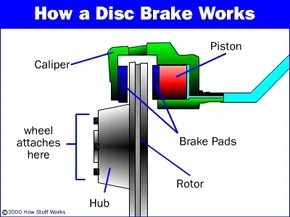
Most modern vehicles use disc brakes. It’s more efficient. The brake rotor is a steel disc attached to the wheel hub. A brake caliper straddles the rotor like a C-clamp. Inside the caliper, hydraulic pressure pushes brake pistons. These pistons squeeze brake pads against the spinning rotor. The friction here brings the car to a halt.
Component Breakdown: Disc Brake Anatomy
To understand why your car stops, look at the specific parts involved in a typical disc brake setup:
- Brake reservoir : Holds the supply of hydraulic fluid.
- Master cylinder : Converts your pedal’s mechanical force into hydraulic pressure.
- Brake lines : Carry the pressurized fluid from the master cylinder to the calipers.
- Brake caliper : The fixed steel housing that holds the pistons and pads.
- Brake piston : A cylindrical rod that extends when fluid enters, pushing the pad.
- Brake pad : A composite material backed by metal that grips the rotor.
- Brake rotor : The spinning steel disc that the pads clamp onto.
Why Disc Brakes Took Over
Before discs became standard, drum brakes ruled the road. The basic principle was identical: friction slows rotation. But drums have weaknesses. They trap heat. They trap dust.
Disc brakes offer superior cooling because the rotor is exposed to airflow. They also have a larger surface area for friction. As the pads wear, they create dust. In a drum system, that dust gets trapped inside the housing, potentially reducing braking efficiency over time. Discs vent that debris easily. The result is consistent stopping power and better heat dissipation.
We’ve covered the fundamentals of how light vehicles stop. Now, the rules change when you get behind the wheel of something heavier. How do you stop a fully loaded semi-truck or a bus full of passengers? You need more than just hydraulic pressure. You need air.
Air-brake Components in Trucks and Buses

The Mechanics of Foundation Brakes
Foundation brakes are the workhorses of heavy transport. You’ll find them on almost every truck and bus, operating on the same triple-valve principle that keeps trains on their tracks. Air pressure builds in the brake lines, and that pressure does the actual work of keeping the brakes disengaged. It’s a graduated release system, meaning if you modulate the pressure slightly, the brakes release proportionally. It’s not an on-off switch; it’s a dial.
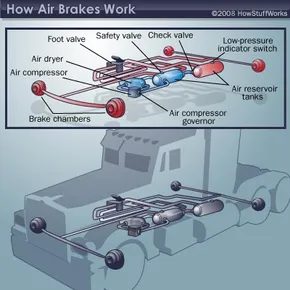
Several components handle this chore exclusively in road-going air brake systems. The air compressor is the heart, pumping air into storage tanks. A governor manages this process, cutting the compressor on when pressure drops below a set point and off when it’s full. Those air reservoir tanks store the compressed air. If you leave a vehicle idle for too long, drain valves are there to vent out moisture and debris.
When you press the foot valve, or brake pedal, you’re opening a path for air to escape the reservoirs. This drop in pressure allows brake chambers to react. Inside each chamber, a diaphragm or cam mechanism moves a push rod. This steel rod connects directly to the slack adjuster, an arm that fine-tunes the gap between the brake shoes and the drum.
The slack adjuster rotates the brake S-cam. It’s a cam shaped like an ‘S’ that physically pushes the brake shoes apart. These shoes have friction linings that grind against the inside of the brake drum, creating the stopping force. Return springs are the unsung heroes here. Once the S-cam stops pushing, these stiff springs snap the shoes back to their resting position, clearing the drum.
At idle, with the system charged, air pressure holds the diaphragm or S-cam in the released position. Step on the pedal, and the pressure drops. The S-cam rotates, shoes spread, and the drum slows down. Let go of the pedal, and the compressor refills the tanks while the springs reset the shoes. It’s a cycle of pressure and release, repeated thousands of times.
Emergency Systems and Auxiliary Brakes
Emergency air brakes are your backup plan. They complement the foundation system and are often activated by a dashboard button. But here’s the catch: you have to pull that button to charge the system before you can drive. The emergency brake stays retracted as long as the system is pressurized. If a leak occurs and pressure drops, the brakes engage automatically. It’s a fail-safe design that prevents runaway trucks.
Heavy trucks also often use an exhaust brake. This isn’t an air brake at all. It relies on the engine’s compression to slow the vehicle down. It’s a useful aid during long descents, reducing wear on the foundation brakes, but it doesn’t replace the air system.
The Sound of Safety
Have you ever wondered why commercial vehicles sound like they’re exhaling constantly? That squeak after braking is just air escaping. The continuous ppssss hiss comes from bypass safety valves. These valves ensure air pressure stays within the correct range. When the compressor builds too much pressure, the valves open to vent the excess. It’s loud, but it’s also a sign the system is working. Since air brakes rely entirely on compressed air, the compressor is constantly cycling on and off to maintain reservoir levels.
Air Brakes: Preventative Maintenance


Operating a vehicle equipped with air brakes isn’t just about knowing the rules; it’s about understanding the mechanics that keep you alive. Every state has its own set of guidelines for obtaining a commercial driver’s license, and the tests are rigorous. Maintaining the system is equally demanding. Before you even turn the key, there are specific pressure checks that define a safe vehicle.
First, ensure the minimum operating pressure meets the baseline. For buses, that floor is 85 psi. For trucks, you need at least 100 psi. If you’re below that, you’re already in the red zone. Next, time the air pressure buildup rate. The system needs to climb from 85 psi to 100 psi in under two minutes, running at 600 to 900 rpm. If it takes longer, the compressor is struggling or worn out.
You also need to verify the governor settings. The cut-out pressure should sit between 120 psi and 135 psi. The cut-in pressure, where the compressor kicks back on, should trigger 20 to 25 psi below that cut-out point. Get these numbers wrong, and you’re playing Russian roulette with your stopping power.
Moisture Management and Coupler Integrity
Water is the silent enemy of air brake systems. It’s a natural byproduct of condensed air. In cold climates, that moisture freezes. Ice blocks the air lines, preventing pressure from reaching the brake chambers. The result? Locked wheels. Modern systems try to mitigate this with automatic drain valves in each air tank, but you still need to check them. Don’t assume they work just because they’re installed.
Air couplers are another weak link. Worn rubber seals allow air to escape. A small leak? The compressor can handle it. A large leak? The compressor runs hot and hard, leading to premature failure. Air loss doesn’t mean the brakes instantly fail, but it means you lose the reserve pressure needed for multiple stops. Being stranded on a mountain pass isn’t a plausible scenario for most logistics managers.
Sensitivity and the Dual System
Air brakes are sensitive. They’re designed for heavy loads. An empty trailer doesn’t have the weight to keep the tires planted, leading to lockups. Ever wonder why there are dual skid marks on the highway? That’s an inexperienced driver over-braking an empty rig. The nightmare outcome is jackknifing. It happens when the trailer swings out alongside the cab, usually due to excessive braking on slick surfaces.
To combat failure, most modern vehicles use a dual system. Think of it as a backup for the backup. If one air circuit fails, the other keeps the vehicle moving, albeit with reduced power. Anti-lock braking systems (ABS) are now standard on tractor-trailers. They function similarly to ABS in passenger cars, modulating pressure to prevent wheel lockup during hard stops.
Why You Won’t See Air Brakes on a Civic
Air brakes are efficient. They’re reliable. They’re also impractical for passenger vehicles. The system requires too much space and complexity. Look at a Peterbilt cruising down the interstate. Notice the large air tanks tucked behind the fuel tanks. Try fitting that entire pneumatic infrastructure under the hood of a Honda Civic. It’s not going to happen. The weight, the noise, and the maintenance cost simply don’t add up for personal use.
“Poor maintenance leads to runaway truck.”
The consequences of ignoring these checks aren’t theoretical. On April 25, 1996, a 1988 Mack cement truck collided with a Subaru sedan in Plymouth Meeting, Pennsylvania. The truck was descending an off-ramp when the brakes failed. It barreled into an intersection, striking the Subaru and killing the driver.
The National Transportation Safety Board (NTSB) investigation revealed a catastrophic maintenance failure. The brake lines were reversed. The secondary system had also failed. The truck was operating with only 17 to 21 percent of its total braking capability. The driver had no warning. No dashboard light flashed. No pedal feel changed until it was too late. It was a senseless death caused by preventable negligence.
Air Brake Diagram
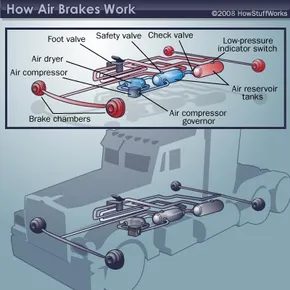
Understanding the internal layout helps. Visualizing how the reservoirs, valves, and chambers connect makes the maintenance steps less abstract. It turns a black box into a mechanical system you can actually trust.
How Air Brakes Actually Work
Forget hydraulic fluid. That’s for your sedan. Air brakes run on compressed air, a system built for brute force rather than finesse. Here is the mechanical reality of what happens when you hit the pedal.
At idle, the system sits in a state of release. Air pressure pushes against the diaphragm, holding the brakes off. It is a constant, pressurized standoff. You press the brake pedal. The pressure drops. This drop turns the S-cam. The cam spreads the brake shoes against the drum. Friction. Stopping power. Service brakes engage using that same air pressure to hold the line.
The Anatomy of the System
Five specific components keep a heavy rig from becoming a missile. You need:
- Air reservoirs: Storage tanks holding the compressed air.
- Air compressor: The engine-driven heart pumping air into the system.
- Brake chambers: Where the air pressure converts into mechanical force.
- Foot valves: The control interface, the pedal itself.
- Brake shoes and drums: The friction surfaces that do the actual stopping.
Missing one, and the whole chain fails.
Why the Noise?
That hiss isn’t a flaw. It’s safety. The “psss” sound you hear after braking is air escaping through automatic bypass safety valves. These valves exist to keep pressure at the correct level. If the compressor overbuilds pressure, the valves open. Loud hiss. It is a warning sign that the system is regulating itself. Squeaking? That is the air leaving the chamber. It confirms the brakes have released.
Who Built It?
George Westinghouse. 1869. An engineer looking at the railroad industry and seeing a fatal flaw. He invented the first triple-valve air-brake system. It was about safety. His original design worked the opposite way of direct air-brake systems, but the principle remained: compressed air for controlled stopping.
Why Not in Your Honda?
Air brakes are huge. The drums are massive because they are designed to stop trucks weighed down by heavy loads. They are unnecessary for a 3,000-pound passenger car. Bigger is not better here. It is dangerous. In a small vehicle, an air brake leak would be catastrophic. The system relies on constant pressure; lose it, and you lose control. Hydraulic fluid doesn’t compress. Air does. In a lightweight car, that compressibility makes steering feel vague. Air brakes are overkill. They are also heavy, complex, and expensive. Stick with hydraulics for the daily driver. Leave the air brakes to the rigs.


