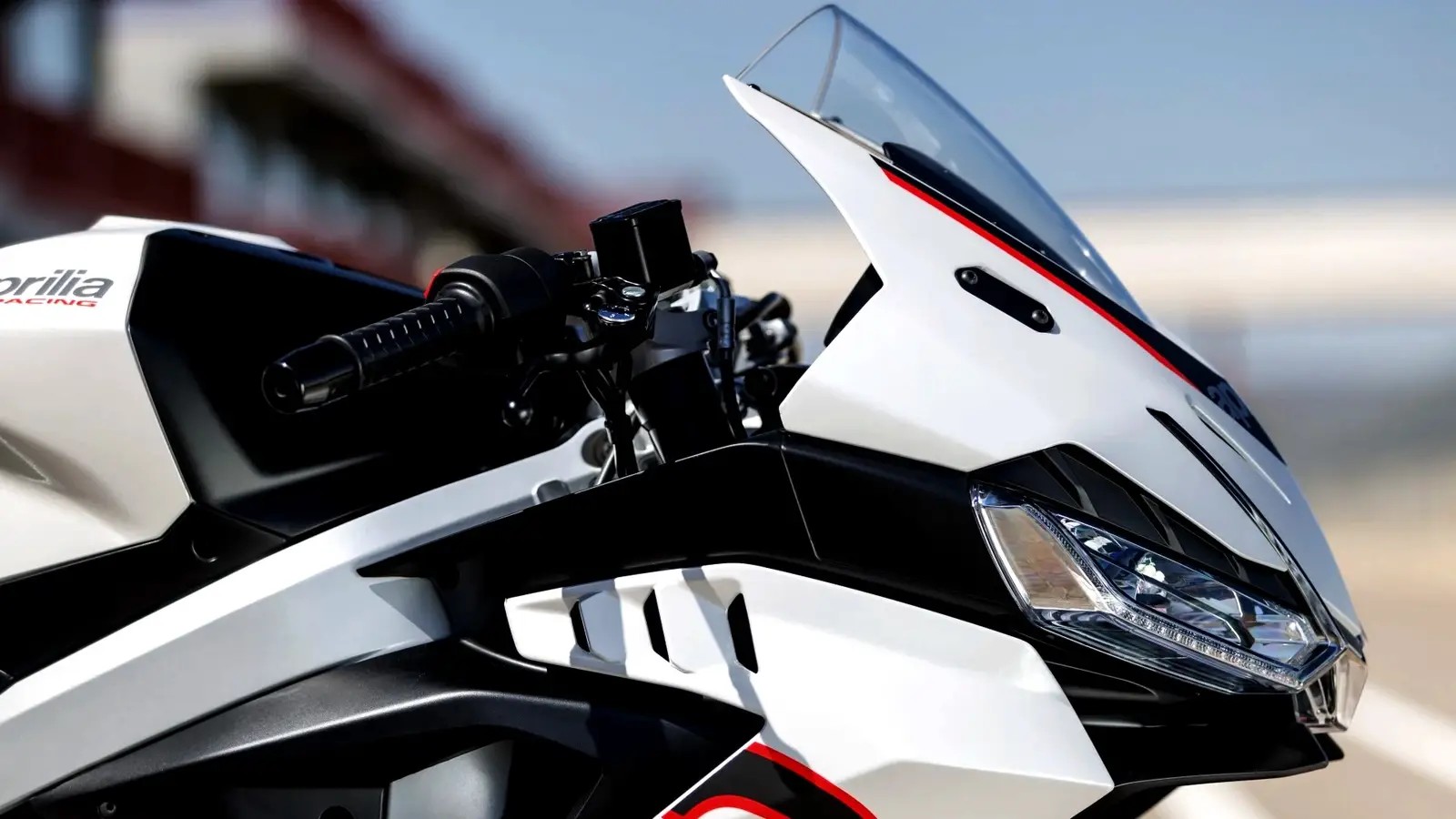
Many aspiring racers dream of handling a high-performance motorcycle like a professional, but the reality of jumping onto a liter-class sportbike can be humbling. The gap between ambition and execution is vast, but it doesn’t have to be insurmountable. A more strategic approach—starting with a manageable, yet capable machine—can dramatically accelerate skill development. The Aprilia RS 457 emerges as an ideal platform for riders aiming to elevate their technique without the immediate intimidation of larger, more powerful bikes.
The Importance of Gradual Progression
The key to mastering high-performance riding isn’t raw power, but controlled finesse. Attempting to replicate MotoGP moves on an overly aggressive machine often leads to frustration and bad habits. Instead, a bike that offers feedback without overwhelming the rider is crucial. This allows for a deeper understanding of motorcycle dynamics—how the chassis responds to braking, how weight shifts affect handling, and how to manage throttle control without inducing wheelspin. The RS 457’s design addresses this directly.
Aprilia RS 457: A Balanced Approach
The RS 457 stands out due to its class-leading aluminum perimeter chassis, a feature typically reserved for larger-displacement bikes. This provides the rider with a familiar feel and feedback similar to that of a full-sized sportbike, fostering better technique transfer. The bike’s adjustable suspension further enhances this learning experience, allowing riders to experiment with settings and understand how they influence handling.
Beyond the chassis, the RS 457 offers a suite of electronics commonly found on higher-end models. Riders can learn to manage ABS intervention, gradually decreasing assistance as their braking skills improve. The traction control system provides similar feedback for throttle control, helping riders develop smoother acceleration habits.
Kawasaki Ninja 500: A Viable Alternative
The Kawasaki Ninja 500 also merits consideration, particularly for riders focused on foundational skills. Its simpler package—telescopic forks, a steel trellis chassis, and an even-firing parallel-twin engine—provides a straightforward learning experience. However, the Ninja 500 may not offer the same level of refinement or performance ceiling as the RS 457, potentially limiting long-term progression.
Performance and Dynamics
The RS 457’s handling is notably sharp, providing precise feedback that allows riders to feel exactly what the wheels are doing. The 41mm USD forks and adjustable monoshock contribute to this confidence-inspiring dynamic. While the brakes can experience fade under extreme track conditions, Aprilia offers upgraded race pads as an accessory to address this issue.
The bike’s lightweight construction—weighing just 385 pounds wet—further enhances handling agility. This is almost 40 pounds lighter than the Honda CBR500R and only slightly heavier than the Kawasaki Ninja 500 SE ABS.
Engine and Electronics
Despite being an entry-level machine, the RS 457’s 457cc parallel-twin engine delivers ample performance. Its 270-degree crank configuration ensures smooth power delivery across the rev range, providing both tractability for street riding and the ability to carry gears in corners. The bike can reach a top speed of 124 miles per hour.
The RS 457 comes equipped with ride modes, engine maps, an anti-rollover system, traction control, and dual-channel ABS with adjustable intervention levels. This level of electronic assistance is uncommon in the entry-level segment.
Pricing and Value
The Aprilia RS 457 starts at $6,799, with the MotoGP-inspired Racing Stripes livery adding an extra $100. While this is $400 more than the 2026 Honda CBR500R and Kawasaki Ninja 500 SE ABS, the aluminum chassis and advanced electronic features justify the price. The bike’s performance rivals its competitors, making it a compelling value proposition.
The Aprilia RS 457 is a thoughtfully designed machine that bridges the gap between beginner-friendly accessibility and pro-level performance. By prioritizing feedback, adjustability, and electronic aids, it offers a clear path for riders to improve their skills and ultimately, ride like a pro.