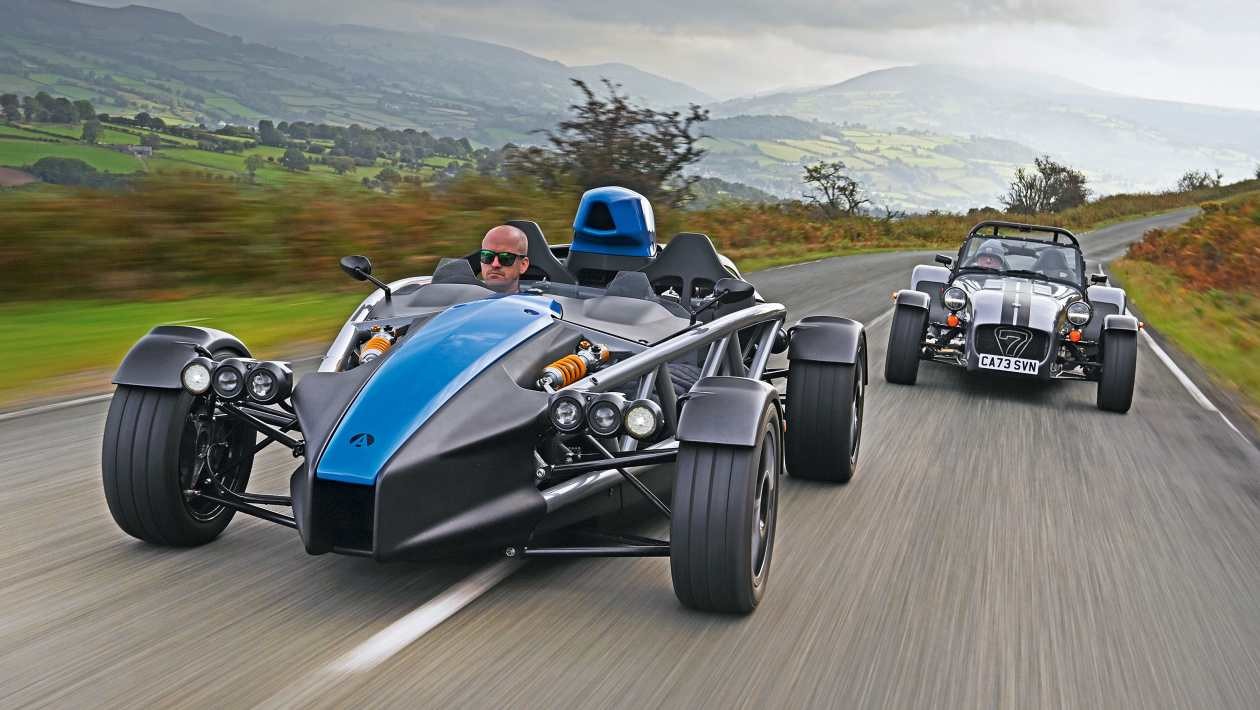
Two of the most visceral, engaging performance cars available today are the Ariel Atom and the Caterham Seven. Both prioritize raw driving experience over comfort or practicality, but which one delivers the ultimate thrill? This comparison dives deep into their capabilities, from brutal acceleration to pure handling joy, to determine a clear winner.
The Ariel Atom: Unfiltered Intensity
The Ariel Atom isn’t just a car; it’s a sensory overload. The latest iteration, the Atom 4, starts at around £54,898 and is engineered for pure performance. The engine is a 2.0-liter turbocharged four-cylinder borrowed from the Civic Type R, pushing out 320 bhp and 420 Nm of torque. This translates to a staggering 0-62 mph time of just 2.8 seconds, and a top speed of 162 mph.
What sets the Atom apart is its power-to-weight ratio of 538 bhp per tonne. This means it feels brutally fast, even in real-world conditions. The chassis is re-engineered with very little carryover from the previous model, except for the driver’s contact points (pedals, steering wheel), ensuring a refined yet aggressive driving experience. The six-speed gearbox is precise, making heel-and-toe downshifts effortless.
The Atom isn’t about long drives; it’s about maximizing adrenaline in short bursts. It’s a car that demands respect and rewards skill, making it a favorite among track enthusiasts and those seeking an uncompromised driving experience.
The Caterham Seven: Tradition and Refinement
The Caterham Seven, particularly the 420 R model, represents a different approach. Priced around £44,585, it emphasizes agility and balance over sheer power. The 2.0-liter naturally aspirated Ford Duratec engine delivers 210 bhp and 203 Nm of torque, resulting in a 0-62 mph time of 3.8 seconds and a top speed of 136 mph.
The Seven’s appeal lies in its lightweight construction, with a kerb weight of only 560 kg. This gives it a power-to-weight ratio of 375 bhp per tonne, which is still impressive. The Caterham feels more nimble and responsive at lower speeds, making it exceptionally fun on winding roads.
Caterham also offers options for customization, including the ability to build the car yourself from a kit. The latest models feature improved build quality and finish, thanks to a new facility in Dartford, Kent. The Seven is a timeless classic, blending tradition with modern engineering.
Head-to-Head: A Clash of Philosophies
On the road, the Seven feels more agile and pointy in the front, while the Atom’s sophisticated chassis delivers incredible balance, grip, and adjustability. The Atom’s engine is simply more explosive, making it an intense experience. The Seven’s smaller size allows for more precise line selection through corners, but the Atom’s composure at higher speeds is unmatched.
Both cars offer a direct, unfiltered driving experience, but the Atom’s tech highlights (such as its multi-stage traction control) and superior performance give it an edge. The Caterham’s reliance on pure mechanical feel is charming, but it lacks the Atom’s raw aggression.
Ownership and Practicalities
Both cars are rare and hold their value well, making them solid financial investments. Ariel offers factory maintenance and rebuilds, while Caterham allows buyers to build their cars from scratch. Neither prioritizes safety features (airbags are absent), but both offer optional harnesses for secure restraint. The Atom’s slightly higher price is justified by its superior performance and engineering.
The Verdict: Ariel Atom Takes the Crown
Cars designed for pure thrills are judged by their ability to deliver excitement, and in this metric, nothing matches the Ariel Atom. Its mind-blowing performance, combined with superb engineering and strong residual values, make it a standout performer. The Caterham Seven is a worthy runner-up, offering timeless charm and agility, but the Atom’s intensity and refinement ultimately secure its victory. Just be sure to invest in warm clothes – you’ll need them.