The recent relaxation of emissions standards in the United States under the Trump administration will not fundamentally alter BMW’s M performance division’s long-term product plans, according to the company’s head, Frank van Meel. The move, which repeals a key 2009 environmental regulation, may seem like a lifeline for large-displacement engines—but BMW M has already adapted to a patchwork of global regulations, and will continue to do so.
US Market Dominance Doesn’t Equal Policy Change
The US represents BMW M’s largest single market, accounting for over one-third of its 213,457 global sales in 2023 (approximately 72,000 vehicles). Despite strong demand for V8 engines in the region, the company maintains that it is prepared to navigate diverse regulatory environments worldwide.
“Every region has had its own standards… so there is no opportunity – nor is there a threat. It’s just the way it is,” said van Meel.
For years, BMW M has balanced compliance with differing standards in Europe, China, and the US, a practice that makes the new US policy shift inconsequential to its core strategy. This means that despite the looser regulations, BMW will not necessarily extend the lifespan of its V8 or V12 engines solely due to the US market.
Balancing Performance and Compliance
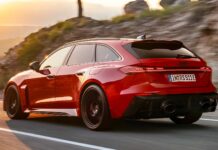
The company has already demonstrated its ability to adapt to stricter rules elsewhere, as seen in the recent adjustments made to its M5 and XM models to meet Euro 7 standards. Rather than outright dropping high-performance engines, BMW M tweaked the plug-in hybrid powertrain by reducing combustion engine output while increasing electric motor performance—maintaining peak power figures while lowering emissions.
This approach highlights a key point: BMW is not reliant on any single market or regulation. It will continue to calibrate its vehicles based on local requirements, rather than adopting a “one-size-fits-all” approach.
Electric Future Alongside Combustion
BMW M is also hedging its bets by developing both electric and combustion versions of its next-generation M3, due in 2027. This split strategy is a deliberate response to market uncertainty, as seen with rivals like Mercedes-Benz and Porsche who suffered financial setbacks after prematurely pivoting to all-electric lineups.
“The split strategy is always right because it gives you the answer to the demands of our customers, and you always have to listen to your customers,” van Meel stated.
The company believes that the timing is crucial, and that its electric M3 will deliver a high-performance experience that competitors have yet to match. The upcoming EV is poised to challenge expectations, according to BMW M, with early testers reportedly surprised by its capabilities.
Conclusion: BMW M’s response to the US emissions rollback is pragmatic. The company is built to operate in a world of conflicting standards, and will continue to develop both electric and combustion vehicles in parallel, driven by customer demand and technological readiness rather than single-market policy changes.