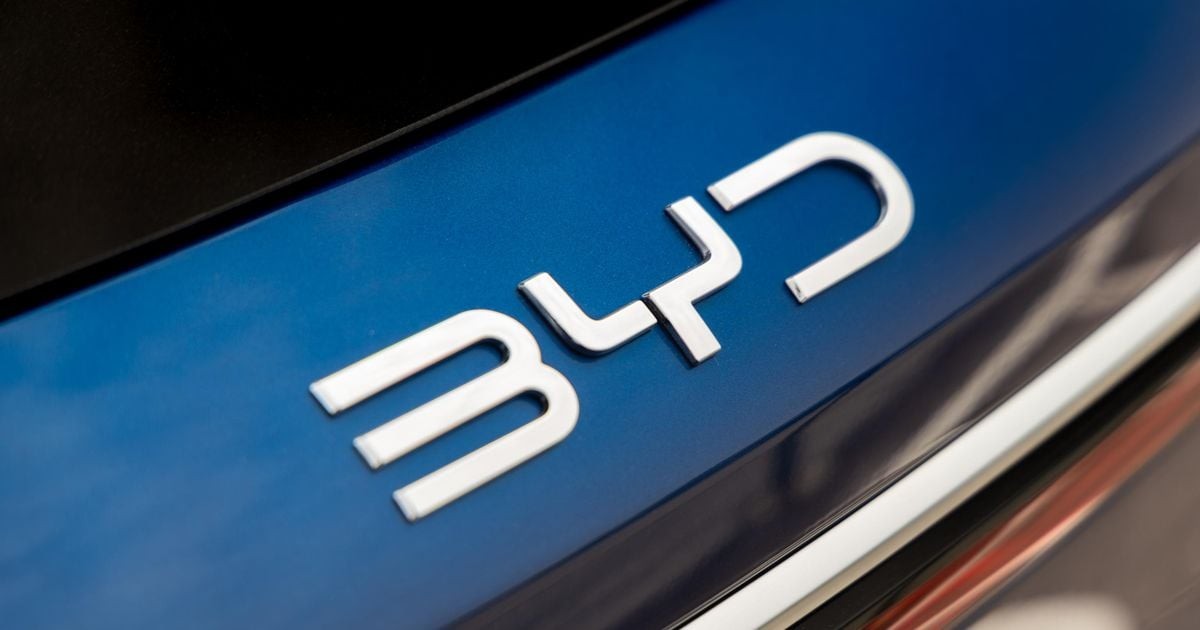
BYD is significantly scaling up its operations in Australia, announcing plans to ship 30,000 vehicles throughout May and June. This massive influx of inventory—roughly triple the brand’s usual shipment volume—comes as record-high fuel prices push Australian consumers toward electric and hybrid alternatives.
A Rapid Rise in Market Share
The surge in shipments is a direct response to unprecedented consumer demand. BYD recently achieved a milestone by delivering 7,217 vehicles in a single month, marking its best performance to date. This growth has propelled the brand into third place in overall Australian sales, trailing only Toyota and Kia.
The scale of BYD’s expansion is evident in its year-to-date performance:
– Sales Growth: The company has sold 17,541 vehicles through March, a 100.1% increase compared to the same period last year.
– Volume Milestone: After selling its first local vehicle in 2022, BYD is on track to hit the 100,000-vehicle mark in Australia later this year.
– Inventory Shift: While the brand previously faced criticism for stockpiling vehicles in unconventional locations, the recent sales boom has significantly cleared previous inventory levels.
Strategic Response to the Fuel Crisis
The timing of this expansion is no coincidence. As fuel prices remain volatile and high, the shift toward electrification has accelerated. BYD Asia Pacific Managing Director Liu Xueliang noted that the company is tailoring its strategy to meet this specific market need.
“If the market requires more EVs, then we will launch more pure EVs. It’s mainly to catch up to market demand,” Mr. Xueliang stated.
To ensure a steady supply, BYD is leveraging its own logistics capabilities, utilizing its own vessels to expedite deliveries. This move aims to prevent vehicle shortages and provide faster turnaround times for customers, including those interested in the high-end Denza luxury brand.
Diversifying the Product Lineup
The increased shipment volumes will support a wider variety of models designed to capture different segments of the Australian market. Key models driving this momentum include:
– Sealion 7: The current best-selling electric SUV.
– Shark 6: A plug-in hybrid (PHEV) ute targeting the high-demand utility segment.
– Sealion 6: A PHEV SUV offering a bridge between traditional internal combustion and full electric.
BYD plans to bolster this lineup with at least eight new models throughout 2026, aiming to compete directly with established giants like Mazda, Kia, and Ford.
The Broader Trend: The Rise of Chinese Automakers
BYD’s success in Australia is a microcosm of a larger global shift. In 2025, Chinese brands overtook Japanese manufacturers to become the world’s leading source of new vehicles. This trend reached a new milestone in February 2026, when Chinese-made vehicles outsold all other origins in the Australian market for the first time.
This shift represents a fundamental change in the automotive landscape, as Chinese manufacturers leverage rapid technological advancement and aggressive scaling to challenge the long-standing dominance of traditional Japanese and European brands.
Conclusion
By tripling its shipments, BYD is positioning itself to capitalize on the consumer shift away from high fuel costs toward electrification. If current trends continue, the brand is well on its way to becoming a permanent fixture on the Australian automotive podium.