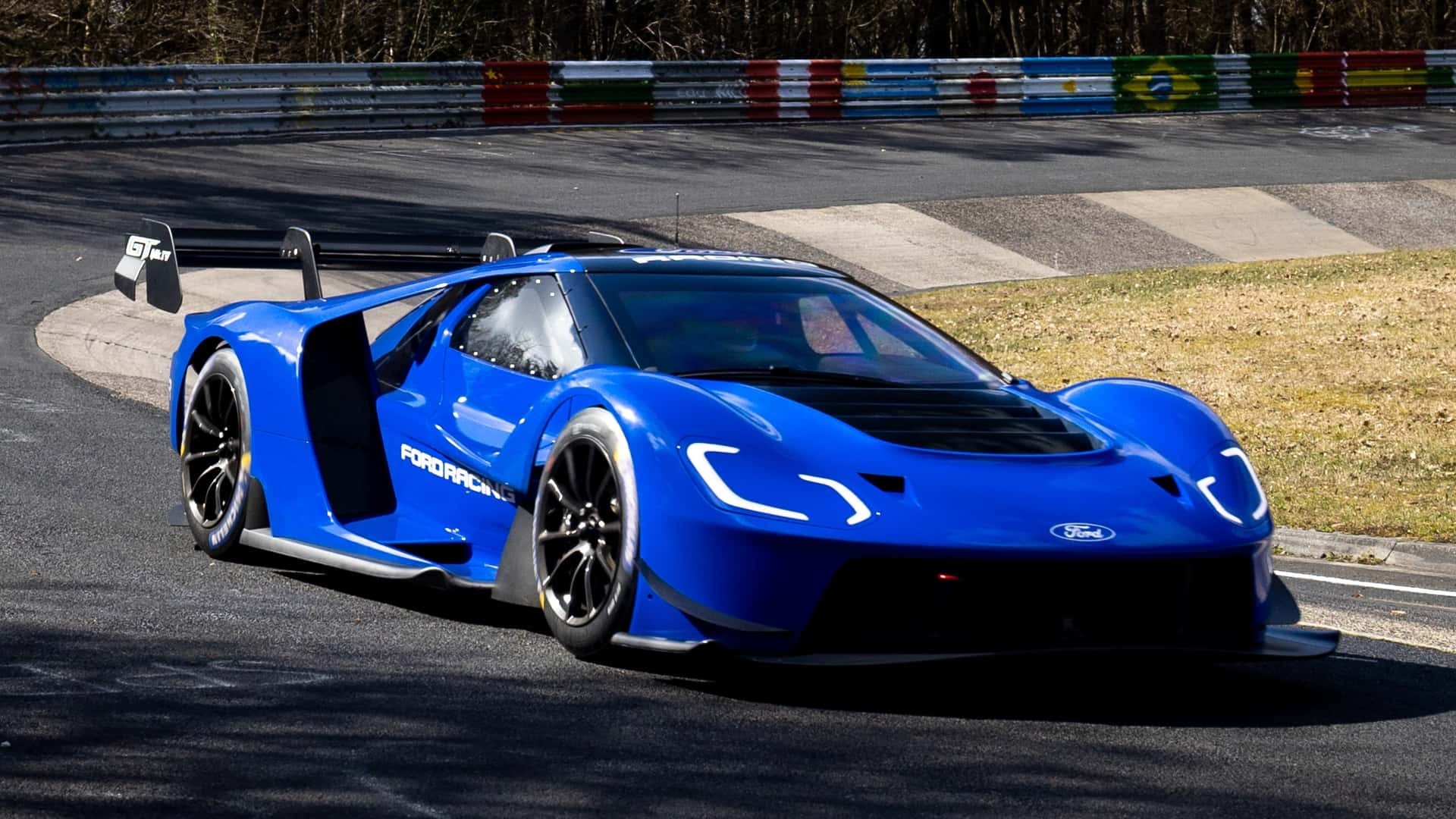
The Ford GT Mk IV has claimed the title of the fastest American-made vehicle to ever lap the Nürburgring, posting a blistering time of 6 minutes and 15.977 seconds. This achievement puts it ahead of the Chevrolet Corvette ZR1X, which previously held the record with a lap of 6 minutes and 49.275 seconds.
Performance Specs and Context
The GT Mk IV is a track-only prototype designed for pure performance, and represents the most extreme variant of Ford’s iconic supercar. It features a custom carbon-fiber chassis developed by Multimatic, a lengthened wheelbase for improved stability, and an aggressively aerodynamic long-tail body capable of generating over 2,400 pounds of downforce at 150 mph.
Under the hood, it boasts a specially tuned twin-turbocharged 3.8-liter EcoBoost V6 producing over 820 horsepower — significantly more than the 660 hp found in the road-legal GT. Each unit commands a price around $1.7 million, and remaining production slots were opened for order last August.
Ranking Among the Fastest
The Ford GT Mk IV now ranks as the third-fastest vehicle ever recorded at the Nürburgring. Only two cars have gone quicker: the electric Volkswagen ID.R (6:05.335) and the Porsche 919 Hybrid Evo race car (5:19.546). Crucially, the GT Mk IV is currently the fastest car to lap the track using only an internal combustion engine.
The Rivalry: Ford vs. Chevrolet
This record is the latest volley in a fierce competition between Ford and Chevrolet. Ford initially set a benchmark with the Mustang GTD, but the Corvette ZR1 and ZR1X quickly surpassed it. Now, Ford has reclaimed the upper hand with the GT Mk IV, demonstrating a clear commitment to pushing performance boundaries.
The Nürburgring remains a crucial testing ground for automakers, and this back-and-forth between these two rivals is intensifying the spectacle as they fight to claim dominance on the legendary track.
The ongoing battle between Ford and Chevrolet highlights the relentless pursuit of speed and engineering excellence in high-performance vehicles. Automakers continue to leverage the Nürburgring as a proving ground, pushing the limits of combustion engines before the inevitable shift to fully electric platforms.