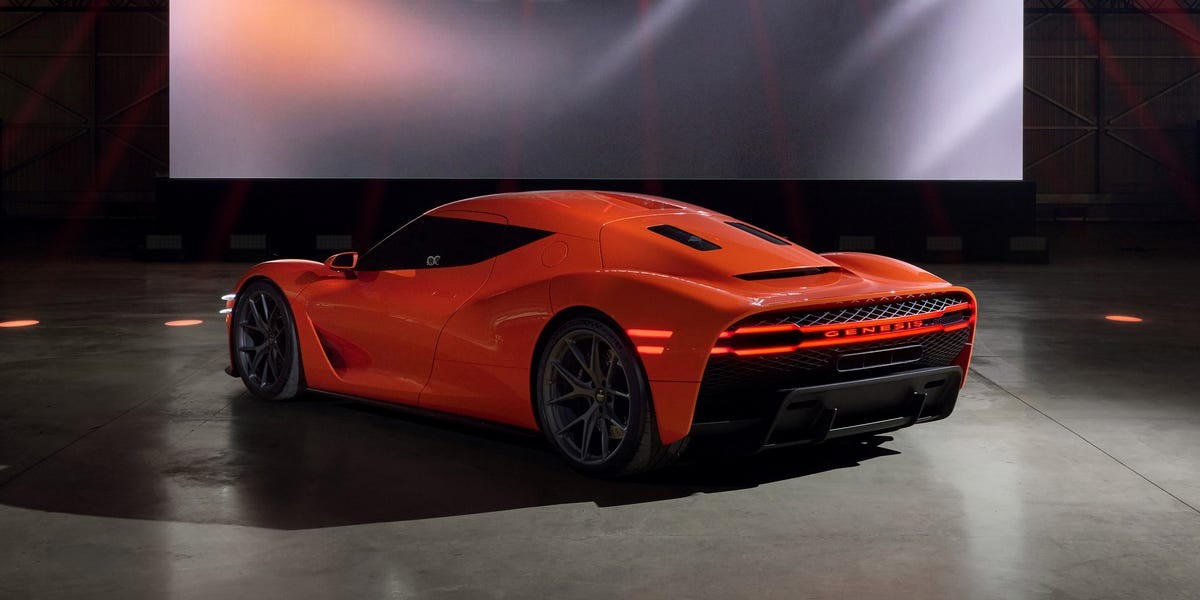
Genesis, Hyundai’s luxury division, is boldly entering the high-performance sports car market with the Magma GT. This upcoming V-8-powered supercar represents a significant shift for the brand, moving beyond its established reputation for sophisticated SUVs to directly challenge established rivals like Porsche and Mercedes-Benz. The Magma GT isn’t just a statement of intent; it’s backed by a racing program designed to prove Genesis’ performance credentials.
The Magma Subbrand: A Performance Push
Genesis has traditionally focused on luxury and comfort. Now, with the Magma subbrand, the company is making a clear play for performance enthusiasts. The first Magma product is the electric GV60 Magma, but the GT demonstrates that Genesis isn’t limiting itself to electric power. The Magma GT is a mid-engined, V-8-powered coupe designed to compete with the world’s best sports cars. This is a critical move for Genesis, which needs to establish itself as a serious player in the performance segment.
Racing Roots and Future Lineup
Genesis isn’t just building a car; it’s building a performance legacy. The brand will participate in the 2026 24 Hours of Le Mans with the GMR-001 endurance prototype racer. This racing effort will directly inform the development of both the road-going Magma GT and a dedicated GT3 race car. The Magma GT platform is expected to support a diverse lineup, including convertibles, track-focused models, and lightweight versions, mirroring the Porsche 911’s approach to product variety.
Powertrain Details: V-8 Power Under the Hood
The concept version of the Magma GT boasts a V-8 engine, and the production model is expected to deliver over 600 horsepower from a twin-turbocharged configuration. Given that Genesis currently lacks a V-8 in its lineup, the engine may be derived from the V-8 created for the GMR-001 racer—effectively combining two of their 1.6-liter turbo four-cylinders. The GMR-001’s hybrid V-8 produces 670 hp, so a similar setup for the production GT isn’t out of the question, potentially pushing output even higher. An eight-speed automatic transmission is anticipated, with a possible entry-level twin-turbo V-6 variant as well.
Competition: Taking on the Giants
The Magma GT will directly compete with established German sports cars, including the Porsche 911 and Mercedes-AMG GT Coupe. It will also challenge mid-engined rivals like the Chevrolet Corvette, and even venture into the territory of exotics such as the McLaren Artura and Maserati MC20. This aggressive positioning signals Genesis’ intent to disrupt the high-performance market.
Challenges and Timelines
Genesis faces an uphill battle. Many automakers have attempted to dethrone the Porsche 911 and failed. Genesis’ limited history in performance cars adds to the challenge. Regulatory pressures regarding V-8 engines in some markets could also pose a hurdle, though the U.S. market remains relatively receptive. Despite these obstacles, Genesis is aiming for a late 2027 or early 2028 launch, with an estimated price tag exceeding $150,000, potentially reaching $200,000 or more.
The Magma GT represents Genesis’ most ambitious undertaking yet. If successful, it will redefine the brand and cement its place among the world’s premier sports car manufacturers.