Kia has laid out an ambitious roadmap to scale its electric vehicle (EV) presence, announcing two pivotal new models and a revised global sales strategy. The automaker is shifting its focus toward high-volume, affordable segments to navigate a changing automotive landscape.
The EV1: A New Contender in the Urban Market
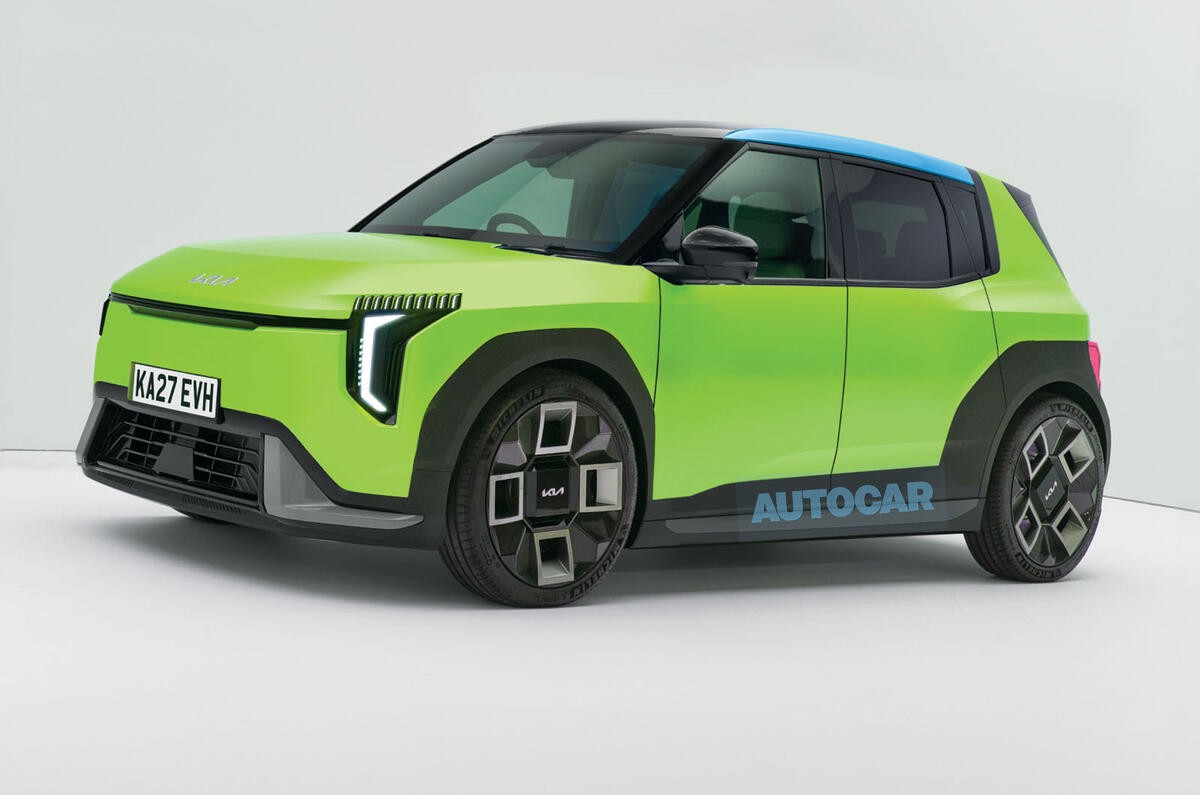
Next year, Kia plans to launch a new small electric hatchback in Europe, potentially branded as the EV1. Designed as a “B-hatch,” this model is intended to be a lower-riding, more streamlined alternative to the upcoming Kia EV2.
This new model is strategically positioned to compete in the highly competitive small-car segment, directly challenging established rivals such as the Renault 5, Peugeot e-208, and Vauxhall Corsa Electric.
Key technical and market details include:
– Affordability: As Kia’s cheapest electric offering, prices are expected to start in the low £20,000s.
– Technology: It will be Kia’s first “software-defined vehicle” in this segment, meaning its core systems will be centrally integrated for better connectivity and updates.
– Performance: Built on the 400V E-GMP platform, the EV1 will likely offer battery options of 42.2kWh and 61kWh, providing an estimated range between 200 and 300 miles.
– Production: While not yet confirmed, the vehicle may be manufactured at Kia’s facility in Slovakia to serve the European market efficiently.
Scaling Up: The 2029 Flagship SUV
Looking further ahead to 2029, Kia revealed plans for a new flagship volume SUV. This model is designed to bridge the gap between current popular models and high-end electric offerings. Kia intends for this vehicle to encourage “trade-up” demand, enticing owners of the Sportage (Hybrid/Plug-in Hybrid) and higher-trim EV5 models to move into a more premium electric experience.
Navigating the “EV Chasm”
These product launches are part of a broader goal to reach one million EV sales per year by 2030, aiming for a 3.8% global market share.
However, Kia has adjusted its expectations. The company’s 2030 target is approximately 20% lower than previous projections. This recalibration comes as Kia CEO Ho Sung Song noted that the global EV market is entering a “chasm” phase —a period where the initial surge of early adopters has passed, and growth has slowed as the industry waits for mass-market adoption.
By diversifying its lineup to include 14 different electric models by 2030—ranging from passenger cars to commercial vehicles—Kia is preparing for a reality where combustion engines will still play a significant role alongside the transition to full electrification.
Kia’s strategy reflects a pragmatic shift: focusing on affordable, software-driven urban cars to capture the mass market while preparing premium SUV models for the next wave of EV enthusiasts.
In summary, Kia is balancing aggressive electrification with market realism, targeting the mass-market through affordable hatchbacks like the EV1 while maintaining a premium ladder for SUV buyers.