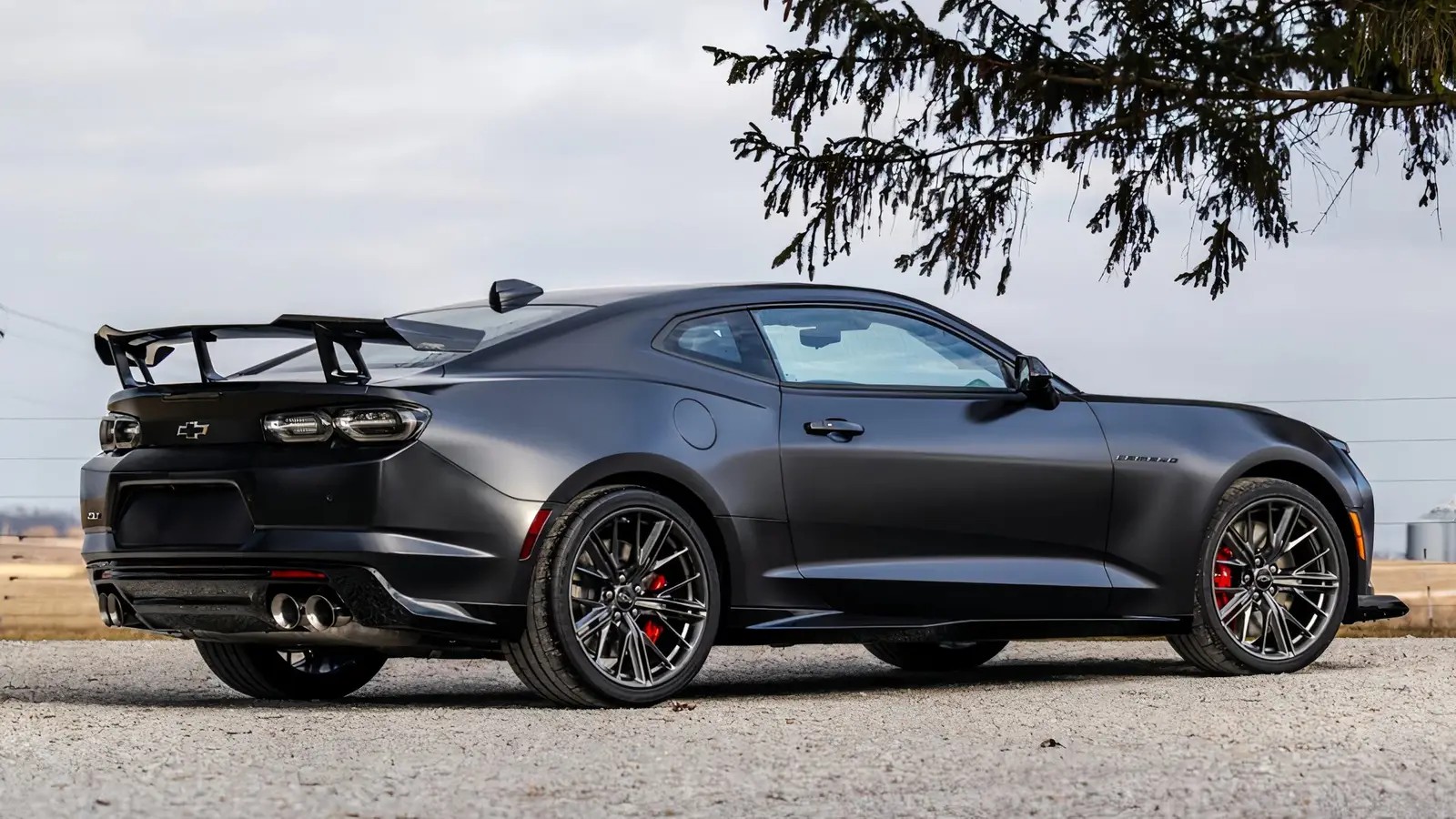
For decades, the United States dominated the world of high-performance, rear-wheel-drive cars, churning out iconic muscle cars with roaring V8 engines. But this era has largely ended. While the Ford Mustang and Chevrolet Corvette continue, the landscape of raw, American-made horsepower is shrinking. The Chevrolet Camaro’s recent discontinuation represents a significant milestone: the final curtain call for a generation defined by unbridled power and aggressive design.
The Decline of Domestic Muscle
Just a few years ago, choosing between V8-powered muscle cars was a luxury. The Dodge Challenger SRT Hellcat Redeye and Ford Mustang Shelby GT500 boasted nearly 800 horsepower, while the naturally aspirated Mustang Shelby GT350 offered a visceral, high-revving experience. Now, the Chevrolet Camaro and Dodge Charger are gone, leaving the Mustang as the last mainstream holdout. This isn’t just about car models disappearing; it reflects broader shifts in automotive priorities.
Manufacturers are increasingly focused on electric vehicles and stricter emissions standards. The demand for massive V8s has waned as fuel efficiency and sustainability become paramount. The era of automakers relentlessly one-upping each other for the highest horsepower numbers is over.
The Camaro: A Last Stand for Old-School Muscle
The Camaro was intended to rival the Mustang, but never quite matched its sales success. However, its sixth generation (2016–2024) represented a high point for the model. Engineers, led by Al Oppenheiser (“Mr. Camaro”), designed it with a clear goal: fix the flaws of the previous generation.
The sixth-gen Camaro borrowed its chassis from Cadillac’s ATS and CTS, resulting in a much more athletic and responsive driving experience. The old fifth-generation Camaro forced the driver to adapt; the sixth-generation responded to the driver’s input. This commitment to performance was evident in its specs.
Displacement Matters: The LT1 V8
While the Mustang’s Coyote engine evolved into a modern overhead-cam design, the Camaro stuck with a classic formula. The 6.2-liter LT1 V8, a cam-in-block, pushrod engine, produced 455 horsepower and 455 lb-ft of torque.
This wasn’t about technological superiority; it was about honoring the tradition of raw, unrefined American muscle. The Camaro took the old-school formula with it when Chevrolet pulled the plug. The ZL1 variant, with its supercharged 6.2-liter V8 (650 horsepower), proved that muscle cars could still compete on the world stage, setting a 7:16.04 lap time at the Nürburgring.
Market Values Today
Today, a sixth-generation Camaro in good condition can range from $15,000 to over $100,000, depending on the variant and condition. A 2016 1SS averages around $25,600, while a 2024 ZL1 can easily exceed $100,000. The Camaro’s discontinuation has already driven up prices, making it a collector’s item.
The Future of Muscle
Chevrolet ended the Camaro’s production run after 2024, leaving the Mustang as the sole surviving four-seater, two-door V8 muscle car from a domestic marque. Ford CEO Jim Farley has assured enthusiasts that the V8 Mustang will remain, stating, “If we’re the only ones on the planet making a V8 affordable sports car for everyone in the world, so be it.”
The Dodge Charger has returned, but some purists reject it as a true muscle car due to its turbocharged inline-six engine. The era of the American muscle car is fading, but the spirit lives on in those who cherish raw power, aggressive design, and the roar of a V8 engine.
The Camaro’s departure isn’t just a product discontinuation; it’s a symbolic end to an era. The remaining players will carry the torch, but the landscape will never be the same.