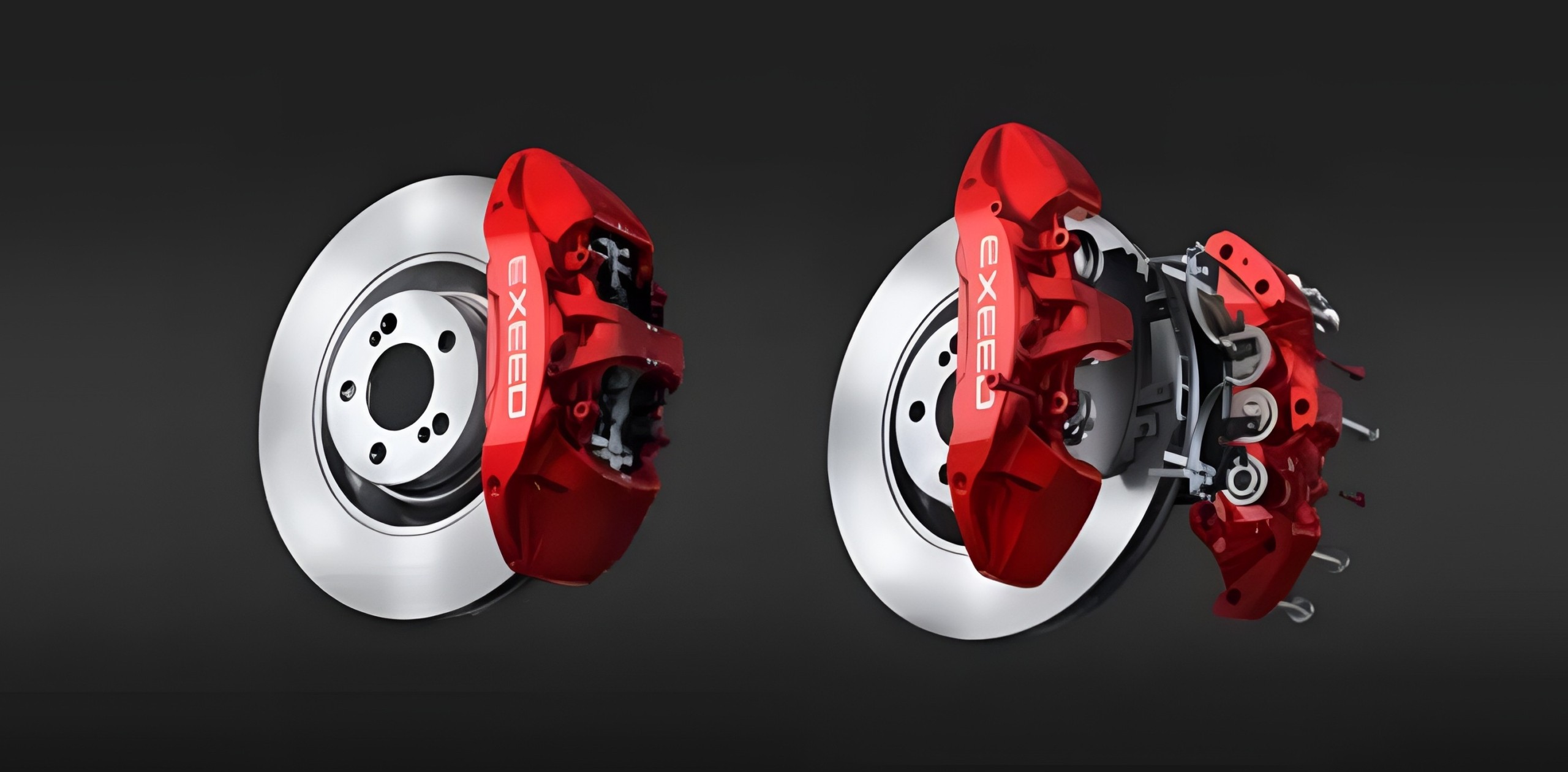
China’s automotive industry is rapidly moving towards brake-by-wire (BBW) technology, specifically through Electronic Mechanical Braking (EMB) systems. Multiple automakers and suppliers are gearing up for small-scale mass production by 2026, signaling a major shift in how vehicles are designed and controlled. This transition isn’t merely about technological advancement; it’s driven by new regulations and a broader industry push toward software-integrated chassis systems.
New Regulations Pave the Way for EMB
In May 2025, China implemented the mandatory standard GB21670-2025, setting technical requirements and testing methods for passenger car braking systems. This standard formally defines “Electrical Transmission Braking Systems (ETBS)”—systems powered entirely by electrical storage and driver-controlled—and establishes crucial safety and reliability standards.
This regulatory framework is essential because it provides the legal and technical basis for certifying EMB systems for mass production. Without it, widespread adoption would be impossible.
Key Suppliers Leading the Charge
Several Chinese companies are at the forefront of this push:
- Orient-Motion Technology: Has already established production lines and is partnering with Dongfeng Liuzhou Motor and Geely’s Farizon to deploy EMB systems.
- Jiongyi Electronic Technology: Has completed durability testing and ISO26262 certification for its fully dry EMB products.
- Motion Technology & Watson Rally: Have validated assembly lines and are in the final stages of production validation.
Beyond these, Beijing West Industries (BWI) is collaborating with Kaiyi Automobile and U Power to integrate EMB systems, enabling independent four-wheel control without hydraulics.
First Models and Future Candidates
The Chery Exeed EX7 is set to be the first mass-produced vehicle with EMB. Other upcoming models, including the Chery ET Series high-end EVs, have passed testing under the new GB21670-2025 standard, making them strong contenders for 2026 EMB integration. Unconfirmed reports also suggest the Li Auto L9 Livis may adopt the technology.
Global Collaboration and Challenges Remain
International suppliers are also involved, with BWI announcing dual-motor EMB systems for Kaiyi and U Power platforms. However, technical complexity is still a major challenge. Actuator performance, functional safety, system redundancy, and cost control remain key hurdles for developers.
This transition is not just about removing hydraulic components; it represents a fundamental shift towards more sophisticated, software-driven vehicle control systems. If successful, this move could redefine braking technology and set a new standard for automotive innovation.