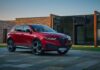
The small car market is shrinking, yet the Mazda 3 remains a surprisingly popular choice. Despite a 24.1% drop in overall small car sales this year, and the discontinuation of models like the Hyundai i30 in some regions, the Mazda 3 continues to attract buyers with its blend of style, handling, and perceived reliability. The question now is whether the latest updates – including Mazda Connected Services and expanded safety features – justify the rising price tag, or if potential buyers should consider alternatives.
Inside the Mazda 3: Upscale Feel, Limited Space
The interior of the G20 Evolve model tested here feels more premium than its price suggests. Cloth seats are comfortable, and materials throughout the cabin are generally well-chosen. Physical climate controls, a rarity in newer cars, add convenience. However, the doors feel tinny, and cheap gloss black plastic surrounds the infotainment system.
The infotainment itself has been updated with available 8.0- or 10.25-inch touchscreens, but the larger screen feels awkwardly placed for frequent use. The rotary dial remains the more practical input method. Wireless Apple CarPlay and Android Auto are now standard, though the system lacks the depth of some competitors.
Rear passenger space is tight, suitable for children but cramped for adults. Boot capacity is also small at just 295 liters, less than rivals like the BYD Dolphin or Skoda Scala. This makes the Mazda 3 less practical for families or those who frequently haul cargo.
Performance and Handling: The Mazda Advantage
Under the hood, the G20 Evolve features a naturally aspirated 2.0-liter four-cylinder engine producing 114kW and 200Nm. It’s not the most powerful option in the class, but it delivers smooth, linear power. The engine is adequate for daily driving, though it lacks the instant punch of hybrid or electric alternatives.
Fuel consumption is a weak point; expect over 10 liters per 100km in city driving. This is higher than competitors like the Toyota Corolla Hybrid, which offers significantly better efficiency.
Where the Mazda 3 truly shines is in its driving dynamics. The steering is perfectly weighted, and the suspension strikes a good balance between firmness and comfort. Handling is sharp and predictable, making it one of the most engaging cars to drive in its class.
Safety and Features: Modern Upgrades
The Mazda 3 holds a five-star ANCAP safety rating, but this rating will expire in December 2025. Standard safety features include autonomous emergency braking, lane-keeping assist, and adaptive cruise control. The optional Vision Pack adds a surround-view camera, driver monitoring, and front cross-traffic alert for an additional $2000.
All grades now include Mazda Connected Services, USB-C connectivity, and wireless smartphone mirroring. Higher trims offer keyless entry, leather seats, and a premium Bose sound system.
Running Costs: Higher Than Average
The Mazda 3 is more expensive to service than many rivals, costing $2284 over five years compared to under $1500 for some competitors. This, combined with higher fuel consumption, makes it less economical to own long-term.
The Verdict: A Driver’s Car, But Not the Most Practical
The Mazda 3 remains a compelling choice for drivers who prioritize handling and style over practicality and efficiency. It’s a refined, well-built car that offers a more engaging driving experience than most small cars. However, its limited space, high running costs, and aging platform mean that alternatives like the BYD Dolphin or Toyota Corolla SX are worth considering. If you don’t need a spacious interior or prioritize fuel economy, the Mazda 3 remains a strong contender.