Nissan has officially pulled the curtain back on the 2027 Nissan Rogue, introducing a significant technological shift that could redefine its position in the highly competitive compact SUV segment. The most notable change is the introduction of the e-Power series-hybrid powertrain, a technology Nissan has utilized globally but is now bringing to the United States for the first time.
A Different Kind of Hybrid
The e-Power system distinguishes itself from the traditional hybrids found in many competitors. While most hybrid vehicles use a combination of a gasoline engine and electric motors to drive the wheels, the Rogue’s e-Power system works differently:
- Electric Drive: The wheels are powered exclusively by electric motors.
- The Engine as a Generator: The gasoline engine does not connect to the drivetrain; instead, its sole purpose is to act as a generator to charge the battery pack.
- No Plug Required: Because it relies on the engine to maintain the battery, it is not a plug-in hybrid (PHEV), offering the convenience of electric driving without the need for external charging infrastructure.
This setup aims to provide a seamless, “EV-like” driving experience, characterized by smooth, instant torque, while avoiding the range anxiety often associated with pure electric vehicles.
Design Evolution and Capability
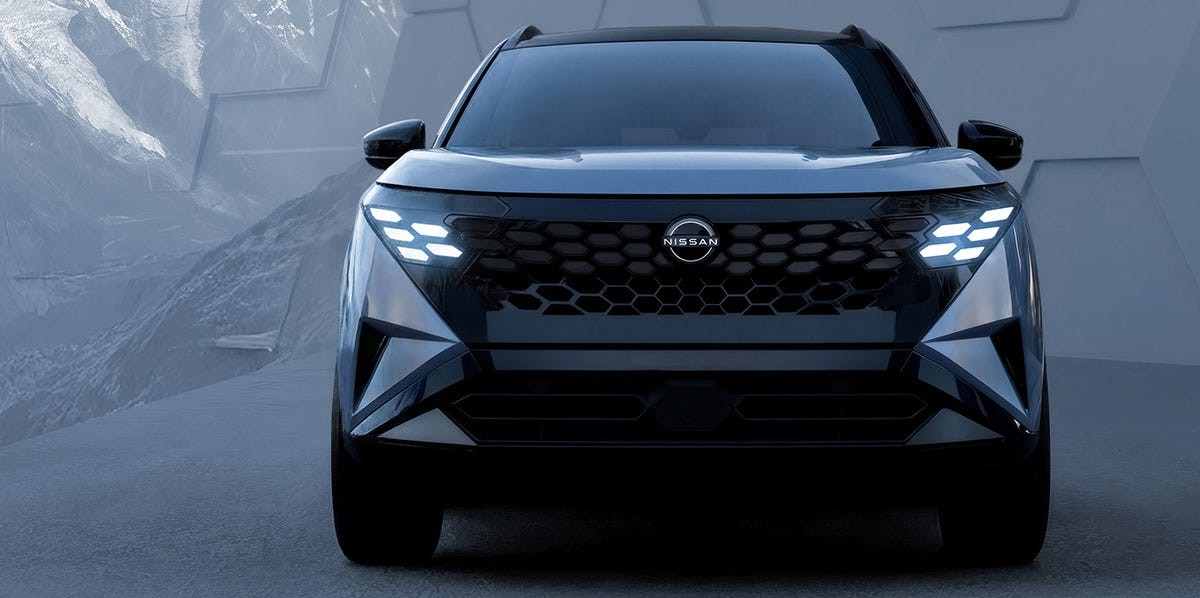
Visually, the 2027 Rogue maintains its recognizable silhouette but adopts a much more modern aesthetic.
- Exterior Styling: The redesigned front end features integrated headlights that blend into the grille, while the rear boasts a grid-like taillight pattern that complements the vehicle’s D-pillar design.
- All-Wheel Drive (AWD): Unlike many single-motor hybrids, the U.S. Rogue will feature a dual-motor setup. One motor will power the front wheels and another the rear, providing true all-wheel-drive capability.
- Interior Expectations: While official interior images have not been released, the vehicle is expected to retain its two-row, five-seat configuration, likely upgraded with larger, more advanced digital displays to match the new exterior.
Market Strategy: Targeting the Leaders
Nissan’s move toward electrification is a strategic response to a shifting market. For years, the Toyota RAV4 and Honda CR-V have dominated the compact SUV space by leaning heavily into hybrid technology. By making the e-Power Rogue the centerpiece of its lineup, Nissan is attempting to capture consumers who want electrified efficiency without the complexity of plugging in.
Current reports suggest a phased transition for the Rogue lineup:
1. Initial Launch: The 2027 model will be available primarily as a hybrid.
2. The Transition: While the current gas-only Rogue will remain in production for a period, Nissan intends for the hybrid to eventually account for the majority of sales.
3. Future Options: A non-hybrid version of the new design is expected to follow at a later date.
This shift marks a move away from the “stopgap” measures of the past—such as the current plug-in hybrid models—toward a dedicated, purpose-built electrified platform.
Conclusion
The 2027 Nissan Rogue represents a pivotal moment for the brand as it introduces its unique e-Power technology to American shores. If successful, this series-hybrid approach could offer a compelling middle ground for drivers seeking the smoothness of an electric motor with the long-range reliability of gasoline.