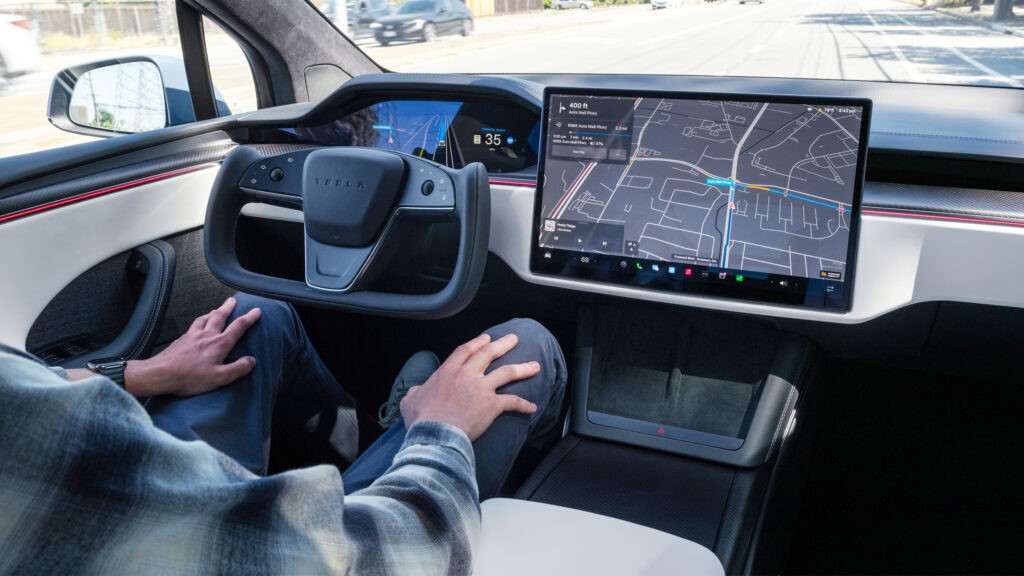
The National Highway Traffic Safety Administration (NHTSA) has escalated its investigation into Tesla’s Full Self-Driving (FSD) system, now moving from a preliminary evaluation to an engineering analysis. This development significantly increases the likelihood of a potential recall affecting over 3.2 million vehicles in the United States. The focus? How Tesla’s camera-based FSD handles conditions with limited visibility – specifically, what happens when the system struggles to “see” in rain, fog, or poor lighting.
From Radar to Cameras: A Risky Transition?
The current probe stems from a shift Tesla made in mid-2021, abandoning radar and ultrasonic sensors in favor of a vision-only approach for its FSD system. While proponents argued this was the future of autonomous driving, regulators now question whether the transition was executed safely. The NHTSA investigation centers on how Tesla’s FSD responds when its cameras are impaired, and whether drivers receive adequate warnings before potential collisions.
Fatal Crashes Prompt Scrutiny
The upgrade to an engineering analysis follows a fatal crash in November 2023, which prompted Tesla to refine its degradation detection system in June 2024. The core issue is that the system reportedly failed to recognize deteriorating visibility conditions in several crashes, issuing warnings too late – or not at all – before impact. In some cases, the FSD system did not even detect vehicles directly ahead.
The Problem with “Vision Only”
The NHTSA’s preliminary review uncovered that at least three out of nine investigated incidents were linked to the FSD system’s inability to cope with poor visibility. This highlights a critical flaw: relying solely on cameras leaves the system vulnerable to conditions where human drivers would intuitively slow down or disengage.
Underreporting Concerns
Adding another layer of complexity, the NHTSA also notes Tesla’s internal data limitations may result in underreporting crashes involving FSD. The company admits its labeling and analysis methods aren’t yet able to consistently identify all FSD-related incidents, raising questions about the full scope of the problem.
What This Means
The NHTSA’s expanded investigation underscores the risks inherent in rapidly deploying autonomous technology before it’s fully tested. The agency’s scrutiny is a signal that regulators are no longer willing to accept “move fast and break things” as a viable safety strategy, especially when lives are at stake. The outcome of this engineering analysis could force Tesla to significantly revise its FSD system, potentially including the re-introduction of redundant sensors, or face a costly recall.