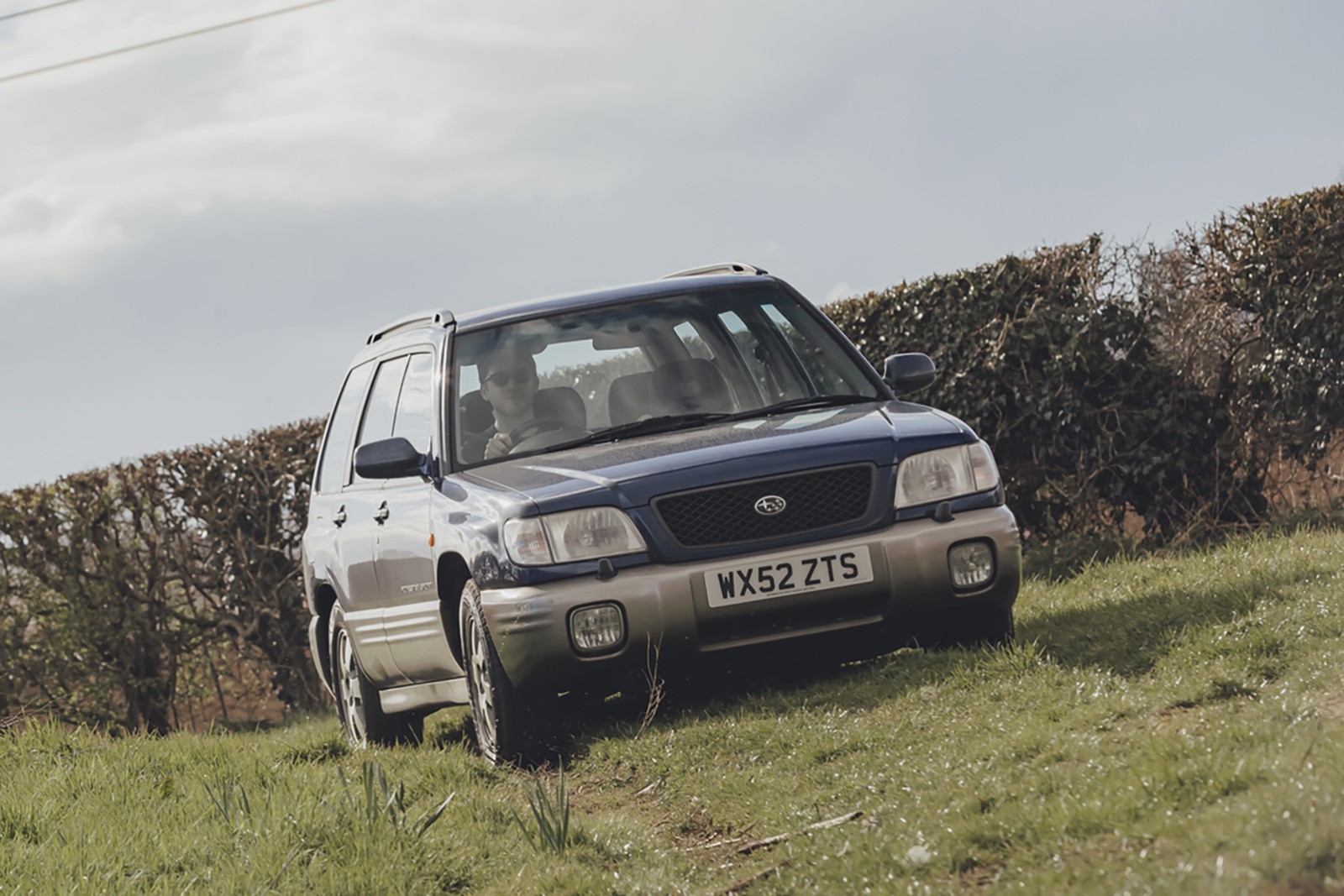
The Subaru Forester’s name suggests a practical, outdoorsy lifestyle. Like many car brands, Subaru leverages imagery of adventure and capability in its marketing—think “Ranger,” “Explorer,” or “Wrangler.” But the Forester’s story is more intriguing than most; it’s a family wagon secretly built on the platform of a world-class rally car.
The Original ‘SUV Tough, Car Easy’
The first Forester arrived in 1997, marketed with the simple promise of “SUV Tough, Car Easy.” This wasn’t a revolutionary concept; Toyota’s Tercel estate offered a similar blend of practicality and all-wheel drive a decade earlier. However, the Forester distinguished itself with its distinctive boxer engine—a flat-four configuration that gave it a unique sound and low center of gravity.
While not groundbreaking at the time, the Forester’s enduring appeal set it apart. The Tercel estate faded into obscurity, while Subaru refined the Forester over generations. By 2008, it had drifted closer to conventional SUV designs, but the early models remain a cult favorite.
A Rally Car in Disguise
The Forester’s hidden strength lies in its mechanical kinship with the Subaru Impreza. The Impreza, in turbocharged, Prodrive-prepared form, dominated the World Rally Championship with drivers like Colin McRae and Carlos Sainz. The Forester shared the Impreza’s chassis, boxer engine, and all-wheel-drive system, making it surprisingly capable on twisty roads.
The Forester’s tall body didn’t betray its performance potential. Even in non-turbo versions, it was quick and fun to drive. But it was the boosted Foresters that really surprised drivers: a practical wagon with the heart of a rally legend.
Interior: Utilitarian to a Fault
The Forester’s interior didn’t match its hidden athleticism. Late 20th-century Subaru interiors were functional, bordering on drab. Grey plastic dominated, with striped upholstery that resembled…well, a collapsed rake. Higher trims offered some relief with fake wood trim, which clashed with the seat fabric but at least broke up the monotony.
The Forester’s success wasn’t about luxury; it was about practicality, reliability, and a surprising undercurrent of performance.
The Forester’s blend of utility and hidden potential cemented its place in automotive history. It proved that family cars could be fun, capable, and surprisingly connected to the world of high-performance motorsport.