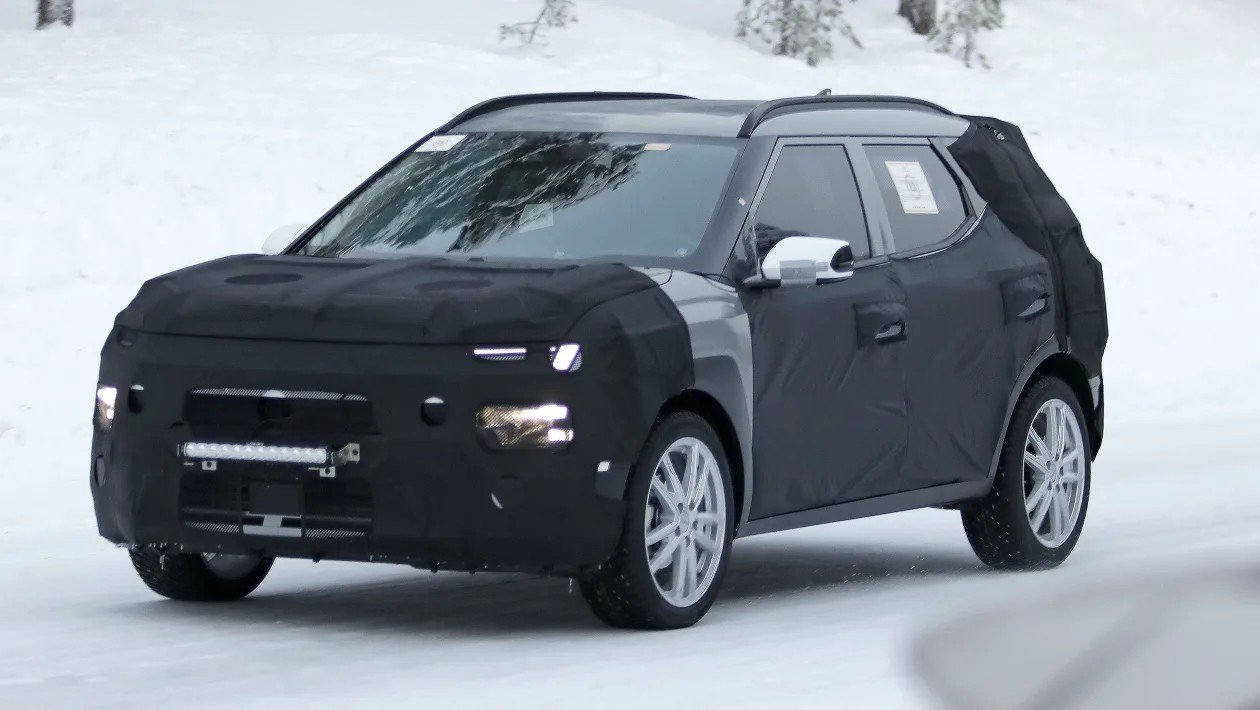
Hyundai is already developing the next generation of its Bayon crossover, less than two years after a minor facelift for the current model. Confirmed by Hyundai Europe CEO Xavier Martinet, the new Bayon is set to launch within the next 18 months, promising a significant departure from its predecessor.
Design Shift: More SUV, Less Supermini
The current Bayon shares its platform (Hyundai-Kia K2) with the i20 hatchback, resulting in a taller, chunkier body. However, prototypes reveal a bolder design direction for the next iteration. Spy shots show a noticeably raised roofline and increased ground clearance, positioning it more firmly as a small SUV.
While still smaller than the Kona SUV, the new Bayon aims to provide Hyundai with a stronger competitor to the Kia Stonic – a move that reflects market trends where compact crossovers are gaining prominence. The price for the current Bayon starts around £24,000, while the Stonic is slightly cheaper, offering potential savings for buyers.
Borrowing Design Cues from the Hyundai Venue
The upcoming Bayon will likely incorporate design elements from the Hyundai Venue, a B-segment crossover sold in other markets. Expect SUV-inspired features such as black A-pillars, plastic wheel cladding, and roof rails, giving it a more rugged look. Yet, Hyundai is also aiming for sophistication, with split LED headlights and a dynamically rising window line.
Powertrain and Tech Updates
Currently, the Bayon is only available with an 89bhp 1.0-litre turbocharged three-cylinder engine (with the mild-hybrid option discontinued in 2024). If the new model retains the K2 platform, a 113bhp mild-hybrid could return, improving efficiency and allowing it to better compete with rivals like the Stonic, Ford Puma, and Suzuki S-Cross.
Inside, expect an upgraded infotainment system. The current Bayon features twin 10.25-inch screens, but the next generation may adopt Hyundai’s larger 12.3-inch dual display, already available in the Kia Seltos. Though positioned as a more affordable option, interior headroom should increase thanks to the taller roofline.
Pricing and Launch Timeline
The larger Hyundai Kona starts at just over £27,000, so the new Bayon’s price will likely remain competitive – starting around the current model’s £23,795. Given the advanced state of the prototype, with production-ready lighting and bodywork, a full reveal before the end of the year is plausible.
The Bayon’s rapid development cycle underscores Hyundai’s aggressive approach to staying competitive in the crowded crossover market. This new model is not just a refresh, but a strategic move to solidify Hyundai’s position against rivals like Kia, Ford, and Suzuki.