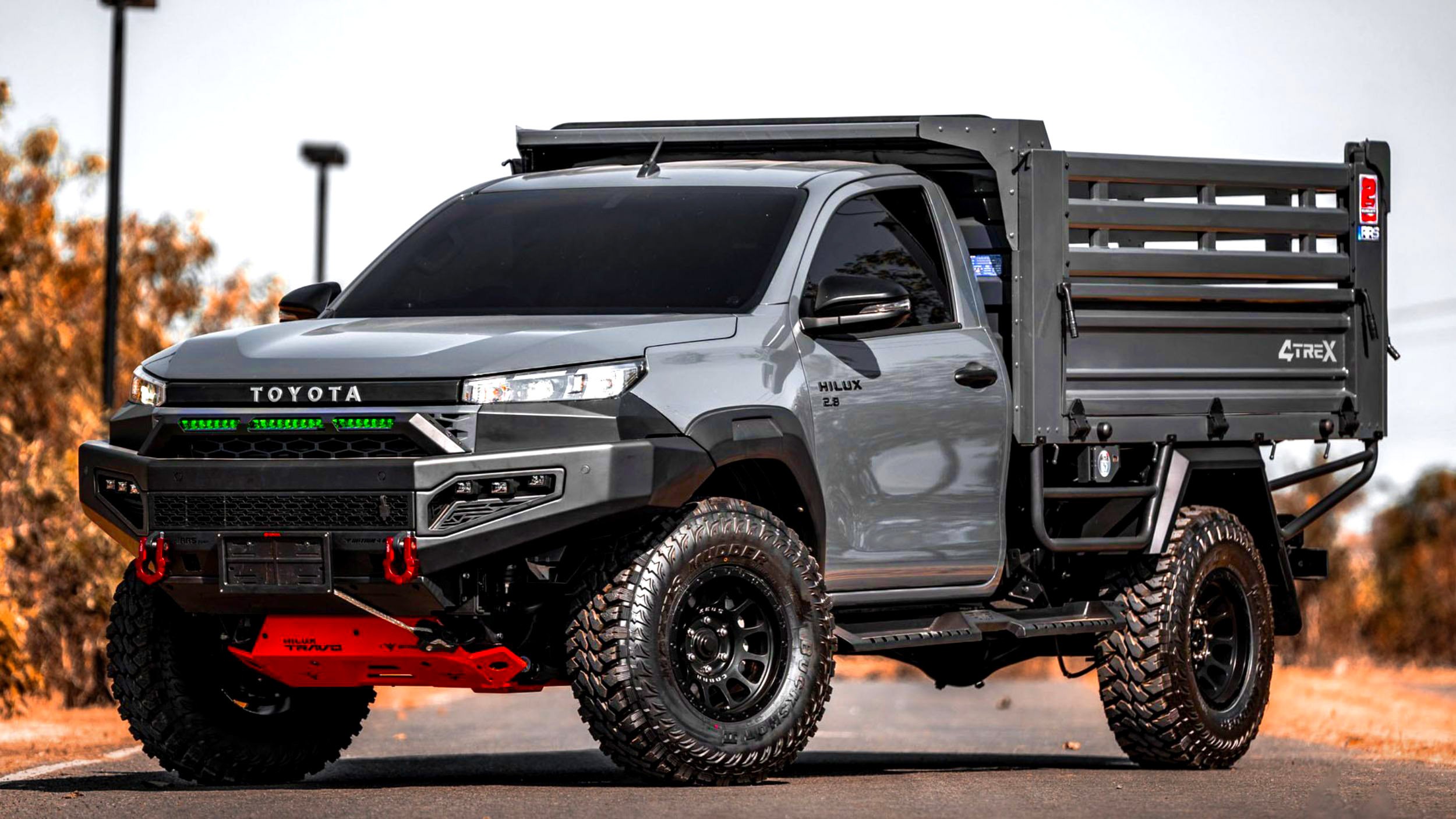
The Toyota Hilux has long been celebrated as a reliable global workhorse, but a specialized Thai aftermarket firm is pushing its utility to extreme limits. Rung Rueng Service (RRS) has unveiled a series of heavy-duty conversions that transform the ninth-generation single-cab Hilux into a high-capacity, self-loading dump truck capable of hauling up to 5,000 kg (11,023 lbs).
Engineering for Extreme Loads
Converting a midsize pickup into a heavy-duty tipper requires more than just a larger bed; it necessitates a complete overhaul of the vehicle’s structural and mechanical integrity. To handle loads that would typically overwhelm a standard Hilux, RRS implements several critical upgrades:
- Enhanced Suspension: The conversion includes a floating rear axle paired with heavy-duty leaf springs and upgraded 20 mm core shock absorbers to maintain stability under maximum weight.
- Custom Steel Bedding: Users can choose between a modified factory bed or a custom high-strength steel structure. Available dimensions range from a standard 600 mm height to custom configurations of up to 800 mm.
- Hydraulic Tilting Systems: RRS offers two ways to power the tipping mechanism:
- Electric Dump System: The most popular choice, capable of tipping between 3,000 and 5,000 kg.
- PTO-Driven System: A more intensive option that draws power directly from the diesel engine via the Power Take-Off (PTO) unit.
A Self-Sufficient Mobile Workstation
To further increase the truck’s autonomy, RRS offers an optional 1,000 kg (2,205 lbs) crane mounted directly behind the cabin. This addition allows operators to load and unload heavy materials independently, effectively turning the Hilux into a standalone mobile workstation.
Modular Design and Integration
One of the most significant technical achievements of these builds is their modular approach. RRS claims that their tipper kits do not require cutting or welding the donor vehicle’s original ladder-frame chassis. This preserves the structural integrity of the Hilux while allowing for easier installation.
Furthermore, the company ensures that the vehicle remains user-friendly by relocating factory electronics—such as reverse cameras and parking sensors —to the new custom chassis, maintaining the safety features originally provided by Toyota.
Market Context: The Rise of Specialized Pickups
This development highlights a growing trend in the automotive aftermarket: the “up-cycling” of midsize pickups into niche industrial tools. While manufacturers like Toyota design vehicles for general versatility, companies like RRS identify specific gaps in the market—such as the need for small-scale, highly maneuverable dump trucks for construction or agriculture—and fill them through specialized engineering.
RRS is not limited to the Hilux; they apply similar logic to the Ford Ranger Super Duty and the Mitsubishi Triton, demonstrating a broad demand for professional-grade utility upgrades in the midsize segment.
By combining Toyota’s legendary reliability with heavy-duty hydraulic and structural engineering, RRS has bridged the gap between a consumer pickup and a professional industrial vehicle.
Conclusion
The RRS Hilux conversion represents a significant leap in utility, turning a standard pickup into a specialized, high-capacity tool for heavy industry. Through modular engineering and significant suspension upgrades, it offers a powerful solution for operators needing compact yet heavy-duty hauling capabilities.