The iconic Volga brand, once a staple of Soviet-era roads and a symbol of officialdom, is attempting a high-stakes comeback. However, this revival bears little resemblance to the domestic manufacturing traditions of the past. Instead of home-grown engineering, the new Volga lineup is built on a foundation of Chinese technology and assembled in repurposed European facilities.
A Strategic Pivot Amidst Market Shifts
The return of Volga comes at a critical juncture for the Russian automotive industry. Following the exit of major Western manufacturers due to the conflict in Ukraine, a significant vacuum has opened in the domestic market.
While Volga was originally synonymous with GAZ-produced sedans used by government officials and taxi fleets, the brand’s modern strategy is one of rebranding and localization. Rather than developing new platforms from scratch, the company is leveraging established Chinese models to fill the void left by departing European brands.
The New Lineup: Rebadged Chinese Successes
The relaunch focuses on two primary models, both of which are heavily derived from Geely’s existing product portfolio.
The Volga K50 (SUV)
The K50 is a direct descendant of the Geely Monjaro. While marketed as a new Volga model, the similarities are striking:
– Design: The K50 retains the Monjaro’s front fascia, chrome accents, and headlight configuration, with the only notable change being a revised grille featuring Volga badging.
– Performance: Reports indicate the SUV will be powered by a 2.0-liter turbocharged petrol engine delivering 238 hp, paired with an eight-speed automatic transmission and all-wheel drive.
The Volga C50 (Sedan)
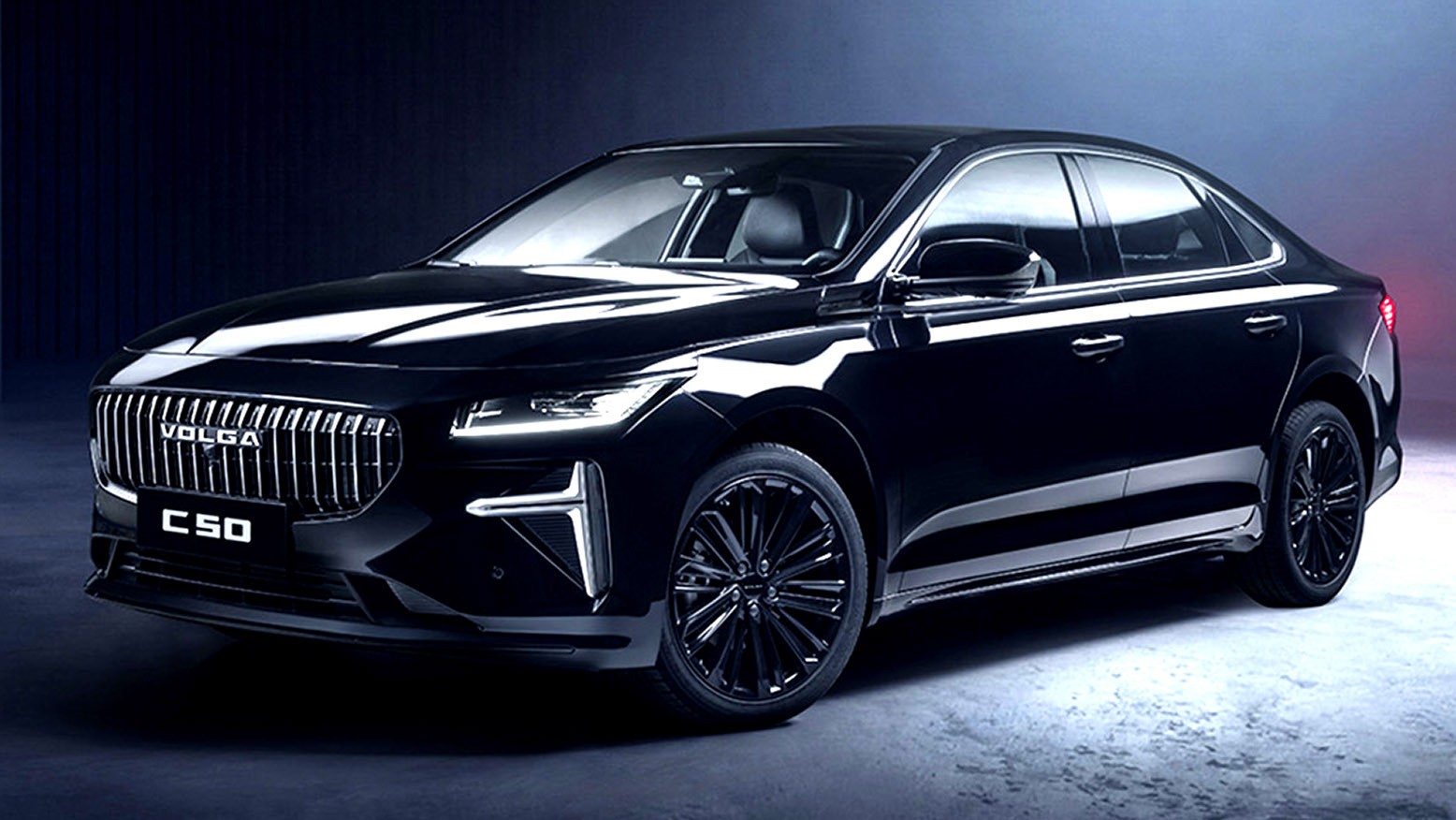
The C50 targets the traditional sedan market, utilizing the Geely Preface as its blueprint.
– Aesthetics: Much like the K50, the C50 maintains the Preface’s clean, conservative design—reminiscent of a Volkswagen Passat or Honda Accord—with minimal changes beyond the branding.
– Interior & Tech: The cabin remains virtually identical to the Chinese original, featuring a digital instrument cluster and a portrait-oriented infotainment display.
– Powertrain: It offers two engine configurations: a 150 hp version and a more potent 200 hp 2.0-liter turbocharged engine, both mated to a seven-speed dual-clutch transmission.
Manufacturing: From Volkswagen to Volga
A key element of this revival is the production site. The new models will be manufactured in Nizhny Novgorod, at the facility formerly operated by the Volkswagen Group. This plant, which previously produced Skoda and VW models for the Russian market, provides the necessary infrastructure to scale production quickly, even if the technological “soul” of the cars has shifted from Germany to China.
The revival of Volga represents a broader trend in the Russian auto market: the rapid transition from Western European engineering to Chinese-led platforms to maintain mobility and market presence.
In summary, the new Volga is less a rebirth of Soviet engineering and more a strategic rebranding of Geely’s proven Chinese models, aimed at capturing the market share left behind by departing Western automakers.