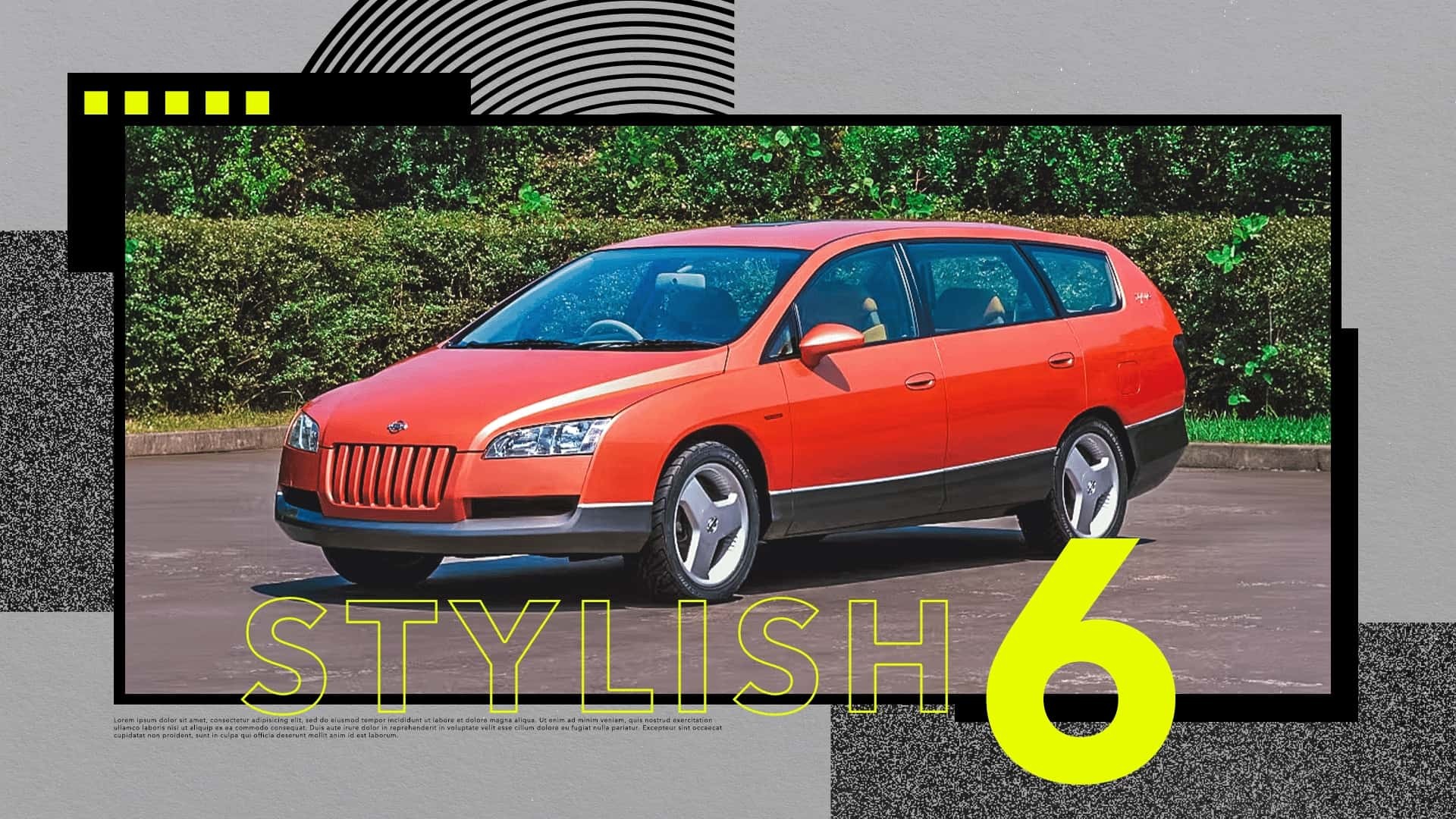
In the late 1990s, the automotive landscape was on the cusp of a massive transformation. While minivans were the reigning kings of family transportation, the seeds of the SUV revolution were already being sown. Amidst this shift, Nissan unveiled a concept that attempted to bridge the gap between the sleekness of a sedan and the utility of a van: the Stylish 6.
Debuted at the 1997 Tokyo Motor Show, the Stylish 6 was not just another station wagon; it was Nissan’s attempt to redefine the “utility wagon” for a changing market.
A Hybrid Approach to Family Travel
Unlike the traditional American wagons of the era—such as the Buick Roadmaster or Ford Country Squire—which often felt like heavy, lumbering cruisers, the Stylish 6 aimed for a more sophisticated, car-like profile. Nissan’s goal was to provide the massive interior volume of a minivan without the high roofline and sliding doors that many drivers found unappealing.
The concept introduced several innovative features designed to maximize passenger comfort and interior flexibility:
- Forward-Facing Third Row: While most large wagons utilized cramped, rear-facing third rows, Nissan oriented the seats forward to improve the passenger experience.
- Swivel Captain’s Chairs: The second row featured rotating seats, a hallmark of minivan luxury, allowing for easier interaction between passengers.
- Modular Cargo Space: When not in use, the third-row seats could fold toward the sides of the vehicle, significantly expanding the cargo area.
- Integrated Entertainment: To cater to families, the concept included built-in screens for the front and second rows, along with fold-out tables and cup holders integrated directly into the dashboard and console.
Early Green Technology
Long before “hybrid” became a standard industry term, the Stylish 6 was experimenting with electrified powertrains. Underneath its distinctive seven-slot grille lay a sophisticated—for the time—hybrid system.
The setup paired a 2.5-liter V6 engine with an electric motor and a Continuously Variable Transmission (CVT). Nissan marketed this combination as a way to achieve “superior driving performance” while maintaining “environmental friendliness,” signaling an early interest in the efficiency trends that dominate the industry today.
Why the Concept Never Reached the Showroom
Despite its ambitious design and advanced tech, the Stylish 6 never entered mass production. Instead, Nissan pivoted toward the Quest minivan and began aggressively expanding its SUV and crossover portfolios.
This decision reflected a broader market trend: consumers were moving away from the “low-slung” wagon aesthetic in favor of the commanding driving position and rugged image offered by SUVs. Today, the station wagon remains a niche segment, largely confined to the European market, while global manufacturers like Nissan have almost entirely transitioned to a crossover-centric lineup.
The Future of Concept Cars
The disappearance of experimental designs like the Stylish 6 is also driven by modern economic realities. As automakers face intense pressure to cut costs, the era of “experimental” one-off concepts is fading.
With major manufacturers currently undergoing massive restructuring—including layoffs and facility closures—the focus has shifted from “what if” designs to “what will sell.”
In the current climate, every new concept must serve as a direct blueprint for a high-volume production model. The whimsical, segment-blurring utility wagons of the 90s have been replaced by a more disciplined, profit-driven approach to vehicle development.
Conclusion: The Nissan Stylish 6 was a forward-thinking attempt to blend sedan styling with minivan utility and hybrid efficiency. While it missed the window of market opportunity, it remains a fascinating glimpse into a lost era of automotive experimentation.