As urban environments become more crowded, a new safety hazard has emerged on our sidewalks: the “silent pedestrian.” With the widespread use of Active Noise Cancellation (ANC) technology, walkers and runners are increasingly insulated from the ambient sounds of the city, including the approach of cyclists.
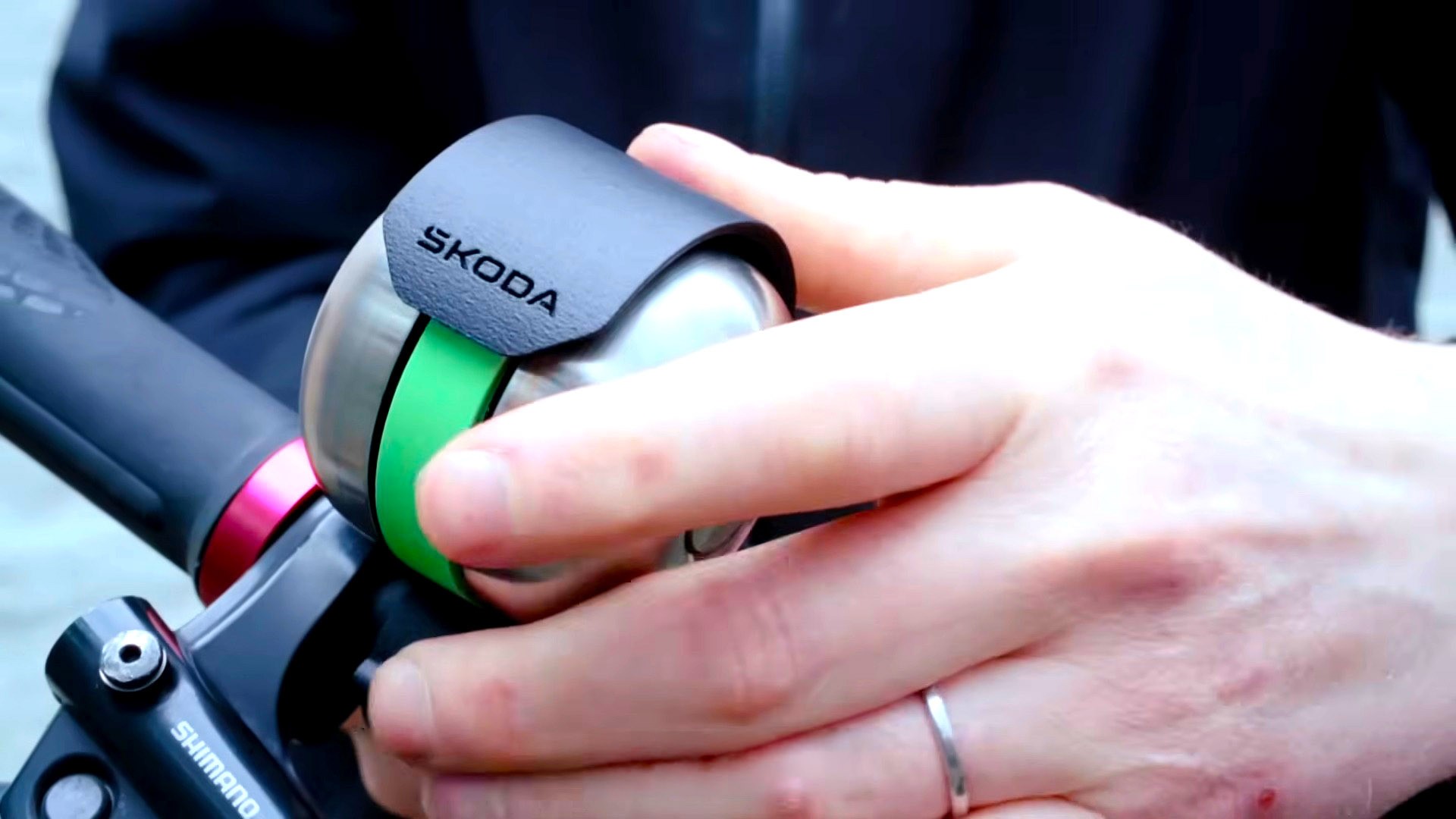
To address this growing danger, Czech automaker Skoda has developed a technological workaround called the DuoBell —a bicycle bell designed specifically to bypass the digital filters of modern headphones.
The Problem: A Growing Collision Gap
The rise of ANC headphones has created a significant blind spot for cyclists. When pedestrians are “plugged in,” they lose the auditory cues necessary to navigate shared spaces safely. This isn’t just a minor inconvenience; it is a measurable safety risk.
- Rising Accidents: Data from Transport for London indicates that collisions between cyclists and inattentive pedestrians surged by 24% in 2024.
- Widespread Use: In major hubs like London, approximately 50% of pedestrians are estimated to be wearing headphones, many of which utilize noise-cancelling technology.
Traditional bells, while loud, often fail because ANC algorithms are designed to identify and neutralize consistent, predictable sounds.
The Solution: Hacking the Frequency
Rather than simply increasing the volume—which can be startling or even dangerous in quiet areas—Skoda collaborated with audiologists from the University of Salford to find a scientific loophole in how headphones process sound.
The DuoBell utilizes a sophisticated mechanical approach to “sneak” past digital noise cancellation:
- Targeted Frequency: Researchers identified a “safety gap” in ANC systems between 750 and 780 Hz. The DuoBell is tuned specifically to emit sound within this narrow window.
- Irregular Patterns: Unlike the rhythmic ring of a standard bell, the DuoBell uses a second resonator and a hammer that strikes in an irregular pattern.
- Mechanical Intelligence: Because the sound is unpredictable and hits a specific frequency gap, the ANC algorithms struggle to recognize and suppress it in real-time.
Real-World Impact: More Time to React
The effectiveness of this design was proven during field tests. Pedestrians wearing ANC headphones gained up to 22 meters (72 feet) of extra reaction distance when the DuoBell was used compared to a standard bell.
In a city environment, those 22 meters represent the critical difference between a near-miss and a collision. The prototype was even tested by Deliveroo riders in London, who reported high satisfaction with the device’s ability to clear a path safely.
Beyond the Prototype
While the DuoBell features a premium design—utilizing Skoda’s “Modern Solid” aesthetic to match their current vehicle lineup—it is currently a prototype and not yet available for individual purchase.
However, Skoda’s goal is broader than just selling a new accessory. The company has stated it will share its research and data with other manufacturers. By making this acoustic intelligence public, Skoda aims to set a new industry standard for cyclist-pedestrian safety.
The DuoBell represents a shift from “making more noise” to “making smarter noise,” using physics to bridge the gap created by modern digital isolation.
Conclusion
By targeting specific frequency gaps that noise-cancelling technology fails to catch, the DuoBell provides cyclists with a vital safety buffer. While the product remains a prototype, its potential to become an industry-wide standard could significantly reduce urban pedestrian-cyclist collisions.