There are endless ways to approach almost anything. There are dozens of ways to boil an egg or skin a cat. Build an emergency bunker? There are also several paths here. Driving is no different. Motorists have wildly conflicting views on road etiquette, light usage, funeral procession protocol and the long-distance holy war between beef jerky and peanut M&Ms.
Then comes the back-in parking dilemma. Most drivers hate parallel back-in parking, but the debate over angled or perpendicular back-in parking spaces is still heated. Should you slam the front bumper into the concrete or use the extra 30 seconds to back into a back-in parking space? The latter is often referred to as “battle back-in parking” by enthusiasts who value tactical positioning.
Think Safety
Experts agree on back-in back-in parking safety. It is the best way to protect and efficiency. The logic is simple: you need as wide a field of vision as possible when you exiting a spot, not when you enter it.
“When you back in, you’re in an defined space where there are probably no people,” says Catherine Peterman, an architect who has designed back-in parking lots across the United States. “If you pull out, you’ll run into traffic and possibly pedestrians.”
Modern vehicles are equipped with rearview cameras and proximity sensors that beep when you’re about to hit something – whether it’s a car, a person, or the neighborhood kids’ prank watermelons. However, these tools have not dramatically reduced the number of backing accidents. Peterman and International Parking Institute spokeswoman Vanessa Solesbee blame the gap between technology and execution. Backing up is still more difficult, mechanically and psychologically, than driving out headfirst.
“These days there are a lot more obstacles to watch out for, like bikes, pedestrians, scooters and longboards,” Solesbee notes. “This makes back-in parking more attractive because you can see the traffic when you pull out.”
Design Debate
Accepting the theory is easy. It’s another thing to executing it in a crowded lot. Novice drivers often feel unsafe when reversing. Ordinary drivers may feel the heat of the honking traffic behind them. Reverse back-in parking takes a few seconds longer than back-in pulling in front-first. This delay creates friction.
For the hesitant, Peterman suggests a compromise: Look for places where the space in front of you is empty. You can Pulling through and reverse.
“As an architect, I strive to design for the safety of the safety of pedestrians,” says Peterman. “It’s safer for them to Pulling through and easier for the driver.”
Peterman and Solesbee agree on the benefits, but disagree on how to structure lots to encourage this behavior.
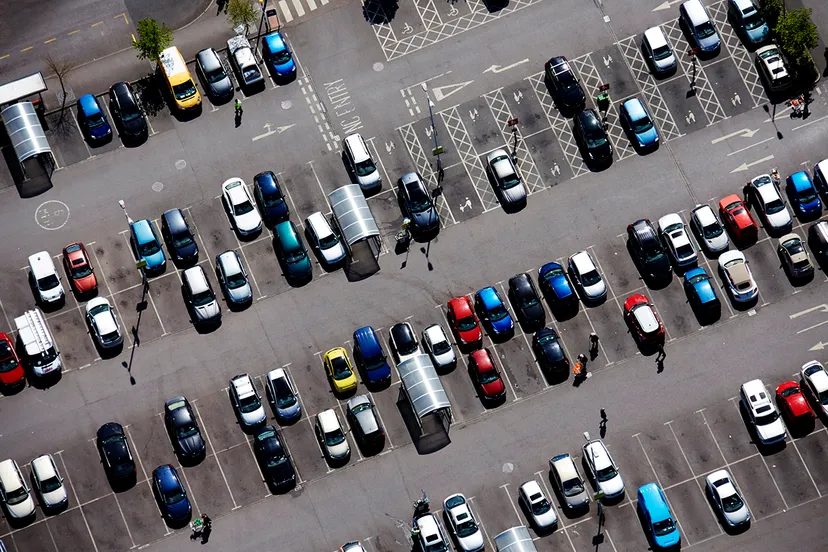

The big parking debate: 90-degree parking spaces vs. slanted parking spaces
Peterman follows 90 degree parking. She favors the rectangular arrangement often found in shopping malls and large garages. The logic is simple. These rectangular rooms are easier to drive through than the slanted ones. But there is also a human factor. She argues that reversing on banked corners is simply too difficult for many drivers.
Solesbee disagrees. She thinks that slanted parking is more suitable for the street and the parking lot. They put more cars in. They are more efficient. Yes, they are harder to turn back to. But saving space is important.
Signs can help. Solesbee points out that some lots do a good job of telling drivers to back in. However, changing habits takes time. Drivers are now distracted. Smartphones compete for attention. Smart dashboards are one factor. We are not necessarily worse drivers. We’re just less focused.
“Right now, going back to a big real estate hole is not intuitive for most people,” says Solesbee.
Not everyone believes the claims. The Washington Post recently polled readers about their preferences. Comments arrived. One reader called the trend annoying. Another complained that being blocked by people struggling to get their cars back into place.
There are also practical reasons for nose-in parking. A reader mentioned a particular scenario. You have to jump-start a car. If you drive inward, other cars will block access to your battery. You need a portable jumper. Or you have to back out.
However, most drivers agree on one thing. It’s impressive to watch a delivery truck driver pull off a perfect reverse. It’s a heroic act.
History of Parking Structures
The first multi-story parking garage was built in 1918 at Hotel La Salle in Chicago. The building served its purpose for decades. In 2005, it was demolished. According to the authorities, it was too small. It was out of date.