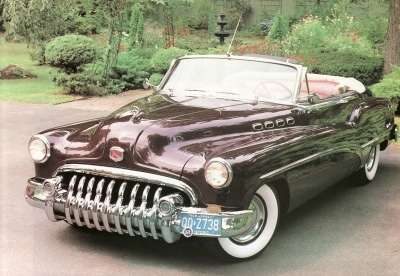
They sit alongside Coca-Cola vending machines and Route 66 signs as unmistakable symbols of the era. The bulbous, toothy grin of the mid-century Buick embodied postwar optimism more than any other machine. No other vehicle embodies America’s commitment to prosperity like these cars.
From 1950 to 1953, Buick offered models for all buyers in almost every price range. While Chevrolet, Ford and Plymouth competed for mainstream, Buick ruled them all. This rule lasted from the Truman era to the Eisenhower era. The Flint, Michigan division of General Motors has achieved this status through bold styling, innovative marketing and an unparalleled dealer network.
The result is a brand that feels less like an automaker and more like a cultural force.

Short lived 1949 Buick C-body
A rarity today, the 1949 Buick Roadmaster convertible witnessed a short-lived and controversial experiment in mid-century automotive design. Buick is synonymous with classic 1950s style, but that year marked a shift from radical innovation to more traditional luxury.
In 1948 and 1949, General Motors introduced a complex new chassis called the C-body. Initially designated B-body, but later in development this designation was changed to C-body. The frame is designed for the high-end Oldsmobile 98 and Cadillac. But Buick skipped the 1948 model year altogether. They did not adopt the C-body until 1949, but the logic behind this decision remains unclear to historians.
This hesitation may be due to Buick’s leadership. Harlow Curtice was the formidable head of the division, overseeing GM’s most profitable brands. He reportedly deemed the radical and untested body design unnecessary to further increase sales in 1948. The design, known internally as the P-38, was designed by Frank Hershey with the direct influence of GM design chief Harley Earl.
The name P-38 is a direct homage to the Lockheed P-38 Lightning fighter. Its visual signature is a high beltline that extends from the front fender to the rear deck and under the window frame. This resulted in a sleek, aerodynamic shape that was ahead of its time.
Although the P-38 was primarily developed for Cadillac, Oldsmobile designers created their own interpretation. A year after the C-body debuted, Chevrolet and Pontiac introduced their own smaller A-bodies. At the same time, the Oldsmobile 76 and 88 also adopted this advanced architecture.
The C-body proved highly controversial among dealers, top management, and especially the Buick division, which used the platform for one model year. The consensus was that the design was too radical for GM’s flagship model. Harlow Curtice, who transitioned to GM corporate management in late 1948 and became president in 1953, was clearly not impressed with the P-38’s styling. His successor at Buick was Ivan L. Wiles. Although Mr. Wiles lacked the overbearing authority of Mr. Curtis, he could still rely on the former executive’s guidance, marking a measured return to Buick’s design philosophy.
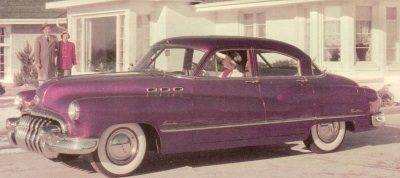

In the 1950s, Buick started with curves. Consider this super touring sedan. The atmosphere in the upper echelons of GM is changing. This is why the B and C bodies were all new for 1950. Buick has a big say in this design.
I liked circles back then. Packard’s Kylpyammmi shape is a pioneer. The Lincoln Mets were also close. Hudson and Nash also participated. Harley Earl understands this trend. He didn’t follow.
He dropped the fender. Added slope to highlight the rear fender. It’s a break from the crowds. Earl reviews Buicks from 1942-1948. I also remember the 1938 Buick Y Job show car. Company pressure can help. He wanted to break away from the style of 1948-1949.
He also built his dream car. The first to appear was the LeSabre. The XP-100 follows. It had the same fenders as the 1950 production car.
1950s Buick Styling: A Fusion of Technology and Design
It’s easy to think that show cars will become production cars. That’s not how Detroit works. The theme of the studio is the end of the 40s. Management wanted three different brands. They wanted to save money on body branding. The results are genius. This is the most complex compatibility program in GM’s history.
General Motors’ progressive car in 1950 was a feat of engineering. They are also new models.
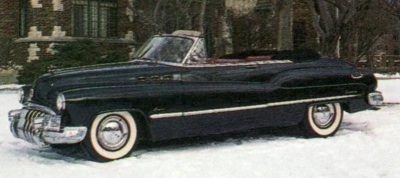
The 1950 Buick Super debuted with a new C-body. This was a move that signaled GM’s shift towards luxury cars for the masses. Buick’s application of this body is meticulous. Two different inline eight-cylinder engines define two different front end lengths. The Roadmaster is 4.75 inches longer than the Super and Special. Some observers believe that all 1950 Buicks, including the entry-level Special, were C-bodies. Reality is more concrete. All 1950 Buicks were B-bodies except for one long-wheelbase four-door sedan, the Super and Roadmaster Riviera. These models have unique rear side windows.
Cadillac C-body impression
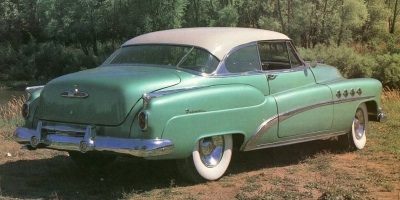
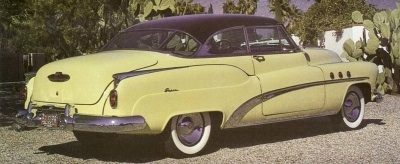
Both models received Cadillac’s C-body treatment. The roof has become elongated. The entire rear end was pushed back 4 inches. This improvement created more space for the rear passengers and significantly lengthens the car’s profile. To emphasize this length, a distinctive side-sweeping spear of the body emerges. First introduced in mid-1949, this chrome strip runs along the rear roofline.
“Those slim Buick sedans probably looked better than the Cadillacs, and Curtice had to be very happy.”
The visual effects are amazing. These Buick sedans look more stylish than Cadillac sedans. It’s an aesthetic triumph that might make GM chief Harlow Curtice very happy. This subtly reflects the dominance of design in the corporate family.
Illusions of scale and branding
The Roadmaster is shorter than GM’s flagship Cadillac. They make up for it with optical tricks. Chrome side treatments add visual weight. The wheels are placed closer to the edges of the car, which increases the perceived footprint. The name itself plays a big role. Introduced in 1936, the “Roadmaster” carried a specific load. Buick describes it as “proud compared to road conditions.” The branding reinforces the image that this car can easily control.
Slanted fenders
Buick produced four visually distinct models with two different front ends and two sedan lengths, essentially two bodies. This breed was a major factor in Buick’s sales success in the early 1950s. Of the three GM brands that used the new 1950 bodies, Buick’s rear-fender dip was the most extreme. This curve separates it from the more conservative Cadillac and the “Futuramic” Oldsmobile. At this point, all three brands used removable fenders. It’s worth noting that the Oldsmobile 98 used a B-body instead of a C-body.
Evolution in 1954
The basic concept of General Motors’ 1950 design continued into 1954, by which time the General Motors B and C bodies had been completely rebuilt. More budget could be used to further differentiate the brand. The fender is fully integrated into the body. Short decks lengthened. The hood and trunk are flatter. Each brand develops more unique features.
The mystery of the design team
Ned Nickles, Harley Earl, Bill Mitchell, Charlie Chayne and Harlow Curtice all played important roles in the 1950 Buick program. They are no longer with us. Speculation is secondhand as to how this car was put together. We can only put the puzzle together. The years 1945–1952 were an void period in Buick’s design history.
According to some sources, Ned Nickles became Buick’s head of design in 1945, but Henry Lauve opposed this. He claims to have been head of Buick’s design department at the time. Lauve said he was promoted to GM design chief in 1947 and later named Nickles as his successor. Lauve claims he played an important role in the design of the 1950 Buick. He is known as the author of the famous “bucktooth grille”. He couldn’t remember more specific details about the project today.
We believe the 1950 Buick was a collaborative effort. It brings together the best of Buick’s design, production and engineering skills. Henri Lauve was one of them, but not the only architect. The result is a car that balances corporate limitations with a unique and recognizable identity. This line is clearly visible even today. The debate continues about who did what.

1950 Buick Special Edition: How a Compact Car Saved the Brand
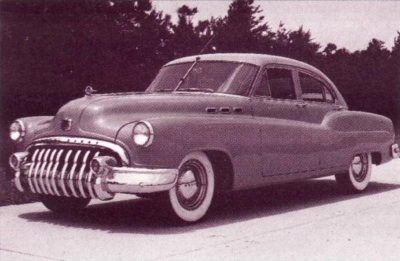
Henry Lauve’s infamous bucktooth grille isn’t just random chrome. It started as a LeSabre show car concept long before GM designers got behind the wheel. Ned Nickles brought the sweepspear and a unique Ventiport inspired by Buicks of the early 1940s. 1950 Dashboard? An intended return to the 1942-1948 appearance. In 1949, they experimented with a dashboard inspired by airplanes. However, the effect is not ideal.
Buick’s leadership of General Motors’ body program in 1950 didn’t come from the big boys. It came from the 1950 Special.
The wheelbase is 121.5 inches. It’s small. This car was launched on August 8, 1949. It became known to the public a few months before the Buick Super and Roadmaster. The first wave of specials featured only fastbacks. Buick calls this the “Jetback.” It can be purchased as a 2-door or 4-door. Both are available as standard equipment or as a DeLuxe sub-series.
The standard two-door Sedanette costs $1,856. The four-door version costs $19 more. That pricing puts Buick right in Plymouth’s sights for third place in total sales. The business coupe is also for sale. There are no back seats. Just a cargo area. The price was $1,803.
Later that year, when the Super and Roadmaster finally went on sale, a notchback four-door called the Touring Sedan was added to the special lineup. Standard and deluxe versions are still available.
The answer was immediate. By the end of 1949, Nearly 82,000 units moved. Buick’s total production increased by 38 percent in 1950, when 552,827 cars rolled off the assembly line. Model year production numbers were even more dramatic, increasing by 104.8%. The early introduction of specials helped increase numbers, but some cars got stuck with ’49 titles.
The total number of special production units was 338,331 units. This is almost half of the 670,256 Buicks produced in 1950.
Buick’s share of the US car market is 8.2%. Plymouth is still in the lead, but the gap is closing. In fact, Buick produced more cars that year than Plymouth. They just couldn’t quite unseat them in final sales rankings.
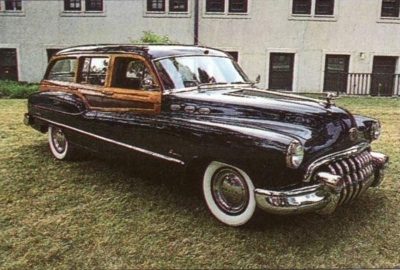

1950 Buick Super and Roadmaster series
The 1950 Buick Super didn’t just share space with the entry-level Special. It shared its bones. The Super rides on the same 121.5-inch wheelbase, uses the same body and is the best-selling model. You could choose from a four-door station wagon (Buick used the term “tourback” loosely at the time), a two-door jetback, a convertible, or a 1950 Estate Wagon with its partial wood body. For the first time, there’s also a Riviera hardtop coupe in the lineup, which adds some sportiness to the mix.
But the real highlight was the newest addition to the Super Series, the 1950 Buick Riviera four-door sedan. This wasn’t the hardtop. The wheelbase is 125.5-inch wheelbase, and the C-body architecture is shared with the flagship Roadmaster model. The pricing was aggressive. At just $73 more than the standard touring sedan, customers weren’t afraid. It ended up being twice as popular as the base sedan, showing that buyers were willing to pay a premium for longer, sleeker looks.
Roadmaster options and standard features
The Roadmaster sits at the top of the food chain with a wheelbase of 126.25 inches. The body configuration is consistent with the lower models, and the basic structure is the same except for the longer hood and wheelbase. The 1950 Roadmaster came in several styles, including four-door, four-window sedan, two-door jetback, convertible, Riviera hardtop, deluxe Riviera hardtop, and station wagon.
There is one notable exception. Model 72. It’s a Riviera C-body four-door sedan with a massive 130.25-inch wheelbase, clearly aimed at those who want maximum interior space without sacrificing top-of-the-line trim.
Visually, the 1950 Roadmasters were defined by the sweepspear. This is standard across the entire Roadmaster range for this model year. Interestingly, the Riviera sedan and wagon were not equipped with this distinctive trim piece until mid-year.
Under the floor, Buick’s automatic transmission technology was winning over the masses. The Dynaflow automatic transmission was first introduced in 1948 and was standard equipment on all Roadmasters. Elsewhere in the lineup, it was an option. The result? Eighty-five percent of Buicks built in 1950 were equipped with the Dynaflow, creating a lasting change in the way American drivers shift gears.
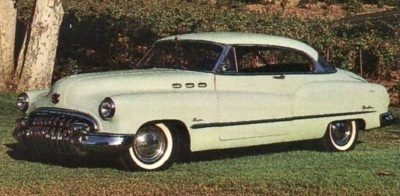

Buick’s dominance in 1950 was about more than just one car. The 1950 Buick Riviera Hardtop drove the numbers. But don’t let the name fool you into thinking it’s a niche luxury item. The versatility of the Riviera Hardtop is an important selling point.
The production of pillarless coupes rose from 4,314 in 1949 to almost 67,000 in 1950. Breakdown by trim:
* 56,030 Super Rivieras
* 8,432 Roadmaster DeLuxes
* 2,300 Roadmasters
There are a total of 66,762 hardtops. It is the second best-selling hardtop this year, about 10,000 units behind the new Chevrolet Bel Air. This single model represents a quarter of the entire hardtop market.
Design Shifts and Engineering Rigidity
The 1950 Buick looked sharp. The fashion curves are as modern as Jane Russell’s latest gowns. But under the hood? As reliable as Clark Gable’s smile. Buick ignored this trend. While Oldsmobile and Cadillac switched to short-stroke V-8 engines, Buick stuck with its long-stroke overhead valve “Fireball” inline-8 engines. They still have great appeal to Buick’s core Buick crowd.
“If you have a valve in your head, values lead.” It’s an advertising campaign. This is not just marketing fluff. The Roadmaster’s 320.2-cubic-inch engine is from 1936. The Special’s 248-cid engine is from 1937.
In 1950, the power of the Roadmaster increased by only 2 horsepower to 152 horsepower. The Special developed 115 to 120 horses. That’s an improvement of 5 with the manual transmission and 10 with the Dynaflow.
Super gets the most interesting updates. It received a new variant, the F-263. It’s actually 263.3 cid. This is a bored version of the Special’s straight-eight. It was specially designed to run on the new postwar higher-octane fuels. The output is 124 horsepower with a manual transmission and 128 horsepower with the Dynaflow. Starting in 1951, the 263 was shared with the Special (120/128 hp) and kept in the Special until 1953. That same year, the Roadmaster and Super got a new 322-cid OHV V-8.
Collector Notes: The Jetback Coupes
While everyone wants a hardtop, collectors should take note of the 1950 Buick Jetback Coupe. Today they are extremely rare. Low production:
* 10,697 Super Jetbacks
* 2,968 Roadmaster Jetbacks
Unlike pillarless hardtops, these notchbacks have a three-piece back windows, Super and Roadmaster windshields will be one-piece units. The Special still has a two-piece windshield.
Improves visibility. The seats are now wider. The turning radius is shortened considerably. But the external details tell us about the hierarchy. Only the Roadmasters can got the sweepspears. The Special DeLuxes and Supers have a simple straight body side trim. Base Specials wore none at all. VentiPorts has also changed. They are flattened into an oval shape. They were moved from the front fender to the sides of the hood. There are four Roadmasterss on each side. Three for Supers and Specials.
1951 Buick: Back to the Grille
Buick’s biggest change for 1951 was a return to the 1948 grille theme. Closely spaced vertical bars. But there’s a twist. The bumper has a “dent” in the middle to better show the shiny work of the teeth.
Dealers hated the 1950 grill. Insurance companies don’t like it either. Each of the nine songs is different. This makes it difficult to secure the warehouse. It’s expensive to replace. And there are many options. The teeth are on top of the bumper. This is going to be a collision.
Radio comedians laugh at it all the time. The higher ups at Buick didn’t find this humorous. So they changed it.
Round air vents return to the front fender, just like in 1949. First introduced in 1946, the “bombsight” hood ornament still guides motorists. In a more stylized form.
Is this a cancellation? Or is it just a pragmatic adaptation to reality? The numbers don’t lie. The hardtop market is changing. The V-8 is coming. But for now, straight eight is in the lead.
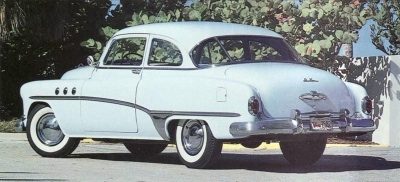

1951 Buick Special Edition: Strategy change
The year 1951 marked a clear turning point in Buick’s entry-level lineup. Gone from the Special Series is the sporty fastback body that dominated the previous year. Instead, the brand has launched two hatchback two-door sedans designed to increase practicality and keep costs low without compromising on core features.
At the top of this truncated lineup is the Buick DeLuxe. Priced at $2,127, the interior is a bit more sophisticated than the others. Closely followed by the $2,046 sport coupe, which is sparsely trimmed and costs less than a luxury sedan. This is a great deal that will appeal to buyers who prioritize the bottom line over interior luxury.
Buick is also trying to conquer the open-air market with a new convertible. This ragtop costs $2,561. Despite the new body style, the convertible did not achieve significant traction. Sales figures show that it consistently was consistently outsold by convertible models of the Super and Roadmaster. Enthusiasts who are willing to pay for a top-down experience only like the prestige and features of high-end models.
Under the hood, the design has remained relatively conservative, but the power has increased slightly. With the standard transmission, the power increases to 120 horsepower. Buyers who opt for the Dynaflow automatic transmission will see a slight increase in horsepower to 128 horsepower. This difference is negligible in real-world driving, but important in spec sheets.
The interior updates are subtle, but significant in terms of the base model. Buick replaced the complex instrument cluster with a simpler panel with two large, easy-to-read dials directly in the driver’s field of vision. This is not just an aesthetic choice. This reflects a broader cost-saving strategy. As a result, the base Special was the only Buick model to feature a two-piece windshield. It’s a quirk that highlights the difference between the entry-level Special and the more integrated design of its siblings.
Visual cues further differentiate the hierarchy. Luxury models have fully sweeping side trim. However, the base Special only has bright stainless steel accents on the rear fender. This is a clear visual signal to the general public and this is the entry point. The reason why the full chrome on the side of the body is omitted is to distinguish it from the more luxurious DeLuxe badge.
The 1951 Special is defined by what it lacked as much as what it had. There are no fastbacks. There is no such thing as a full sweepspears. It has only two large dials and a two-piece windshield.
This simplification strategy ensures that the Special are still available. It no longer tries to be a sports car. This is a tool. A way to get into a Buick without spending a lot of money. Whether this means sacrificing style for price or valuing durability over speed is still debated among collectors. The numbers suggest the latter. The base model moved. It just did so with less flash.
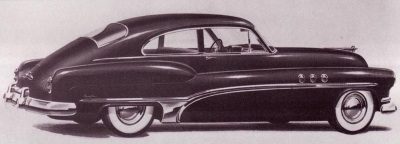

The 1951 model year marked the end of Buick’s jetback styling era. The lineup remained largely intact as last year, but the Super series gained a full sweepspear in all models. This was also the last year for the jetback body style. Production was so tight that only 1,500 two-door jetbacks were built, exclusively in the Super trim. Engine specifications are exactly the same for the Super and Roadmaster series. In the Roadmaster segment, production of the Jetback Coupe has been completely discontinued.
The Riviera Hardtop is available in two configurations. One with hydraulic window controls and the other without. There was only one 4-door sedan, the long wheelbase 72R Riviera. Buick’s total production fell to 404,657 cars in 1951. This decline was mainly due to production cuts caused by the Korean War and a shift in focus to the defense industry. Despite the decline in production and sales, Buick remains in fourth place behind Plymouth.
Differences between the 1952 Buick and previous years
The changes made to the 1952 Buick were so minor that it takes a trained eye to spot the differences. The special standard model, which was discontinued at the beginning of production, received the sweepspear, but the two-piece windshield remained. The easiest way to identify the model year from the profile is the sweepspear itself, which varies slightly from year to year.
In 1952, the chrome strip did not cover the entire length of the car. Instead, it flowed back to the rear wheel opening and curves gracefully forward along the rocker panel to flow towards the front wheel opening. Special standard models do not have this rocker panel strip. The Super and Roadmaster also feature modest chrome rear-fender fins. All 1952 Buicks (except station wagons) had a more square trunk lid than the 1951 model.
The Special lineup remained unchanged as last year. However, the Super series has been streamlined and there is only one four-door and one two-door model on the list, both of which are classified as Riviera. The special engine and super engine were carried over as is. The power of the eight-cylinder engine of the Roadmaster Fireball was increased to 170 horsepower. This increase was made by raising the compression ratio from 7.2:1 to 7.5:1 and introducing a new Buick-designed four-barrel “Air Power” carburetor. Interestingly, Olds and Cadillac also used the same carburetor design in 1952, much to Buick’s displeasure.
Power steering was first available on the Super and Roadmaster models, but at a hefty price of $199. This is a much-needed option that reflects the growing demand for convenience features in larger vehicles.

Plan your million dollar trip
The 1952 Buick marketing machine didn’t pull any punches. In the advertisement, I emphasized the idea that it was spent to complete what is called million dollars worth of engineering, research, and specialized components. Its job? To control sideways side shift in curves, the so-called “side shift”. Shock absorbers are also not standard. There are two sets of cylinders and pistons that control the upward and downward thrust.
Buick also addressed the weight issue. Sure, the road master has a “honest weight”, but they feel that it is offset by the increase in horse power. They even claim that the new Airpower carburetor requires less fuel at 40 mph than the old setups needed at 30. This is a smart approach. Increase efficiency without sacrificing presence.
Visually, the 1952 model showed subtle but noticeable changes. 宣伝电影に写ですますますますますますますますますのビュク年ですますのビュク年ですますますますますしますますますますしますしますします.
Production limitations and market position
Despite the technical pride, production fell to 303,745 cars in 1952. The culprit wasn’t lack of demand. It was the Korean War. The production restrictions imposed by the government have hit the car industry hard. But the problem is that every other car maker faces the same cuts. They all lost market share at roughly the same rate. That’s why Buick ranks firmly in the fourth place in the industry. It’s not the best performer, but it’s solid. Buick remained in fourth place for two more years, eventually rising to third place.
The Roadmaster’s Cross-Country Test
Motor Trend tested the 1952 Buick Roadmaster sedan and it was an unforgettable driving experience. This is significant because this car was the last year with the big 320.2 cid inline engine. Editor Harry Cushing wasn’t just driving around the neighborhood. didn’t just drive it around the block. He pushed the huge machine from Flint, Michigan to Ensenada, Baja, Mexico.
The results are mixed. Low and Drive’s 0-60 time is only 17.1 seconds. Top speed was 100 mph, which was impressive for its time. Fuel consumption is 12.6 mpg at a constant speed of 60 mph. But the level of comfort is undeniable. Cushing found the car to be very stable and comfortable, even at high speeds on mostly straight roads, and successfully drove it 756 miles between Eiko, Nevada and Los Angeles in one day.
“When traveling across the country, you’ll find yourself transported to your destination in unprecedented comfort and luxury.”
Flaws of the dynasty
However, not everything is smooth sailing. Cushing complained. At speeds of 70-75 mph, the car tends to lean and lose control in corners. He attributes this mediocre cornering ability to the soft-spring four-coil suspension. It’s built for comfort, not handling.
Next comes the Dynaflow transmission. Yes, it’s smooth, but it’s very slow to respond. In the mountains, Buick officials in Flint assured them that using Drive would be sufficient. they were wrong. Cushing had to use both Drive and Low ranges to navigate the steep slopes. Even on flat straights, acceleration in drive mode feels slow, especially if you have to overtake. This is the case with the new 4-barrel carburetor.
The Secret Sauce
So why did Buick become one of America’s most popular cars? Cushing asked the same question. He said that while this may be hard for avid sports car enthusiasts to accept, the answer is obvious to anyone willing to get behind the wheel of a 1952 Roadmaster and seriously drive it. Tämä on mukavaa. This is 贅沢ですね。 It feels like a mattress, which makes your trip relaxing.
But success goes beyond soft seats. Buick management had the foresight to put these cars in the economic range of nearly every new car buyer. They didn’t just sell the car. They understand the importance of their dealer network and never forget it.
The advertising played a huge role too。 It’s not complicated or too technical. Sometimes it’s lighthearted and lyrical, like an old Jordan Playboy ad from the 20s. The copy, created by the Kudner Advertising Company, which had held the account since Clarence “Rex” McCullock and others helped launch the new Buick “brand” in 1936, was faithful to the machine’s intentions. It was accessible. It has confidence.
Buick packs many desirable features into its vehicle packages to satisfy its buying base. A design that appealed to the masses。 It accelerates steadily, even if it’s not fast. Its ride quality made other cars feel jarring by comparison. It was a recipe for dominance。 And it kept them in the top four every year, even though it was forced to slow down production.

The 1952 Buick Super Riviera ad was simple. Direct. Catchy. The company is based on a slogan that has long haunted GM’s rivals: “If they make a better car, Buick makes it.”*
They featured metal in their ads with the slogan “Sure is true for ’52”. It worked. At least it did until the overhead valve V-8 was introduced in 1953. Then came the trendy styling of 1954. The nightmare of quality control then plagued the department for a decade.
By contrast, the 1950-1952 models stand as a peak. Arguably, these are still the best Buicks the brand has ever produced.
1950: Peak
The 1950 lineup was ideal. heavy. It was expensive at the time. But they sell a lot.
Series 40 Special
Baseline. The four-door touring sedan weighs 3,710 pounds and costs $1,941. Only 1,141 of these made it off the line. The real volume driver was the 4D DeLuxe Touring Sedan. 141,396 units were produced. Price: $1,983.
Buick also offered the Jetback fastback sedan. Weight: 3,715 lbs. Price: $1,909. Production volume: 58,700 units.
Coupe buyers have several options. The Jetback business coupe was stripped back. Lighter (3,615 lbs). Cheaper ($1,803). Only 2,500 of them were produced. 76,902 Deluxe Jetback Coupes were sold. Fastback coupe models added 42,935 units.
Total Series 40 Special production for 1950: 338,331.
50 series super
Step up. You got the 4D Touring Sedan. 3,745 lbs. $2,139. 55,672 units sold.
The Riviera nameplate appeared here. The 4D Riviera sedan was a powerhouse. 3,870 lbs. $2,212. The production volume is 114,745 units. It dominated the Super line.
Hardtops were gaining traction. The Riviera Hardtop Coupe weighed 3,790 pounds, cost $2,139, and sold 56,030 units. convertible? 12,259 Riviera Cabriolet Coupe, priced at $2,476.
Wagon buyers weren’t ignored. The 4D Estate Wagon weighs 4,115 pounds. Cost $2,844. Production was modest: 2,480.
Total Series 50 Super: 253,352.
70 Series Roadmaster
The flagship. The 4D Touring Sedan weighs 4,135 lbs. Price: $2,633. Only 6,738 units were sold. Why? The Riviera Deluxe 4D Sedan is a toy for the masses. £4,220 $2,738. The production volume is 54,212 units.
The hardtop market is fragmented. 2,300 Riviera Coupes (not the luxury version) were sold. 8,432 copies of the deluxe version were sold. convertible? 2,964 units. Jetback fastback? 2,968.
The manor carriage is back. Heavier. £4,470 more expensive. 3,407 dollars. Only 420 of them were produced.
70 Roadmaster Series Total: 78,573.
1950 Buick Total Production: 670,256.
1951: Change
Production decreases. Significantly.
Series 40 Special
The 4D Sedan weighs 3,605 lbs. The price is $2,139. Only 999 units were sold. The Deluxe 4D Sedan was superior with 87,848 units sold and priced at $2,185.
The Riviera Coupe weighs slightly less (2,645 pounds? This data point appears to be an aberration in the source and may be a typo at 3,645, but we’ll stick with the number given here). Price: $2,225. 16,491 units were sold.
Introducing the 2D sports coupe. £3,600 $2,046. 2700 units. The Deluxe 2D Sedan sold 54,311 units and was priced at $2,127.
Series 40 Total: 165,554.
50 series super
The Tourback Sedan is new. £3,755 $2,356. 10,000 copies were sold.
The Riviera 4D sedan is still king. £3,845 $2,437. The production volume was 92,886 units. A hardtop coupe? 54,512 units, price $2,356. convertible? 8,116 pieces, price $2,728.
The jetback coupe leaves a lasting impression. 1500 units. The manor carriage is back. 4,100 pounds $3,133. 2,212 copies were sold.
Total Series 50 Super: 172,235.
70 Series Roadmaster
Load main line contraction. 48,758 Riviera 4D sedans were sold. £4,240 $3,044.
Hydraulic steering is a separate option. The Riviera Hardtop Coupe with hydraulic controls weighs 4,235 pounds and costs $3,143. 12,901 units were produced. A normal hard roof? Only 809.
convertible? 2,911 pieces, price $3,283. Manor carriage? 679 units are priced at $3,780.
70 Roadmaster Series Total: 66,868.
Total Buick production in 1951: 404,657.
1952: Last year of the Classic series
Production continued to decline. The market is changing.
Series 40 Special
4D cars are rare. 137 units. Weight: 3,650 lbs. Price: $2,209.
Luxury 4D car 63.3