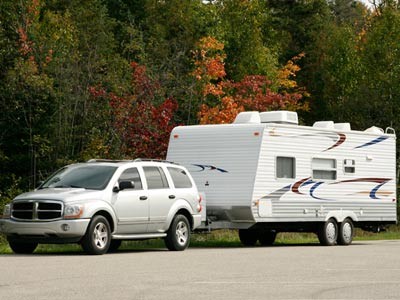
Towing isn’t just slapping a hitch on a truck and pointing it toward the lake. It’s a complex mechanical dance involving axles, hitches, bearings, mirrors, and transmissions. Every component needs to mesh perfectly. If one part fails, the consequences aren’t just a minor annoyance. A weak link can destroy a boat, wreck a camper, or cause a serious accident.
But the weakest point in that chain isn’t usually mechanical. It’s you.
Driver error is the leading cause of trailer-related accidents. Maybe you loaded more motocross bikes than your vehicle’s payload limit allows. Maybe you ignored weight distribution across the axles. Or maybe you’re just underestimating how hard it is to drive a long, heavy rig. Managing a trailer is like carrying a large box through a crowded hallway. You have to think about every turn, every brake, every shift in weight.
Before you hit the road, read your owner’s manuals. Know the weight limits. Know the maintenance schedules. Practice in an empty parking lot with a loaded trailer. Get a feel for the sway. Get comfortable with the braking distance.
The Achilles Heel: Trailer Tire Blowouts
Even with perfect driving skills, mechanical failure can still strike. And in the world of towing, tires are the most vulnerable component.
The BoatU.S. Trailering Club receives over 100 assistance requests every month specifically for flat trailer tires. That’s not a rounding error. That’s a systemic issue.
Why do trailer tires fail? Usually, it’s pressure.
Under-inflation is the biggest culprit. When you don’t inflate tires enough, the sidewalls flex excessively under the load. The heat builds up. The rubber weakens. Eventually, the tire blows out. A blowout at speed can cause the trailer to sway violently, making steering nearly impossible.
Over-inflation is just as dangerous. Too much pressure reduces the contact patch between the rubber and the road. You lose traction. Your braking ability diminishes. You’re sliding on a bubble of air rather than gripping the asphalt.
And don’t assume your tires are safe just because they look fine. Tires lose air pressure naturally over time, even when the trailer sits in the garage. By the time you hook up, they might already be below the recommended PSI.
How to Check and Maintain Trailer Tire Pressure
Proper maintenance starts with understanding load ratings. Every tire has a maximum load limit. Exceeding it invites failure. Distribute your cargo evenly across the axles. Don’t put all the weight on one side.
When checking pressure, use a reliable gauge. Check the tires when they are cold. If the tire has been driven on more than a mile, the internal heat will give you a false, higher reading. Under-inflate based on a hot reading, and you’ll arrive at your destination with a blowout.
Ensure all tires on the same axle are inflated to the same pressure. Mismatched pressures cause uneven wear and handling issues.
If your tires are properly inflated and you want to dig deeper into vehicle prep, there is much more to cover.
More on Towing Safety
- Top 10 Towing Risks to Keep in Mind
- 10 Essential Towing Tips
- How Motorcycle Towing Safety Works
- How to Back Up a Towed Vehicle
- Boat Towing Safety Guide
- How to Brake While Towing
- How to Shift Gears While Towing
- How to Turn Safely with a Trailer
- How to Pass Other Vehicles While Towing
- General Trailer Towing Safety
External Resources:
- National Highway Traffic Safety Administration: Towing a Trailer
- RV Advice: Maximizing Recreational Vehicle Tire Life
Sources:
- “General Trailer Safety.” Sunrise Trailer Sales. Nov. 5, 2008.
- Polk, Mark K. “RV Tire Failure 101.” Explorer RV Insurance. Nov. 5, 2008.
- “Towing a Trailer.” National Highway Traffic Safety Administration. April 2002.
- “Trailers: A Word About Safety.” Trailer Safety Industry Coalition. August 2005.
- “When Something Goes Wrong.” BoatU.S. Trailering Magazine. Nov. 5, 2008.