



The rules for emissions and fuel economy have forced the automotive industry to completely rethink how it delivers gasoline to an engine. The shift wasn’t recent. It happened gradually, driven by engineering necessity rather than choice. The 1990 Subaru Justy holds a strange title in US automotive history. It was the last mass-market car sold here with a carburetor. The very next model year? The Justy got fuel injectors.
This makes the timeline confusing for some enthusiasts. Fuel injection isn’t new. The technology dates back to the 1950s. European manufacturers had been using electronic fuel injection widely since around 1980. Today, if you buy a new car in the United States, it has fuel injection. Period.
We are going to break down exactly how that fuel enters the cylinder. We will also decode terms like “multi-port fuel injection” and “throttle body fuel injection” so you know what is actually happening under the hood.
The Complicated Rise and Fall of the Carburetor
For nearly the entire life of the internal combustion engine, the carburetor did the heavy lifting. It mixed air and fuel for the engine. You still see them on lawnmowers and chainsaws today. They work. They are simple. But cars got complex. The carburetor had to manage more operating requirements than ever before.
To handle the load, these mechanical devices became intricate. A typical setup required five distinct circuits:
- Main circuit – Supplies the precise amount of fuel needed for efficient cruising speeds.
- Idle circuit – Keeps the engine running smoothly when you are stopped at a light.
- Accelerator pump – Delivers a quick burst of fuel when you first press the pedal. This eliminates hesitation.
- Power enrichment circuit – Adds extra fuel when climbing a hill or towing a heavy load.
- Choke – Enriches the mixture when the engine is cold to ensure a reliable start.
It wasn’t enough to just mix the fuel. The environment changed. Emissions regulations tightened. The catalytic converter became mandatory. This device requires a very specific air-to-fuel ratio to work effectively. Too much fuel, and it fails. Too little, and it fails.
Engineers had to monitor oxygen levels in the exhaust in real-time. They used oxygen sensors to feed data to the engine control unit (ECU). The ECU then adjusted the mixture instantly. This is called closed loop control. Carburetors simply could not achieve this level of precision. They are mechanical. They cannot think.
There was a brief, ugly period where manufacturers tried to electrify the carburetor. Electrically controlled carbs were even more complex than their pure mechanical counterparts. They failed. Fuel injectors took over.
From Single Point to Multi-Port Precision
The transition didn’t happen overnight. The first step was throttle body fuel injection. Also known as single-point or central fuel injection. This system put electrically controlled fuel injector valves directly into the throttle body.
It was almost a bolt-in replacement. Automakers didn’t need to redesign their engines. It was a quick fix. But it wasn’t perfect.
As engine designs evolved, manufacturers moved to multi-port fuel injection. This is also called port fuel injection, multi-point injection, or sequential fuel injection. The difference is significant. Each cylinder gets its own dedicated injector. These nozzles spray fuel right at the intake valve.
The result is better accuracy. The metering is tighter. The engine responds faster. It is a more efficient system. The days of the single nozzle for all cylinders are gone.
Understanding the Input
When you press the gas pedal in your car, you are not directly controlling the fuel. You are controlling the throttle valve. This valve regulates how much air enters the engine. The fuel system reacts to that air.
So the gas pedal is really the air pedal.
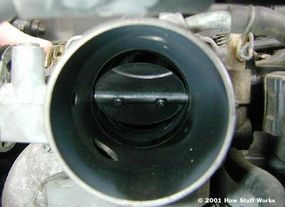

Step on the gas. The throttle valve swings open. More air rushes in. Your Engine Control Unit, or ECU, catches that movement instantly. It doesn’t just watch. It reacts. The ECU ramps up the fuel delivery before that extra air even hits the combustion chamber.
Why does timing matter so much?
Because hesitation is the enemy. If fuel delivery lags behind the air intake, you get a rich pocket of air with no fuel. The engine stutters. You feel it as a jerk in the seat of your pants. The ECU prevents this by synchronizing fuel injection with air flow. It’s a tight dance between mass airflow and atomized fuel.
The Injector Anatomy
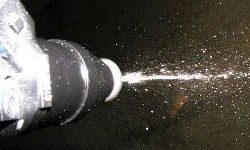
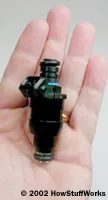
A fuel injector is essentially an electronically controlled valve. Don’t overcomplicate it. It’s a gatekeeper for pressurized fuel from the pump. It opens and closes many times per second. Precision is key.
When the ECU sends an electrical signal, an electromagnet moves a plunger. The valve opens. Pressurized fuel squirts through a tiny nozzle. That nozzle is engineered for atomization. It turns liquid into a fine mist. Why? Because mist burns. Liquid does not. Complete combustion requires surface area. The finer the mist, the better the burn.
The ECU controls the duration of this opening. We call this pulse width. Longer pulse width equals more fuel. Shorter equals less. Simple physics.
These injectors are mounted in the intake manifold. They spray directly at the intake valves. A fuel rail distributes the pressurized fuel to each injector. It’s a closed loop system. Pressure is constant. Control is dynamic.
The Sensor Network
The ECU cannot make decisions in a vacuum. It needs data. A lot of it. The engine operates under constantly changing conditions. Temperature, load, speed, airflow. The ECU monitors all of these via a network of sensors.
Here is what the ECU listens to:
- Mass airflow sensor: This tells the ECU exactly how much air is entering the engine. It is the primary input for calculating base fuel.
- Oxygen sensor(s): Located in the exhaust. It measures oxygen content in the spent gases. This feedback loop tells the ECU if the mixture is too rich (too much fuel) or too lean (too much air). The ECU adjusts based on this real-time data.
- Throttle position sensor: This monitors the angle of the throttle plate. It signals the ECU about driver intent. Sudden throttle input? The ECU sees it immediately and adjusts fuel delivery to prevent lag.
- Coolant temperature sensor: The engine needs a different air-to-fuel ratio when cold versus when hot. This sensor tells the ECU the engine’s thermal state. Cold engines need a richer mixture to run smoothly.
- Voltage sensor: The electrical system matters. If system voltage drops, it often means a high electrical load (like the A/C compressor or alternator straining). The ECU may raise the idle speed to compensate for the load.
- Manifold absolute pressure (MAP) sensor: This measures the vacuum in the intake manifold. Less pressure means more air is being drawn in. The ECU uses this to estimate engine load and power output. More air in, more fuel out.
- Engine speed sensor: RPM is a critical factor in calculating pulse width. The faster the engine spins, the more frequently the injectors must fire to maintain the ratio.
Sequential vs. Batch Fire
Multi-port fuel injection systems generally fall into two categories. They either fire all injectors at once, or they fire them sequentially.
Batch firing is simpler. All injectors open in a single event or grouped events. It works. But it has a delay.
Sequential multi-port fuel injection is different. Each injector opens just before its specific cylinder’s intake valve opens. It is timed to the individual cylinder.
Which is better? Sequential wins for responsiveness.
Consider a sudden throttle change. In a batch system, the ECU might have to wait for the next full engine revolution before the next injection event occurs. That is a delay. In a sequential system, the ECU only waits until the next intake valve opens for that specific cylinder. That can be milliseconds sooner.
The result is faster adaptation. The engine responds to driver input with less lag. The air-fuel ratio stays tighter under dynamic conditions. It is not just about power. It is about smoothness. It is about precision.
The technology keeps evolving. But the core principle remains the same. Measure air. Add fuel. Burn it cleanly. Do it fast.
The software inside your engine control unit (ECU) is doing a lot of heavy lifting. It isn’t just a simple switch. The algorithms have to satisfy strict emissions rules for 100,000 miles, meet EPA fuel economy targets, and stop you from blowing up your engine. There are dozens of other constraints to manage too.
The ECU uses a formula mixed with huge lookup tables to figure out the pulse width for fuel injectors. That’s the amount of time the injector stays open. The equation multiplies a series of factors. Most of those factors come from tables. We can simplify this to see how it works. A real system might use a hundred factors. Our example uses three.
Pulse width = (Base pulse width) x (Factor A) x (Factor B)
First, the ECU looks up the base pulse width. This depends on engine speed (RPM) and load. Load comes from manifold absolute pressure. Let’s say you are at 2,000 RPM with a load of 4. You find that intersection in the table. The base pulse width is 8 milliseconds.
| RPM \ Load | 1 | 2 | 3 | 4 | 5 |
|---|---|---|---|---|---|
| 1,000 | 1 | 2 | 3 | 4 | 5 |
| 2,000 | 2 | 4 | 6 | 8 | 10 |
| 3,000 | 3 | 6 | 9 | 12 | 15 |
| 4,000 | 4 | 8 | 12 | 16 | 20 |
Now look at Factors A and B. These come from sensors. Factor A is coolant temperature. Factor B is oxygen level. If the coolant is at 100 degrees and the oxygen level is 3, the tables give us specific multipliers.
| Parameter A (Temp) | Factor A |
|---|---|
| 0 | 1.2 |
| 25 | 1.1 |
| 50 | 1.0 |
| 75 | 0.9 |
| 100 | 0.8 |
| 125 | 0.75 |
| Parameter B (O2) | Factor B |
|---|---|
| 0 | 1.0 |
| 1 | 1.0 |
| 2 | 1.0 |
| 3 | 1.0 |
| 4 | 0.75 |
So the math is simple. 8 x 0.8 x 1.0 equals 6.4 milliseconds. The system adjusts based on these inputs. Factor B is about oxygen in the exhaust. If there is too much oxygen, the ECU cuts fuel. It’s a feedback loop designed to keep things efficient.
Real systems have over 100 parameters. Some tables change over time to account for wear on parts like the catalytic converter. The ECU might run these calculations a hundred times a second.
What Performance Chips Actually Do
This brings us to performance chips. If you understand the ECU logic, you get why these aftermarket chips exist. They boost horsepower.
There is a chip in the stock ECU that holds the lookup tables. Performance chip makers replace that chip. The new tables contain values that push more fuel during certain conditions. Maybe they add more fuel at full throttle across the entire RPM range. They might also change spark timing. Those settings have their own tables.
The key difference is priorities. Car manufacturers worry about reliability, mileage, and emissions. Chip makers don’t care as much about those things. They use aggressive settings in the fuel maps. They want power. Period.
The Future of Direct Injection
Direct injection changed the game. Fuel goes straight into the combustion chamber instead of the intake manifold. This precise delivery improves atomization. You get better combustion efficiency. More power. Lower emissions.
Electric vehicles are taking market share. Demand for internal combustion engines will drop. So will the demand for fuel injectors. But it won’t happen overnight. Internal combustion engines will stick around for years. Hybrids need them. Niche applications need them.
The technology is still evolving. We are seeing higher pressure injection systems. Control algorithms are getting smarter. Integration with electric propulsion is coming. These steps promise even more efficiency and less pollution. The landscape is shifting.
For more on fuel injection systems, check the links on the next page.
Fuel Injection Systems FAQ
Can you convert a carburetor to fuel injection?
Yes. Aftermarket conversion kits can replace a carburetor with injectors.
How much does a fuel injection conversion system cost?
Some systems are under $1,000. Most cost significantly more.
Does fuel injection increase horsepower?
It depends on the engine. You can expect an addition of 10 to 20 horsepower.
Do old cars have fuel injectors?
Most US cars before 1990 used carburetors. Fuel injection existed since the 1950s. European cars used it widely starting in 1980.
What are the different types of fuel injection systems?
Modern systems fall into four categories: single point, multi-port, sequential, and direct injection.
Related HowStuffWorks Articles
-
How Automobile Ignition Systems Work
-
How Car Engines Work
-
How Catalytic Converters Work
-
How Car Cooling Systems Work
-
What speed should I drive to get maximum fuel efficiency?
-
How Gasoline Works
-
How the Hydrogen Economy Works
-
How the Aptera Hybrid Works
More Great Links
-
The fuel delivery system
-
Troubleshooting Electronic Fuel Injection Problems
-
Service Tips for Diesel Fuel Injection
-
GM Goodwrench Videos


