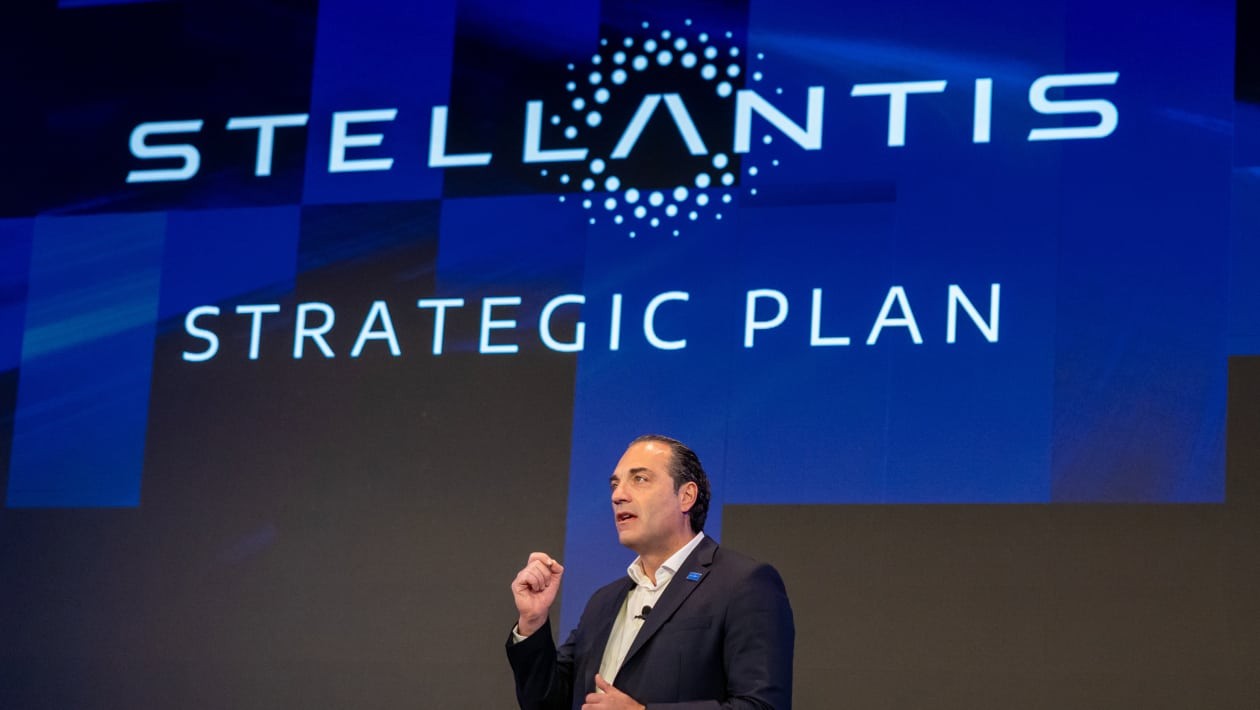
Stellantis has a new plan. It costs €60 billion. It lasts five years.
They call it FaSTLAne. The goal isn’t to make everyone feel equal. It is to make money. Real, hard cash.
They picked two leaders for Europe. Fiat and Peugeot.
Forget the others for a moment. These two get the spotlight. Why? Simple economics. Peugeot commands higher prices in the “upper mainstream” bracket. Fiat rules South America and sells like hotcakes there. Jeep and Ram keep the North American cash flowing. Those four are the global engines.
Tech goes to the winners
Who gets the toys? The winners do.
Stellantis is dumping €24 billion into new tech. We’re talking about STLA One, the global architecture that underpins the next generation of cars. Think lithium iron phosphate batteries built into the chassis itself. Cell-to-body. Efficient. Cheap to produce at scale.
But who rides the wave first? Peugeot.
Emanuele Cappellano, the European boss, made it clear. Peugeot launches STLA One in 2007. Wait, 2027. Then Opel, Jeep, and Alfa Romeo follow. They will slap their specific branding on the platform.
At true scale, this hits one million cars a year in Europe alone.
The first car is the electric E-208. Then the E-2008. Opel follows suit. There is even a mid-size SUV co-developed with China’s Leapmotor. By 2030, two million cars will share this spine. It stretches from superminis to large SUVs. It even fits hybrids. Stellantis claims “drivetrain freedom.” They cut combustion engines by 40%. Not zero. Just less.
What about the rest?
The rest feel a little crowded.
New CEO Antonio Filosa admits it. The brands blur together. Is the Citroën C3 different from the Fiat Grande Panda? Barely. Is the Vauxhall Corsa just a rebadged Lancia Ypsilon? Pretty much.
Fixing this costs money. But Stellantis spent 60% of its budget—€36 billion—trying to separate them.
John Elkann, the chairman, says they are moving from global to regional. Less one-size-fits-all. More local flavor.
DS Automobiles dies. Well, not dies. It gets swallowed. Folded back into Citroën after 12 years of pretending to be luxury. Lancia becomes a satellite of Fiat. Bureaucracy shrinks. Profits might grow.
“Stellantis is shifting from global… to regional,” said Elkann. “European brands will make their own decisions.”
Promises, promises. But the structure demands hierarchy.
The 2CV returns as a budget EV
Citroën is bringing back the 2CV.
It won’t be the quirky air-cooled relic from 1948. It will be a cheap electric city car. Xavier Chardon wants to capture that affordable comfort. But with modern tech.
This fits the E-car program. Fiat and Leapmotor help too.
The target is shocking. A full electric car below €15,00.00. By 2028.
“Cost parity,” says Cappellano. “Making electrification profitable.”
They will build them in Pomigliano, Italy. The cheap EVs earn super-credits for emissions targets. A regulatory cheat code. But only if the cars are actually cheap.
V8s in America, EVs in Europe
The split is stark.
Europe chases electric efficiency. North America cranks out V8 trucks.
Ram is doubling production. One million units by 2023? No, 2030. Small pickups, mid-size trucks, muscle cars with HEMI engines. The Rumble Bee hits 777 horsepower. Climate change seems like a distant suggestion here.
Ram does offer a range-extender hybrid. Jeep gets one too. But mostly? Gas burns bright in America.
Filosa loves the US market. It lacks Chinese competition. Regulations are friendlier. Revenues should grow 25% there. Europe gets 15%. The math is easy.
Chrysler expands. It had one car. The Pacifica MPV. Now it adds crossovers.
The Airflow sits on the STLA One platform. The Arrow and Arrow Cross are renamed Fiat Grizzlys. They act like a American Dacia. Budget warriors priced at $25k-$35k.
Friends with benefits?
Filosa loves partners.
Chinese firms move in. Leapmotor takes two Spanish plants. Dongfeng builds its Voyahs in France. Stellantis sells them. Local manufacturing shrinks off the books. Cost cutting? Sure.
Then there is the mystery.
Jaguar Land Rover (JLR).
Stellantis signed a memo to explore synergy. Why? Make sense. Jeep and Land Rover share DNA. Build them together in the US. Avoid tariffs. Use idle factories.
Industrial logic suggests this is a lock. But it is just talk so far.
The bottom line
The target: €190 billion in revenue. Seven percent margin.
Easy, right?
John Elkann laughs in the face of “easy.” He’s in this industry for decades. Never seen change this fast. Competition bites. Technology shifts daily. Volatility is the norm.
“Success is not achieved in one day,” he says. “Day by day. Relentless focus.”
Sounds humble. But €60 billion doesn’t sound humble. It sounds desperate to stay ahead.
Will the 2CV save them? Will Ram’s V8s print money? Or will the brand confusion rot them from inside?
We will see. The cars are coming. Whether we buy them is another question. 🚗💨