Great Wall Motor (GWM) is shifting its strategic focus beyond the affordable SUVs and utility vehicles that currently define its brand. The Chinese automaker is preparing to launch a high-performance supercar designed to compete directly with established luxury brands like Ferrari. This move signals a significant pivot in GWM’s global strategy, leveraging a hybrid V8 powertrain to capture markets where emotional engagement and driving dynamics remain paramount, even as the domestic Chinese market rapidly transitions to electric vehicles.
A Ferrari Benchmark with a Hybrid Heart
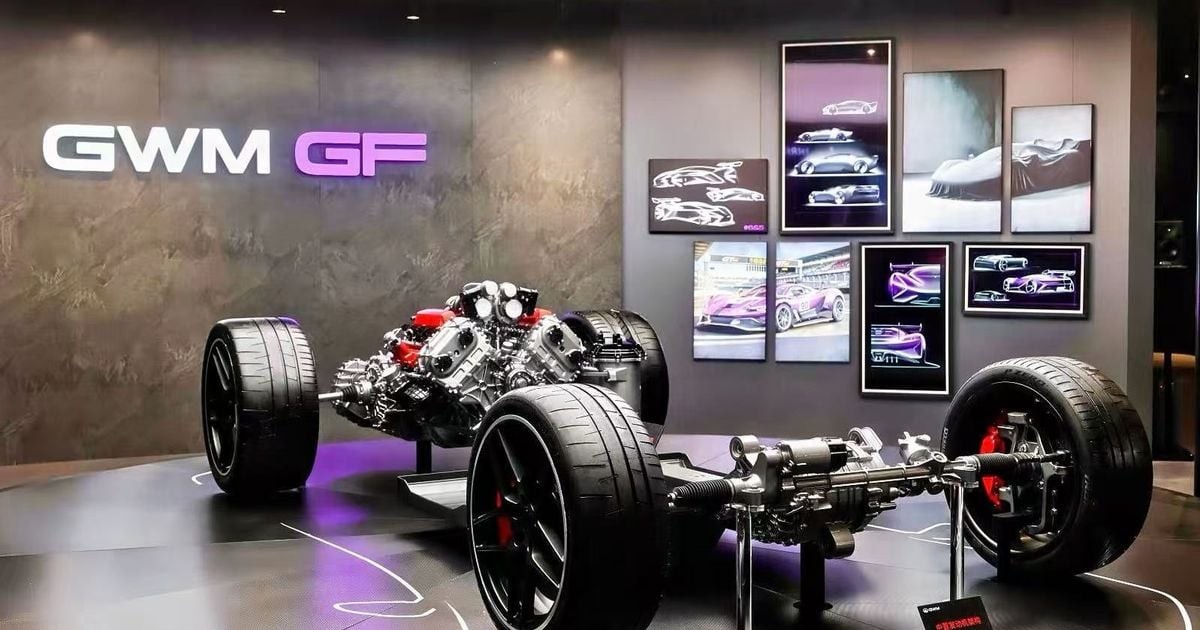
The upcoming supercar, built on the new GWM GF platform, is scheduled for a full reveal around 2027. While the exterior design remains under wraps, technical details unveiled at the Beijing Motor Show highlight a sophisticated engineering approach. The vehicle features a carbon-fibre monocoque chassis and a mid-mounted, electrified 4.0-litre twin-turbocharged V8 engine.
This powertrain is not a simple carryover from GWM’s existing SUV lineup, such as the Tank 700, though it may share some components. Instead, it represents a bespoke development aimed at high-performance applications. The system integrates:
- A P4 electric motor at the front axle.
- The twin-turbo V8 in the middle.
- A P2 electric motor at the rear, working in tandem with a nine-speed automatic transmission.
This hybrid configuration is not merely for compliance with emissions regulations but is a deliberate choice to maximize performance delivery. The electrification allows for instant torque fill and optimized power distribution, addressing limitations often found in pure internal combustion engines.
Why a V8 in an Electric World?
GWM’s decision to invest heavily in V8 technology appears counterintuitive given the broader industry trend toward electrification. However, company leadership argues that this strategy is specifically tailored for global markets rather than the domestic Chinese landscape, which is dominated by pure EVs and plug-in hybrids with smaller four-cylinder engines.
Adam Thomson, GWM’s chief engineer and former McLaren chief engineer, emphasizes that the V8 is chosen for the emotional engagement it provides—a critical factor for supercar enthusiasts. Thomson argues that current battery technology still faces challenges regarding power-to-weight ratios and charging speeds that limit the usability of pure electric supercars.
“Electric supercars… deliver a huge amount of power but possibly for a very short period of time. They are an exercise in showing what’s possible with the technology, but we’re saying perhaps that technology isn’t able to deliver what we’re trying to achieve with this car.”
By opting for a hybrid V8, GWM aims to avoid the “niche” status of current electric hypercars like the Rimac Nevera or Pininfarina Battista, offering a vehicle that balances extreme performance with practical, sustained driving dynamics.
Global Ambitions and Australian Availability
The launch of the GF supercar is part of a broader effort to elevate GWM’s brand image on the world stage. GWM Chairman Jack Wei confirmed that the vehicle will be available in Australia and New Zealand, although specific sales strategies and distribution channels are still under discussion.
“We just need to make a business case for it,” said John Kett, GWM’s Australia and New Zealand COO, indicating that market readiness is the final hurdle before confirmation.
This supercar initiative complements GWM’s other global projects, including a full-size pickup truck aimed at the US market. While US entry remains uncertain due to tariff complexities, the development of high-capacity engines for both off-road and high-performance applications underscores GWM’s commitment to diverse powertrain solutions for international consumers.
Motorsport as a Brand Builder
Beyond the showroom, GWM intends to use motorsport to build credibility and global exposure. The GF platform is designed to evolve into a GT3 race car, with plans for a road-going GT3 version as well. Wei highlighted that motorsport is a “key tool for brand-building,” with potential participation in events like the Dakar Rally and other global racing categories, including in Australia.
This racing pedigree is intended to validate the performance credentials of the GF platform, reinforcing the brand’s shift from value-oriented utility vehicles to high-performance luxury.
The Bigger Picture
GWM’s supercar project raises important questions about the future of internal combustion engines in a globalizing automotive industry. While China races toward electrification, markets in Europe, North America, and Oceania still show strong demand for traditional performance cues. By betting on a hybrid V8, GWM is testing whether emotional connection can outweigh the pure efficiency metrics driving the EV revolution.
The success of the GWM GF will depend not just on its performance specs, but on whether it can convince buyers that a Chinese automaker can deliver the prestige and driving soul associated with European supercar giants.
The GF supercar represents GWM’s most ambitious attempt to shed its budget-friendly image. If successful, it could pave the way for a new era of Chinese performance vehicles, proving that innovation in the premium segment is not limited to battery technology alone.