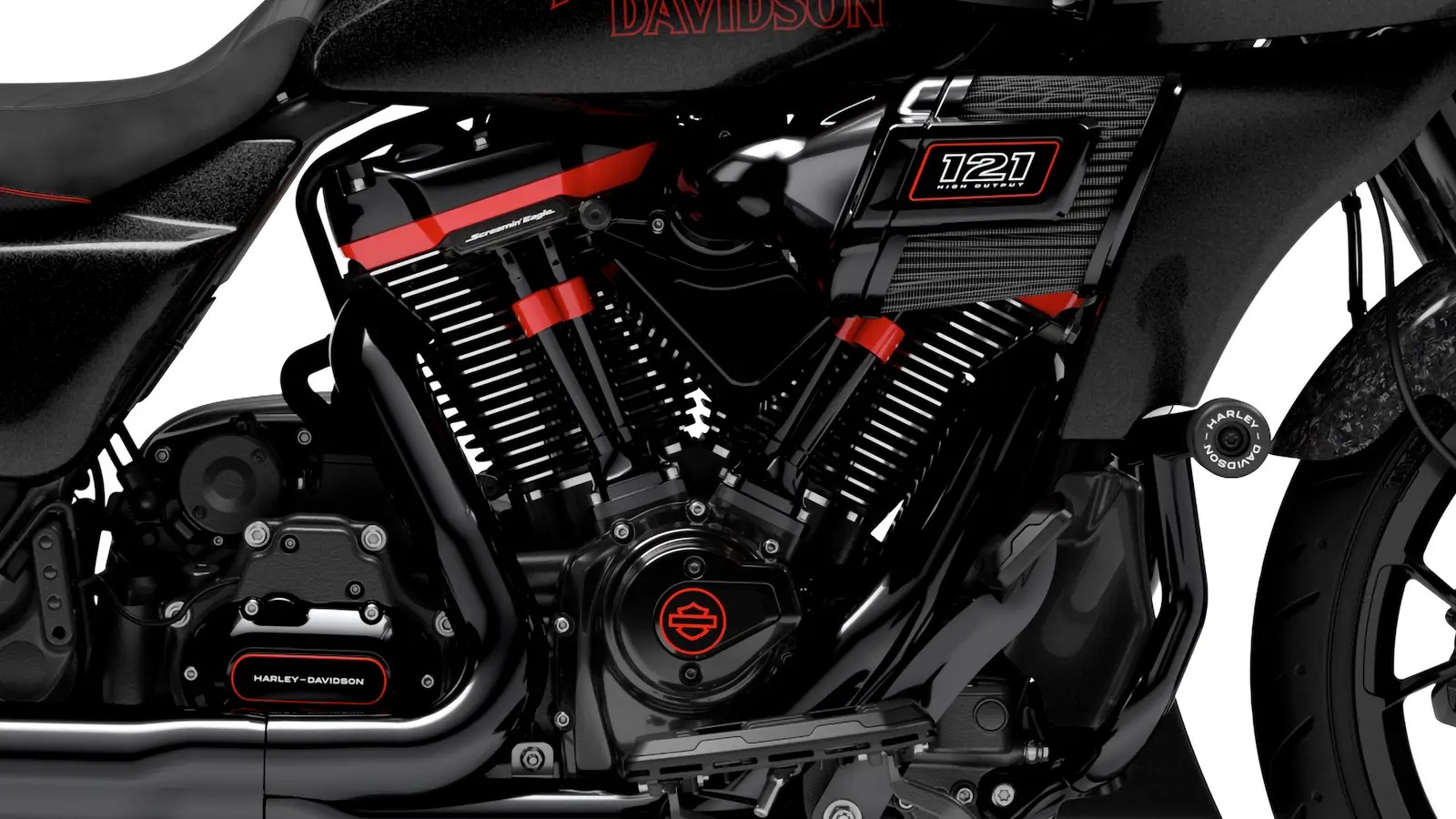
In the world of cruiser motorcycles, displacement is often synonymous with character. For riders, a larger engine isn’t just a spec on a sheet; it represents that effortless, “lazy” torque that allows a heavy machine to cruise at highway speeds without breaking a sweat. While the “displacement wars” of the early 2000s—once dominated by the massive Triumph Rocket 3—have cooled, manufacturers are once again pushing the limits of engine capacity.
At the forefront of this resurgence is Harley-Davidson, a company that has successfully bridged the gap between traditional V-twin soul and modern engineering precision. Theirs crown jewel is the Milwaukee-Eight 121.
s
s crown jewel is the Milwaukee-Eight 121.
s crown jewel is the Milwaukee-Eight 121.
Why “Big Twin” Engines Matter
For Harley-Davidson, large-capacity “Big Twin” engines are more than just a marketing tool; they are the brand’s identity. Unlike high-revving, inline-four engines found in sportbikes, a Big Twin is defined by its massive moving parts—heavy pistons, thick connecting rods, and substantial flywheels.
This architecture creates two essential qualities:
– Character: The large reciprocating mass produces a unique, rhythmic “throb” and a signature sound that enthusiasts crave.
– Low-End Torque: Because cruisers are inherently heavy, they don’t need high-RPM horsepower to move. They need massive amounts of torque at low speeds to provide confident, seamless acceleration.
The Milwaukee-Eight 121: Two Paths to Power
As of 2026, the Milwaukee-Eight 121 (1,982 cc) stands as the largest standard production engine in the Harley-Davidson lineup, powering the premium CVO (Custom Vehicle Operations) models. However, not all 121 engines are created equal. Harley-Davidson has split this displacement into two distinct personalities to serve different types of riders.
1. The Milwaukee-Eight 121 VVT (Variable Valve Timing)
Designed for the CVO Street Glide and CVO Road Glide, this version prioritizes rideability and efficiency.
– Focus: A broad, smooth torque spread.
– Benefit: It delivers power early in the rev range (starting as low as 1,000 RPM), meaning riders can stay in gear longer without constant shifting.
– Efficiency: The VVT technology helps optimize fuel consumption and reduce emissions, making it the ideal choice for long-distance touring.
2. The Milwaukee-Eight 121 HO (High Output)
Found in the CVO Road Glide ST, this engine is built for those who want a more aggressive, performance-oriented experience.
– Focus: Maximum peak power and torque.
– Mechanics: It utilizes a more aggressive cam profile and high-flow intake and exhaust systems.
– Trade-off: While it can outrun the VVT version at wide-open throttle, the power arrives higher in the rev range, and the engine is tuned to reach a higher redline of 5,900 RPM.
Engineering Under the Skin
Despite its “old school” appearance with functional cooling fins, the Milwaukee-Eight 121 is a sophisticated piece of thermal management. The cylinder heads are liquid-cooled, with water directed first to the rear cylinder and then the front to manage heat effectively—specifically around the exhaust valve ports. Additionally, the engine features rear cylinder deactivation, a clever tech solution that reduces heat and fuel consumption when the rider is cruising at steady speeds.
The Competitive Landscape
Harley-Davidson does not operate in a vacuum. The Milwaukee-Eight 121 faces stiff competition from various engineering philosophies:
| Competitor | Engine Type | Key Characteristic |
|---|---|---|
| Honda Gold Wing | 1,833cc Flat-Six | High refinement and a dual-clutch automatic option. |
| BMW R 18 | 1,802cc Boxer Twin | Traditional layout with modern water-cooling and VVT. |
| Indian Challenger | 1,768cc Liquid-Cooled V-Twin | High-performance “PowerPlus” engine with high HP/Torque. |
| Suzuki Boulevard M109R | Large V-Twin | Fully liquid-cooled, but lacks modern electronics/6th gear. |
Evolution Through Necessity
The transition to the Milwaukee-Eight series was a pivotal moment for Harley-Davidson. For nearly two decades, the Twin Cam series served the brand, but as Harley-Davidson sought to attract a more global, modern audience, the Twin Cam began to feel dated.
The emergence of the Milwaukee-Eight in 2016–2017 was a direct response to a changing market—specifically the rise of competitors like Indian Motorcycle, which had modernized its lineup under Polaris. The M-8 series allowed Harley to retain its legendary V-twin feel while meeting the rigorous performance and emissions standards of the 21st century.
Conclusion
The Milwaukee-Eight 121 represents the perfect equilibrium between heritage and innovation. By offering specialized versions like the VVT and HO, Harley-Davidson ensures that its largest engine serves both the relaxed long-distance cruiser and the performance-hungry rider.