The Porsche 911 GT3 has long carried a reputation as a hardcore track machine, tolerated rather than enjoyed on public roads. Many assume the Touring variant – wingless for subtlety – is the sensible choice for everyday use. However, the latest 992.2 generation proves otherwise. This is the most well-rounded GT3 Porsche has ever created, one that doesn’t demand compromise, even as a daily driver.
Evolution, Not Revolution
On paper, the 992.2 GT3 doesn’t appear radically different. It retains the signature 4.0-liter naturally aspirated flat-six engine, capable of revving to 9,000 rpm, and offers the familiar choice of manual, PDK dual-clutch, or Touring configurations. But the improvements lie in refinement – small, impactful adjustments that elevate an already exceptional car.
This isn’t about chasing higher peak numbers; it’s about making the GT3 calmer, sharper, and more confidence-inspiring in all situations, from track days to winding backroads and even suburban commutes.
Subtle Design, Unmistakable Intent
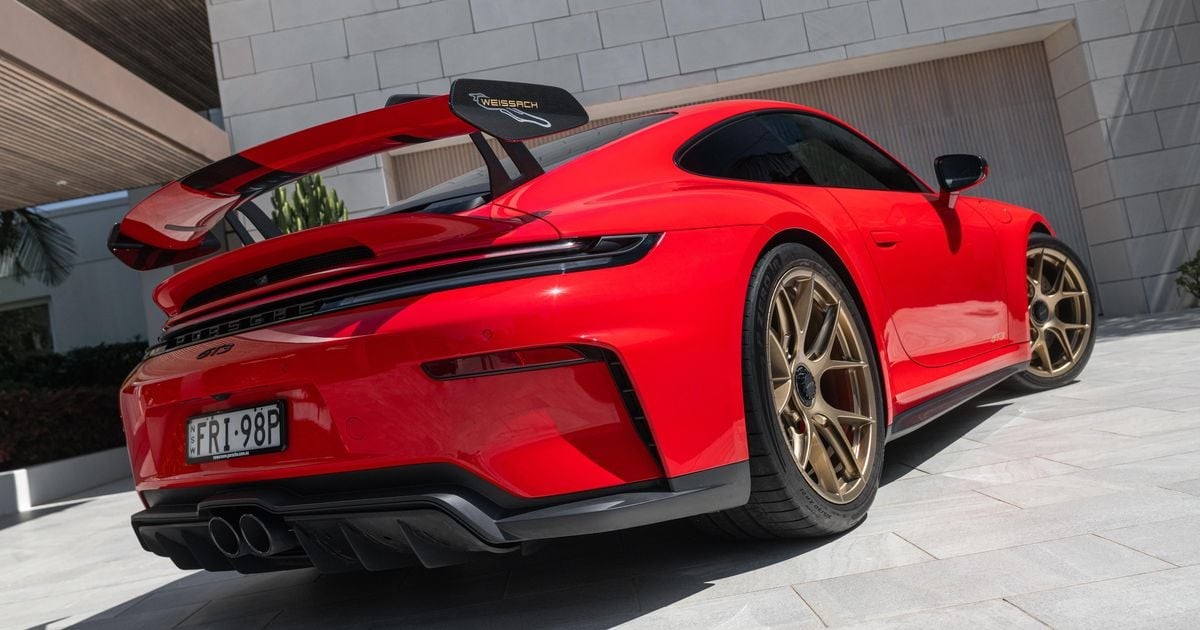
Visually, the GT3 maintains its purposeful stance – low, wide, and aggressive. The updates are functional rather than flashy: larger air intakes with carbon blades improve cooling, while redesigned Matrix LED headlights free up space for additional cooling ducts. At the rear, a reshaped diffuser and tweaked bumper vents complement the swan-neck rear wing, now featuring larger, angled endplates.
The Touring version’s retractable spoiler offers understated elegance, but the fixed wing is integral to the GT3’s identity. It’s a visual statement, a reminder of the car’s capabilities, and a source of pride for its driver.
The Heart Remains Sacred: The Naturally Aspirated Engine
The GT3’s engine remains a masterpiece: a 4.0-liter naturally aspirated flat-six producing 375 kW (503 hp) and revving to 9,000 rpm.
While stricter emissions regulations have slightly reduced peak torque to 450 Nm, the real change is a shorter final-drive gearing (around 8% reduction). This makes the GT3 feel more responsive and eager at everyday speeds, eliminating the previous model’s slightly long-legged feel. The engine still sounds magnificent, a visceral reminder of why naturally aspirated engines remain relevant.
PDK vs. Manual: A Closer Call on the Road
On the track, the seven-speed PDK dual-clutch transmission is undeniably faster. But on the road, the choice becomes more nuanced. The PDK remains a technological marvel, shifting seamlessly between docile commuter and race car modes. In traffic, it’s smooth and unobtrusive; on a fast road, it delivers the satisfying ‘crack’ of upshifts that feels like racing.
However, the six-speed manual retains its charm. The shorter throw, perfectly weighted action, and beautifully judged ratios make it an engaging experience. Auto-blipping on downshifts is flawless, and the light clutch makes daily driving a pleasure. The manual slows the experience just enough to let you savor it.
For a daily-driven GT3 Touring, the manual is the romantic choice. But in a winged GT3, the PDK feels more fitting, allowing for quicker shifts and a more intense connection to the machine.
RS DNA, Road Manners: Suspension Refinement
The most significant transformation comes from the suspension geometry borrowed from the GT3 RS. The anti-dive setup reduces nose dive under braking by nearly 50%, improving stability and confidence, especially on uneven surfaces.
Despite this track-derived change, ride quality hasn’t suffered. The GT3 remains surprisingly compliant in normal driving modes, firm but never harsh. This is a GT3 you can genuinely drive every day without compromise.
Steering, Balance, and Brakes: The Benchmark Remains
The electromechanical power steering has been fine-tuned for a more linear and natural feel. Turn-in is immediate without being nervous, and the mid-corner balance is exceptional. The car changes direction with precision, making it agile yet never edgy.
The brakes are immense, with six-piston calipers and 408mm discs up front. Pedal feel is rock-solid, and modulation is perfect. The standard braking system is more than enough for road use, though the optional PCCB ceramic setup offers even more stopping power.
Interior: Focused and Functional
Inside, the changes are subtle but meaningful. The analog tachometer has been replaced by a fully digital 12.6-inch instrument cluster, clear, configurable, and ideal for both road and track. The seating position remains spot-on, with optional carbon bucket seats providing firm support without discomfort. Dual-zone climate control, infotainment, front-axle lift, and driver assistance systems remind you this is still a road car first.
The Verdict: A GT3 for Real Life
The 2026 Porsche 911 GT3 doesn’t chase headlines with bigger numbers. Instead, it delivers confidence, composure, and connection on real roads. It’s calmer, sharper, more resolved, and somehow even more exciting.
This is a GT3 you can live with, even as a daily driver, without apology or compromise. And as for the wing? It’s worth every penny. Sometimes looking a little ridiculous is exactly the point.