


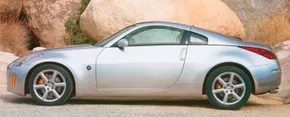
The 2003 Nissan 350Z didn’t just enter the scene; it reclaimed a legacy. By the time it arrived as a model year 2003 vehicle, Nissan had already built decades of lore around its “Z” lineage. This wasn’t a nostalgic cash grab, though. It was a calculated move to bring raw driving excitement back into a more accessible price bracket. The result was a machine that balanced size, power, and cost in a way that appealed directly to enthusiasts who wanted performance without the hypercar tax.
If you are hunting for 2003 350Z specifications, you are likely looking for more than just a list of numbers. You want to know how the chassis felt, what the engine breathed, and whether the manual gearbox was as satisfying as the marketing promised. The data below breaks down exactly what Nissan engineered for that debut year.
The Numbers That Matter
Starting with the sticker shock, the base price sat at $26,269. For that money, you got a pure rear-wheel drive layout. No all-wheel-drive nonsense to dilute the driving experience. The car tipped the scales at 3,188 pounds curb weight. That figure is manageable, especially when paired with the powertrain details below.
The footprint is compact but muscular. With a wheelbase of 104.3 inches and a total length of 169.6 inches, the 350Z occupied just enough space to feel substantial without being unwieldy in city traffic or canyon runs. It’s a two-seater cockpit. Period. No back seats. Just driver and passenger.
Suspension and Grip
Nissan didn’t skimp on the geometry. Both the front and rear suspension utilize a multi-link setup. This is a detail that separates the 350Z from cheaper front-wheel-drive coupes. Multi-link allows for better wheel control during cornering, translating to sharper turn-in and more predictable behavior at the limit.
Tire choices varied by trim and wheel size. The standard setup ran 225/50WR-17 in the front and 235/50WR-17 in the rear. If you opted for the larger wheels, those dimensions grew to 225/45WR-18 up front and 245/45WR-18 out back. Wider rubber meant more grip, which is essential when you are trying to put down nearly 300 horsepower.
Under the Hood: The VQ35DE
The heart of the 2003 350Z is the dual-overhead-cam 32-valve V-6 engine. Nissan’s VQ series had already won numerous “Engine of the Year” awards, so the expectation was high. The displacement sits at 3498 cubic centimeters (essentially 3.5 liters).
The compression ratio is a healthy 10.3:1, helping the engine breathe efficiently. Fuel delivery comes through multi-point electronic fuel injection, ensuring each cylinder gets what it needs.
The output figures


