


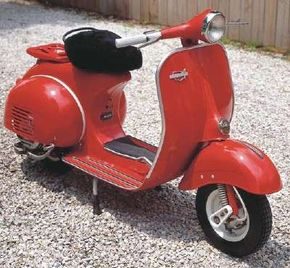
Sears sold it. Piaggio built it. It’s a Vespa.
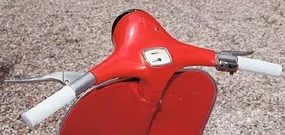
The 1964 Vespa Allstate Cruisaire isn’t just another vintage two-wheeler. It’s a direct lineage to the machine that redefined personal transport in post-war Italy, but with an American retail stamp on the tank. Most people don’t realize “Vespa” isn’t the brand. It’s the model. The maker is Piaggio.
From shipbuilding to the birth of the scooter
Piaggio didn’t start as a scooter company. They started in the late 1800s as an engineering firm. By the 1930s, they were a massive industrial concern. They built airplanes. They built ships. Then World War II hit.
The company was devastated. Infrastructure gone. Markets shattered. They needed a product that was simple, cheap to make, and desperately needed. Post-war Italy had a transportation crisis. Cars were scarce. Gas was tighter. People needed to move.
Piaggio looked small. Really small.
The result was the Vespa. It wasn’t just a motorcycle with small wheels. It was a new category. A unibody design. A stamped steel chassis that acted as the frame, the body, and the protection for the engine all at once.
Engineering quirks that made the Vespa iconic
The original design had some clever mechanics that stuck around for decades. The 90-cc two-stroke engine sat inside that steel shell. But the real genius was in the convenience features.
Change gears by twisting the left handgrip. No foot shifter. No clutch lever. Just twist and go.
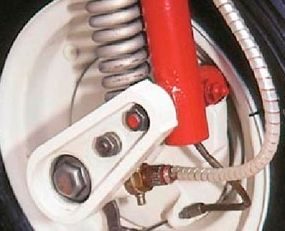
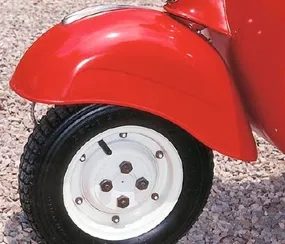
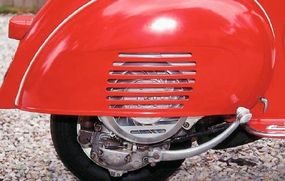
The suspension setup was equally unique. A single-sided trailing-link front fork and a swingarm rear. Why? Tire changes. You could swap a tire without removing the whole wheel assembly. It was practical. It was rugged. It worked.
The Vespa wasn’t just a vehicle. It was a solution to a logistical nightmare.
Production exploded. One million units in ten years. The scooter became a cultural icon.
How the 1964 Allstate Cruisaire fits the timeline
Success breeds licensing. When a product is this good, other companies want a piece of it. Sears, the American retail giant, saw the opportunity. They licensed the design and sold it under their Allstate brand.
The 1964 Vespa Allstate Cruisaire is essentially the Italian original with a badge swap. But there’s a spec bump.
The engine displaces 125 cc. That’s bigger than the early 90-cc models. More power. More torque. Still a two-stroke. Still a twist-grip gearbox. Still that single-sided suspension that makes roadside repairs a breeze.
Sears didn’t keep the line forever. Just a few years. But for that window, you could walk into a department store and buy a piece of Italian engineering.
Is the retro Vespa trend still alive?
Piaggio survived the Sears deal. They survived the shift to modern, futuristic scooters. But they never killed the original design.
The retro version of the classic Vespa remains a perennial favorite. Why? Because the original design language was too good to throw away. Clean lines. Functional simplicity. A shape that hasn’t aged poorly.
The 1964 Allstate Cruisaire sits in a specific niche. It’s the bridge between the war-ravaged origins and the global icon we know today. It’s the proof that a scooter could be sold through a catalog and still feel premium.
Not many motorcycles can claim that pedigree. Fewer still have the twist-gift gearbox.
The next page shows
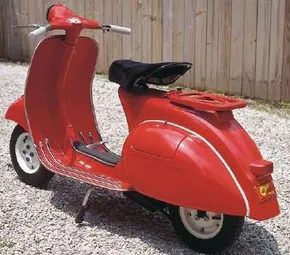

How Sears Built the 1964 Vespa Allstate Cruisaire
The lineage matters here. The 1964 Vespa Allstate Cruisaire didn’t just appear in a Sears catalog out of nowhere. It was the direct, almost untouched descendant of Piaggio’s postwar Italian rescue plan. After the war, Italy needed cheap, simple transport. Piaggio delivered. They built the scooter. It worked.
Sears saw the model. They decided Americans needed it too. But they didn’t want you thinking you were buying an import. So they rebranded it. Allstate became the name. The Cruisaire was the specific trim.
Why the Allstate Brand Changed the Scooter Market
This wasn’t just a sticker swap. It was a distribution strategy. Sears had the stores. Piaggio had the engineering. The combination created a weird but effective hybrid. You could walk into a department store and buy a motorized vehicle. That was new.
The mechanicals stayed Italian. The frame, the engine, the single-cylinder two-stroke heart of it all—that was pure Piaggio. But the marketing was thoroughly American. Sears stripped away the European mystique and sold it as practical hardware. Like a lawnmower or a refrigerator.
The scooter remained virtually intact from its Italian roots, proving that good design doesn’t need localization to sell.
Which Features Defined the 1964 Model?
You’re looking at a 1964 unit. This is late in the classic era. The engine is a 125cc single-cylinder. It’s air-cooled. It uses a two-stroke combustion cycle, meaning you mix oil with the gas. No separate oil tank. That’s the trade-off for simplicity.
The Cruisaire badge usually signaled a few minor upgrades over the base model. Better paint. Maybe a nicer seat. Perhaps some chrome accents that the plain “Vespa” models lacked. But under the skirt? Same machine.
- Engine: 125cc, single-cylinder, two-stroke
- Transmission: CVT (Continuously Variable Transmission) via belt
- Drive: Shaft drive to the rear wheel
- Brakes: Mechanical front and rear
Sears sold thousands of these. They were everywhere. Suburban driveways became scooter parking lots. For a brief moment, the Vespa wasn’t a niche import. It was a Sears special.
How the Allstate Compared to True Imports
Did Sears change anything technical? Barely. The geometry is the same. The engine mounting is the same. The difference is in the paperwork and the dealer network. If you bought a Vespa from an Italian dealer, you waited. If you bought an Allstate, you drove it home that day.
The parts were interchangeable. A piston for a 1964 Allstate fits a 1964 Vespa. This is why collectors don’t hate them. They aren’t cheap knockoffs. They are the real thing, just wearing a different name tag.
So why does it matter? Because it shows how American retail absorbed European innovation. Sears didn’t invent the scooter. They just invented the way you bought one.





Where to dig deeper into the two-wheeled past
You’ve got the history. You’ve got the specs. Now you need the rest of the story.
Don’t just stop here. The internet is full of deep dives if you know where to look.
Start with Classic Motorcycles. It’s not just a search term. It’s a genre. You want to see how the aesthetics shifted from the post-war utility bikes to the chrome-heavy cruisers of the seventies. Look for the evolution in frame geometry. Notice how the handlebars dropped.
Then, figure out How Motorcycles Work. Most enthusiasts know what a carburetor does. Fewer know why a certain port timing changes the torque curve. Strip away the mystique. Understand the mechanical sympathy. When you know how the engine breathes, you respect it more when you ride it.
Finally, browse Other Classic Motorcycles. The big names get the press. The obscure ones have the soul. Look for the models that didn’t sell well but aged like fine wine. The ones with the weird fuel tanks. The engines that sound like angry bees.
“A classic isn’t just old. It’s interesting.”
Go find the rust. Go find the glory. 🏍️


