


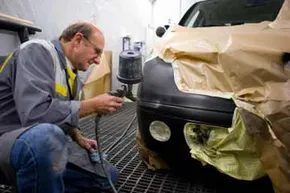
Look at the vehicle in your driveway. It’s just sitting there. But consider the logistics. Millions of cars are on the road. From the welded steel in the chassis to the glossy finish on the hood, how did this machine get from a factory line to your garage?
Treat a car as a product, not just transport, and the scale becomes clear. It is a massive global industry. Demand is high. Supply chains are complex. But let’s zoom in. We’re looking at the most visible part of that equation. The paint.
Whether you drive a standard white sedan or a limited-edition “Plum Crazy” challenger, that color isn’t just for show. It’s a shield. It protects the metal underneath. But it’s not just aesthetic. There is chemistry involved. There is engineering. How is that coating applied? How is it protected? Why does it last so long?
The Science Behind Automotive Finish Technologies
People associate paint with personality. Black. Silver. Gray. White. These are the bestsellers in the US and globally. But paint is only the top layer. If manufacturers focused only on color, we’d have a lot of peeling, rusty hoods. Think about houses. New ones chip. Old ones crack.
Cars don’t do that. Not usually.
The reason automotive paint holds up is that it is part of a multi-step finishing process. It’s not a single coat. It’s a system.
Robotic arms handle the application. Humans don’t spray these cans anymore. Robots ensure uniformity. They apply the base coat evenly. Why? Bubbles. Ripples. Weak spots. If the paint isn’t smooth, the protection fails. Robots get the job done fast. They are consistent. They don’t get tired.
But the technology isn’t just mechanical. It’s chemical. Carmakers need rich colors. They also need durability. The paint must survive extreme conditions. Sunlight. Ice melters. Dust. Hail. The chemistry has to be tough.
Advances in Automotive Finishing
The industry has moved past simple solvent-based paints. Modern finishes rely on advanced polymers and clear coats. These materials provide UV protection. They resist scratches. They maintain gloss.
The process typically involves several layers.
- E-coat: A primer that prevents rust. It is applied via electrodeposition.
- Primer: Adds smoothness. Fills imperfections.
- Base coat: Provides the color.
- Clear coat: The transparent top layer. It protects the base coat from UV rays and environmental damage.
Each layer serves a purpose. Skip one, and the car suffers. The e-coat is the foundation. Without it, corrosion starts within months. The primer levels the surface. The base coat gives the car its identity. The clear coat locks it all in.
This isn’t just about looking good. It’s about longevity. A well-finished car retains value. It resists decay. It withstands the elements.
The chemistry behind these layers has evolved significantly. Water-based paints are now common. They reduce volatile organic compounds (VOCs). They are safer for workers. They are better for the environment. But they require precise temperature and humidity control during application.
Robotic sprayers adjust pressure and distance in real-time. Sensors detect the car’s shape. The nozzles move accordingly. This ensures even coverage. It eliminates waste. It saves money.
So, the next time you see a gleaming hood, remember the layers underneath. The robotics. The chemistry. The engineering. It’s not just paint. It’s a complex system designed to protect your investment.
What happens when the clear coat fails? That’s a different story. But that’s for part two.


The Hidden Tech Behind Your Car’s Shine
Let’s be honest. You drive to the dealership because you want something shiny. You pick the color that makes your teeth ache. But while you’re obsessing over whether silver or black looks better in the sun, the real engineering marvel is happening right under your nose.
It’s not the metal. It’s not the engine. It’s the automotive finishing process.
We’ve all seen the old rust buckets. The ones sitting in backyards, flaking like scabs when you touch them. That’s what happens when you ignore the finish. It’s not just cosmetic. It’s structural armor.
Clear Coat Is Your First Line of Defense
Forget what you learned in basic chemistry. The clear coat is more than just a layer of lacquer. It’s a shield.
When sunlight hits your hood, it doesn’t just warm the paint. It blasts it with ultraviolet rays. UV radiation breaks down chemical bonds. Without protection, your car’s color fades. The base coat turns chalky. The metal underneath starts to oxidize. Rust loves moisture. It hates a good seal.
The clear coat blocks that UV damage. It’s transparent, hard, and sacrificial.
A scratch in the clear coat is far less visible than a scratch in the paint. It takes the hit so the metal doesn’t have to.
This is why detailing matters. A good wax job fills microscopic pores. It adds another layer of hydrophobic defense. Water beads up and rolls off. Dirt doesn’t stick. The paint stays intact.
But modern manufacturing has gone further. Far beyond wax.
Self-Healing Coats: The Future Is Here
Remember the Nissan Infiniti self-healing clear coat? That wasn’t a marketing gimmick. That was elastic resin technology.
Here’s how it works. A key scratches the surface. A tiny groove forms. The resin is elastic. When the sun hits that groove, the heat softens the material. The molecules rearrange. The scratch disappears.
Days later, the surface is smooth again.
This technology isn’t just for luxury sedans. It’s spreading. Nissan even tested it on mobile phone cases. If a phone case can self-heal, imagine what your daily driver can do.
The Chevrolet Corvette ZR1 takes this a step further. Its exposed carbon fiber panels get a clear coat directly over the weave. No base paint. Just the protective layer. The carbon fiber shows through. The protection remains.
Why does this matter to you?
- Resale Value: A car with intact paint sells for thousands more than one with faded, scratched panels.
- Structural Integrity: Rust weakens the body. A weakened body is unsafe in a crash.
- Aesthetics: It just looks better.
Why Finishing Is Critical to Manufacturing
It’s easy to dismiss automotive finishing as frivolous. The engine makes the car go. The suspension makes it handle. The paint? It’s just for looks.
Wrong.
Cars are heavy. They vibrate. They endure temperature swings from -20°F to 110°F. Water, salt, road grime, bird droppings—all of it attacks the metal.
Paint slows the breakdown. Undercoating seals the undercarriage. Clear coat protects the surface. Without these layers, a new car would be a rust bucket in five years.
Think about safety. If the door frame is corroded, does it crumple correctly in a side-impact collision? If the floor pan is weak, does it support the chassis? The finish isn’t just about pride. It’s about physics.
The Bottom Line
You don’t need to understand the chemistry of urethane or acrylic resins. You just need to know this:
Your car’s finish is its first line of defense. Ignore it, and you lose value. Protect it, and you preserve the machine.
Next time you wash your car, look closer. That shine isn’t just pride. It’s engineering.
And it’s keeping you safe.


