


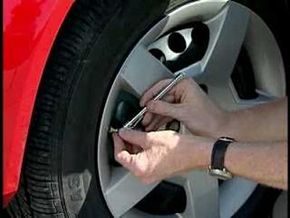
You look at your sidewall. You see a big number printed there. Let’s call it 51 psi. Your gut says, “Fill it to the max.” Don’t. That number isn’t a suggestion for optimal driving. It is the absolute physical limit before the rubber gives up and the steel belts fail. Manufacturers print that max pressure to protect themselves from liability. They want a soft ride. They want you comfortable. That comfort comes at the cost of a lower recommended operating pressure, usually found on your door jamb sticker, not the tire itself.
When you ignore the door jamb PSI and chase the sidewall max, you are guessing. You don’t know the margin of error. You might be two pounds over. You might be ten. In that gap lies a safety hazard.
The Center Tread Trap
Overinflation kills tires in a specific way. The tire bulges in the middle. The center tread presses into the asphalt with maximum force. The shoulders? They lift off. You get uneven tread wear. The center goes bald while the edges look nearly new.
This isn’t just about aesthetics. It’s about longevity.
The U.S. Highway Traffic Safety Administration (NHTSA) uses the Uniform Tire Quality Grading (UTQG) system. You’ve seen it. It rates tread wear, traction, and temperature. The tread-wear number is a promise. It assumes you are driving on properly inflated tires. It assumes a flat contact patch. When you overinflate, you break that assumption. You wear out the tread faster. You replace the tires sooner. You waste money.
Weight Limits and Blowout Risk
Here is where it gets dangerous. Tires have a load rating. It tells you the maximum weight each tire can carry at a specific pressure. This rating is calculated for properly inflated conditions.
Push the pressure too high. Then load the car. Now add cargo. Passengers. A full gas tank. The rigid tire cannot absorb the impact of road imperfections. It transfers every bump directly into the sidewall structure. The heat builds. The internal stress spikes. If you combine overinflation with a heavy load, you create the perfect storm for a blowout.
A blowout at 70 mph on the interstate is not a minor inconvenience. It’s a life-altering event.
Common Questions on Tire Pressure
Is it dangerous to over inflate tires?
Yes. The primary danger is uneven tread wear. The center wears down faster than the edges. This shortens the tire’s life. More critically, overinflation combined with heavy loads increases the risk of a catastrophic blowout. The tire loses its ability to flex and absorb shock.
Is it bad to slightly over inflate your tires?
A few PSI over the recommended spec usually won’t kill you or your tire immediately. If you are two or three pounds high, you are likely fine. The ride might be stiffer. The handling might feel sharper. But don’t make it a habit. Small deviations add up over time.
What happens if you drive on over inflated tires?
You burn through tread. You spend more on replacements. You lose traction in wet conditions because the center is balding. You risk structural failure if you hit a pothole hard. The tire becomes a rigid drum rather than a flexible cushion.
Is 40 PSI too high for tires?
For many passenger cars, 32 to 35 psi is the sweet spot. 40 psi sits at the high end of the normal range. It is not inherently dangerous if your vehicle’s door jamb says 40 psi. But if your car needs 35, pushing to 40 is unnecessary inflation. Check your sticker. Ignore the sidewall max.
How much can you over inflate car tires?
Keep it close. If you are more than a few PSI over your recommended pressure, you are playing with fire. The risk of damage increases. The wear rate accelerates. The margin for error shrinks to zero.


