


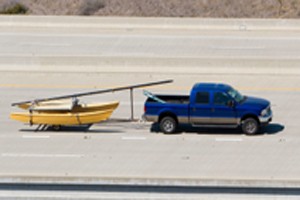
Towing capacity is the hard ceiling. It’s the maximum weight your vehicle is engineered to pull without breaking something expensive. Manufacturers set these limits. They are not suggestions. You’ll find the official number in your owner’s manual. Ignore aftermarket hitch listings that claim higher numbers. Those hitches might physically fit a variety of vehicles, but the chassis, suspension, and transmission in your specific car or truck have a hard limit. Exceed it and you risk drivetrain damage. You risk handling failure. You risk stopping distance increasing beyond what your tires can handle.
Always check the manufacturer’s spec. Never guess.
The data below covers specific models from 2006 to 2009. When you look up your vehicle, remember the math. The published towing capacity assumes a specific payload. If you and your passengers exceed 150 lbs each, that weight eats into your towing allowance. Add optional equipment. Add cargo. Do the subtraction. Then check the limit.
Here is the breakdown by make.
Acura Towing Capacity
Acura kept it simple for most of its lineup during this era. The MDX was the workhorse. Everything else was light duty or not rated at all.
| Year | Model | Max Towing Capacity (lbs) |
|---|---|---|
| 2006 | MDX | 3500 |
| 2006 | RL | 1000 |
| 2006 | RSX | 1500 |
| 2006 | TL | 1000 |
| 2006 | TSX | – |
| 2007 | MDX | 5000 |
| 2007 | RL | 1000 |
| 2007 | RDX | 1500 |
| 2007 | TL | 1000 |
| 2007 | TSX | 1000 |
| 2008 | MDX | 5000 |
| 2008 | RL | 1000 |
| 2008 | RSX | 1500 |
| 2008 | TL | 1000 |
| 2008 | TSX | 1000 |
| 2009 | MDX | 5000 |
| 2009 | RL | 1000 |
| 2009 | RSX | 1500 |
| 2009 | TSX | 1000 |
More Acura Specs:
– Acura GVWR
– Acura GAWR
– Acura GCWR
– Acura Cargo Carrying Capacity
– Acura Curb Weight
– Acura Payload
Audi Towing Capacity
Audi was not towing-focused back then. Most models have no rating. The Q7 was the exception. It could haul significantly more than the A8 or A6. The R8? Not rated for towing. Period.
| Year | Model | Max Towing Capacity (lbs) |
|---|---|---|
| 2006 | A3 | – |
| 2006 | A4 | – |
| 2006 | A6 | – |
| 2006 | A8 | – |
| 2006 | S4 | – |
| 2006 | TT | – |
| 2007 | A3 | – |
| 2007 | A4 | – |
| 2007 | A6 | – |
| 2007 | A8 | – |
| 2007 | Q7 | 5500 |
| 2007 | RS4 | – |
| 2007 | S4 | – |
| 2007 | S6 | – |
| 2007 | S8 | – |
| 2008 | A3 | – |
| 2008 | A4 | – |
| 2008 | A5 | – |
| 2008 | A6 | – |
| 2008 | A8 | – |
| 2008 | Q7 | 5500 |
| 2008 | R8 | – |
| 2008 | RS4 | – |
| 2008 | S4 | – |
| 2008 | S5 | – |
| 2008 | S6 | – |
| 2008 | S8 | – |
| 2008 | TT | – |
| 2009 | A3 | – |
| 2009 | A4 | – |
| 2009 | A5 | – |
| 2009 | A8 | – |
| 2009 | Q7 | 5500 |
| 2009 | R8 | – |
| 2009 | S4 | – |
| 2009 | S5 | – |
| 2009 | S8 | – |
| 2009 | TT | – |
More Audi Specs:
– Audi GVWR
– Audi GAWR
– Audi GCWR
– Audi Cargo Carrying Capacity
– Audi Curb Weight
– Audi Payload
BMW Towing Capacity
BMW didn’t rate most of its sedans or sports cars. The Z4? No rating. The M3? No rating. The 7-Series? No rating. But if you needed to tow, you went to the SUVs. The X3, X5, and later the X6 all carried ratings that made them viable for light trailers or small boats.
| Year | Model | Max Towing Capacity (lbs) |
|---|---|---|
| 2006 | 325 | – |
| 2006 | 330 | – |
| 2006 | 525 | – |
| 2006 | 530 | – |
| 2006 | 550 | – |
| 2006 | 650 | – |
| 2006 | 750 | – |
| 2006 | 760 | – |
The mid-2000s were a weird time for towing. You had heavy-duty trucks pushing past 10,000 lbs while small sedans were rated to pull nothing but a small utility trailer full of lawn chairs. If you are looking at the used market for a 2006 to 2009 vehicle, knowing the max towing capacity is the first step. Don’t guess. The difference between a 1,000 lb limit and a 10,000 lb limit is the difference between a smooth tow and a blown transmission.
Here is the breakdown by manufacturer.
Chevrolet
Chevy’s lineup was split between light-duty pickups and heavier commercial-grade trucks. The Avalanche and Suburban offered solid mid-range options, but the real muscle was in the Silverado HD series.
In 2006, the Silverado 1500 Hybrid stood out with a 6,700 lb rating. The SS trim pushed it to 7,500 lbs. If you needed to haul a boat or a small RV, the 2500 HD was the king at 10,100 lbs. The 3500 HD dropped slightly to 9,500 lbs, likely due to configuration differences.
By 2009, the Avalanche 1500 lost some ground, dropping to 5,000 lbs. The Express vans became more specialized; the 2500 model hit 6,300 lbs while the 3500 settled at 6,200 lbs. The Tahoe Hybrid was an interesting outlier in 2008 and 2009, rated at 6,200 lbs—higher than the standard 4,500 lb Tahoe.
| Year | Model | Max Towing Capacity (lbs) |
|---|---|---|
| 2006 | Avalanche 1500 | 7300 |
| 2006 | Avalanche 2500 | 10200 |
| 2006 | Cobalt | 1000 |
| 2006 | Colorado | 1600 |
| 2006 | Equinox | 3500 |
| 2006 | Express | 4300 |
| 2006 | HHR | 1000 |
| 2006 | Impala | 1000 |
| 2006 | Malibu MAXX | 1000 |
| 2006 | Monte Carlo | 1000 |
| 2006 | SSR | 2500 |
| 2006 | Silverado 1500 | 5700 |
| 2006 | Silverado 1500 Hybrid | 6700 |
| 2006 | Silverado 1500 SS | 7500 |
| 2006 | Silverado 1500 HD | 8300 |
| 2006 | Silverado 2500 HD | 10100 |
| 2006 | Silverado 3500 HD | 9500 |
| 2006 | Suburban 1500 | 7500 |
| 2006 | Suburban 2500 | 7900 |
| 2006 | Tahoe | 5700 |
| 2006 | TrailBlazer | 5400 |
| 2006 | TrailBlazer EXT | 5000 |
| 2006 | Uplander | 3500 |
| 2007 | Avalanche 1500 | 7200 |
| 2007 | Cobalt | 1000 |
| 2007 | Colorado | 1900 |
| 2007 | Equinox | 3500 |
| 2007 | Express | 4300 |
| 2007 | HHR | 1000 |
| 2007 | HHR Panel | 1000 |
| 2007 | Impala | 1000 |
| 2007 | Monte Carlo | 1000 |
| 2007 | Silverado 1500 | 4600 |
| 2007 | Silverado 1500 Classic | 5700 |
| 2007 | Silverado 1500 Hybrid Classic | 6700 |
| 2007 | Silverado 1500 SS Classic | 7500 |
| 2007 | Silverado 1500 HD Classic | 8300 |
| 2007 | Silverado 2500 HD | 10000 |
| 2007 | Silverado 2500 HD Classic | 10100 |
| 2007 | Silverado 3500 | 9600 |
| 2007 | Silverado 3500 Classic | 9500 |
| 2007 | Suburban 1500 | 7100 |
| 2007 | Suburban 2500 | 7700 |
| 2007 | Tahoe | 4500 |
| 2007 | TrailBlazer | 5400 |
| 2007 | Uplander | 3500 |
| 2008 | Avalanche 1500 | 7200 |
| 2008 | Cobalt | 1000 |
| 2008 | Colorado | 3000 |
| 2008 | Equinox | 3500 |
| 2008 | Express | 4300 |
| 2008 | HHR | 1000 |
| 2008 | HHR Panel | 1000 |
| 2008 | Impala | 1000 |
| 2008 | Maibu Classic | 1000 |
| 2008 | Silverado 1500 | 4600 |
| 2008 | Silverado 2500 HD | 10000 |
| 2008 | Silverado 3500 HD | 9600 |
| 2008 | Suburban 1500 | 7100 |
| 2008 | Suburban 2500 | 9600 |
| 2008 | Tahoe | 4500 |
| 2008 | Tahoe Hybrid | 6200 |
| 2008 | TrailBlazer | 5400 |
| 2008 | Uplander | 3500 |
| 2009 | Avalanche 1500 | 5000 |
| 2009 | Cobalt | 1000 |
| 2009 | Colorado | 3000 |
| 2009 | Equinox | 3500 |
| 2009 | Express 1500 | 4300 |
| 2009 | Express 2500 | 6300 |
| 2009 | Express 3500 | 6200 |
| 2009 | HHR | 1000 |
| 2009 | HHR Panel |
GMC heavy haulers and hybrid gains
The Silverado and Sierra lines dominate the volume, but the numbers shift year to year. 2006 was a baseline. The Sierra 1500 managed 4,000 lbs. The 2500? 10,500 lbs. That’s serious torque. The 3500 dropped slightly to 10,000 lbs. The Yukon family sat in the middle. Yukon at 5,700 lbs. Yukon XL stretched the limit to 7,500 lbs. The Canyon pickup? Meager 1,800 lbs.
By 2007, the 1500 gained 800 lbs. 4,800 total. The 2500 dipped a notch to 10,400. The Acadia entered the fray, capped at 2,000 lbs. The Yukon actually lost ground, dropping to 4,500 lbs. The XL stayed high at 7,100 lbs.
2008 brought the hybrid. The Yukon Hybrid jumped to 6,200 lbs. That’s more than the standard V8 in 2007. The Sierra 2500/3500 held steady. The Envoy stayed stuck at 5,300 lbs until it vanished.
2009 saw the Sierra 2500 hit 10,500 lbs again. The Sierra Hybrid appeared, but data is missing. The Yukon recovered to 4,800 lbs. The XL took a weird dive to 5,100 lbs. Why? Aerodynamics or weight distribution. Maybe both. The Envoy persisted. The Savana vans hovered around 4,300 to 6,300 lbs depending on the chassis.
Key Insight: The GMC Sierra 2500 consistently out-towed its 1500 sibling by over 5,000 lbs throughout this era.
For context on these numbers, you need to look at GVWR and GCWR. Towing capacity isn’t just engine power. It’s payload minus curb weight, plus whatever the hitch allows. The payload limits often bite harder than the max tow rating.
Honda reliability and the Ridgeline
Honda plays a different game. The Accord is a sedan, not a hauler. 1,000 lbs. That’s it. The Civic? 1,500 lbs. The Element? 1,500 lbs. The CR-V didn’t tow anything in 2006. Waited until later to even be mentioned in towing charts.
The Odyssey and Pilot were the workhorses. 3,500 lbs each. Consistent. Reliable. The Ridgeline surprised people. 5,000 lbs. A unibody pickup. It held that number in 2006 and 2008. 2007 and 2009 had gaps in the data, likely due to configuration changes or trim levels.
The Civic Hybrid dropped the limit to 1,000 lbs. Weight penalty from the battery pack. The Insight? Couldn’t tow at all. The S2000? No. Even though it was a rear-wheel-drive sports car.
The Accord disappeared from the chart in 2008 and 2009. Maybe they stopped offering the tow package. Or maybe the data isn’t there. The Fit also sat out. The Element faded out after 2008.
Hummer brute force
The H2 started at 6,500 lbs in 2006. By 2008, it jumped to 8,200 lbs. That’s a massive increase. They likely reinforced the frame or upgraded the cooling system. The H3 stayed flat. 3,000 lbs. It never changed.
The H1 Alpha was an outlier. 7,887 lbs in 2006. Military-grade. The H3T pickup appeared in 2009 with 4,400 lbs. A niche vehicle. Small bed, big engine.
The H2 numbers are deceptive. They look high, but the vehicle itself weighs nearly 5,000 lbs empty. You aren’t hauling much inside the tow limit. Payload is the real killer here.
Hyundai modest capacity
Hyundai kept it conservative. The Accent couldn’t tow. The Azera? 1,000 lbs. The Elantra dropped from 1,500 lbs in 2006 to 750 lbs by 2007. Then it stayed there. The Tucson was stuck at 1,000 lbs.
The Santa Fe started at 2,700 lbs. Dropped to 1,650 lbs in 2007 and stayed there. The Sonata never moved past 1,000 lbs. The Tiburon? Nothing.
The Veracruz and Entourage offered 1,000 lbs. The Sorento appeared in 2007 with 5,000 lbs. That was a big number for the brand at the time. The Borrego launched in 2009 with 5,000 lbs. The Genesis sedan appeared in 2009 but had no tow rating listed.
Infiniti luxury towing
Infiniti tried to mix luxury with utility. The FX35 and FX45 crossovers were rated at 3,500 lbs. Steady. The G35 and M35/M45 sedans were limited to 1,000 lbs. The QX56 was the beast. 9,000 lbs. Every year from 2006 to 2009.
The EX35 and G37 didn’t have ratings listed for 2008. The FX35 disappeared in 2009, replaced by the FX50, which held the 3,500 lb rating. The QX56 remained the king of the lineup for towing.
Isuzu utility
Isuzu was small but capable. The Ascender held 5,300 lbs across 2006 to 2008. The i-280 started at 1,700 lbs. The i-350 was 4,000 lbs.
In 2007, the i-290 bumped to 2,100 lbs. The i-370 stayed at 4,000 lbs. 2008 saw the i-290 rise to 2,200 lbs. The i-370 jumped to 5,500 lbs. A significant gain. They likely updated the engine tuning or transmission cooling.
Jaguar elegance, no towing
Jaguar didn’t care about towing. The S-Type, X-Type, XJ8, XJR, XK8, XKR. Zero. Not a single rating in 2006, 2007, or 2008. The 2009 XF, XJ8, XKR, and XK Coupe also listed nothing. They prioritized handling and comfort. If you needed to tow, you didn’t buy a Jaguar.
Jeep truck and SUV limits
Jeep is known for off-roading, not highway towing. The Commander, Grand Cherokee, and Liberty were rated at 3,500 lbs. The Wrangler, whether 2-door or Unlimited, was stuck at 1,000 lbs.
The Compass and Patriot were smaller. 1,000 lbs. The Liberty dropped to 2,000 lbs in 2008 and 2009. Why? Weight increase or chassis stiffening. The Grand Cherokee held its ground. The Commander disappeared after 2009.
Kia growing pains
Kia entered the towing conversation late. The Sportage was 1,500 lbs. The Optima was 2,000 lbs. The Sedona minivan hit 3,500 lbs in 2007. The Sorento SUV jumped to 5,000 lbs in 2007 and held it.
The Borrego appeared in 2009 with 5,000 lbs. The Rio, Spectra, and Rio 5 couldn’t tow. The Rondo had no rating. The Amanti was silent. Kia’s heavy haulers were the Sorento and Borrego. Both capped at 5,000 lbs.
Land Rover capability
Land Rover matched its size with capability. The LR3, Range Rover, and Range Rover Sport were rated at 7,700 lbs in 2006 and 2007. In 2007, the Range Rover Sport bumped to 7,716 lbs. Precision engineering.
2008 was a gap
Lexus Towing Capacity
The Lexus lineup from 2006 to 2009 is a study in specialization. Most sedans and coupes carry a dash indicating no towing capacity, but the SUVs tell a different story. If you are looking for Lexus towing capacity data for off-road rigs, the GX 470 and LX series are your only real options in this era.
The GX 470 holds steady at 6500 lbs across all four years. It’s a body-on-frame beast. The LX 470 starts at 6500 lbs in 2006 and 2007, but for 2008 and 2009, it swaps out for the LX 570. That new chassis jumps the limit to 8500 lbs. That’s a massive increase for the flagship SUV.
Mid-size SUVs like the RX 330, RX 350, and RX 400h offer 3500 lbs in 2006 and 2007. By 2008, that number drops to 2000 lbs. Why? Likely because the RX 350 became more mainstream and the engineering focus shifted to comfort over utility, or perhaps they tightened the specs to protect the unibody structure under heavy loads.
The LS 430 in 2006 lists 2000 lbs, but the LS 460 and LS 600h in subsequent years show a dash. Luxury sedans generally aren’t built for towing. The SC 430 and IS series remain non-towing vehicles throughout this period.
| Year | Model | Max Towing Capacity (lbs) |
|---|---|---|
| 2006 | ES 330 | – |
| 2006 | GS 300 | – |
| 2006 | GS 430 | – |
| 2006 | GX 470 | 6500 |
| 2006 | IS 250 | – |
| 2006 | IS 350 | – |
| 2006 | LS 430 | 2000 |
| 2006 | LX 470 | 6500 |
| 2006 | RX 330 | 3500 |
| 2006 | RX 400h | 3500 |
| 2006 | SC 430 | – |
| 2007 | ES 350 | – |
| 2007 | GS 350 | – |
| 2007 | GS 430 | – |
| 2007 | GS 450h | – |
| 2007 | GX 470 | 6500 |
| 2007 | IS 250 | – |
| 2007 | IS 350 | – |
| 2007 | LS 460 | – |
| 2007 | LX 470 | 6500 |
| 2007 | RX 350 | 3500 |
| 2007 | RX 400h | 3500 |
| 2007 | SC 430 | – |
| 2008 | ES 350 | – |
| 2008 | GS 350 | – |
| 2008 | GS 450h | – |
| 2008 | GS 460 | – |
| 2008 | GX 470 | 6500 |
| 2008 | IS 250 | – |
| 2008 | IS 350 | – |
| 2008 | IS-F | – |
| 2008 | LS 460 | – |
| 2008 | LS 600h | – |
| 2008 | LX 570 | 8500 |
| 2008 | RX 350 | 2000 |
| 2008 | RX 400h | 2000 |
| 2008 | SC 430 | – |
| 2009 | ES 350 | – |
| 2009 | GX 470 | 6500 |
| 2009 | IS-F | – |
| 2009 | IS 350 | – |
| 2009 | IS 250 | – |
| 2009 | LX 570 | 8500 |
| 2009 | RX 350 | 2000 |
| 2009 | SC 430 | – |
Lincoln Towing Capacity
Lincoln kept things simple. The big trucks and SUVs dominated the towing numbers. The Mark LT, a pickup based on the F-150 platform, is the clear winner here. It holds 8900 lbs from 2006 through 2009. If you need to haul a heavy boat or a large travel trailer, this is the Lincoln to get.
The Navigator, Lincoln’s full-size SUV, maxes out at 6000 lbs across the board. It’s a solid number for a luxury hauler. The Town Car, the last of the body-on-frame sedans, offers a modest 2000 lbs. That’s enough for a small pop-up camper, but not much else.
Newer models like the MKX and MKZ are lightweights in this regard. The MKX starts at 2000 lbs in 2007 and stays there. The MKZ shows no towing capacity until the end of the decade, where the larger MKS appears in 2009 with a lowly 1000 lbs. Don’t expect to tow much with the sedan lineup.
| Year | Model | Max Towing Capacity (lbs) |
|---|---|---|
| 2006 | LS | – |
| 2006 | Mark LT | 8900 |
| 2006 | Navigator | 6000 |
| 2006 | Town Car | 2000 |
| 2006 | Zephyr | – |
| 2007 | MKX | 2000 |
| 2007 | MKZ | – |
| 2007 | Mark LT | 8900 |
| 2007 | Navigator | 6000 |
| 2007 | Town Car | 2000 |
| 2008 | MKX | 2000 |
| 2008 | MKZ | – |
| 2008 | Mark LT | 8900 |
| 2008 | Navigator | 6000 |
| 2008 | Town Car | 2000 |
| 2009 | MKS | 1000 |
| 2009 | MKX | 2000 |
| 2009 | MKZ | – |
| 2009 | Navigator | 6000 |
| 2009 | Town Car | 2000 |
Mazda Towing Capacity
Mazda’s towing numbers are heavily dependent on whether you are buying a truck or an SUV. The B-Series trucks (B2300, B3000, B4000) are essentially rebadged Ford Rangers and Explorers. This means their towing specs track closely with Ford’s.
The B4000 is the workhorse here, hitting 3140 lbs in 2006, 2008, and 2009. The B3000 drops slightly to 2480-2500 lbs. The B2300 sits around 1600 lbs.
For SUVs, the CX-7 and CX-9 offer 2000 lbs once they arrive in 2007. The Tribute, another Ford-bad
Pontiac Towing Capacity
Pontiac didn’t mess around with heavy hauling. Mostly. If you are looking at a 2006 through 2009 Pontiac, you need to check the badge carefully. The mid-size sedans like the G6, Grand Prix, and the GTO were strictly limited. They could pull 1000 lbs. That is light. Barely enough for a small jet ski or a couple of bikes on a rack. The G8, which arrived in 2008 as GM’s big sedan sharing DNA with the Holden Commodore, doubled that to 2000 lbs. Better. Still not a workhorse, but respectable for a sports sedan.
Then there were the utility players. The Pontiac Montana SV6 and the Torrent were the heavy lifters. Both handled 3500 lbs in 2006. The Torrent kept that rating through 2009. The Vibe, co-developed with Toyota, started at 1500 lbs in 2006 and 2007, but dropped to 1000 lbs in 2009. Why the sudden downgrade? Likely a recalibration of safety margins or suspension tweaks. The Solstice? Zero towing capacity. It is a roadster. You do not tow with a roadster.
Porsche Towing Capacity
Porsche has always danced on the edge of practicality and performance. For the Cayenne, that line was surprisingly thick. In 2006, and continuing into 2008 and 2009, the Cayenne could tow 7716 lbs. That is massive. It competes directly with full-size trucks in raw numbers, though the fuel economy tells a different story. The 911, Boxster, and Cayman? Nothing. Not a single pound. These cars are built for cornering, not cargo. Trying to tow anything with a 911 Carrera would void the warranty and probably break the rear subframe before you even got the trailer hitch installed.
Saab Towing Capacity
Saab leaned on GM platforms for a significant portion of its 2000s lineup, and that showed in the towing specs. The 9-5, a large sedan, handled 3500 lbs from 2006 to 2009. Solid. Consistent. The 9-3, the smaller sibling, managed 2000 lbs across those same years. It was competent, if not exciting.
The real muscle came from the 9-7X. A rebadged GMC Envoy, it could tow 5500 lbs. That is mid-size SUV territory. It makes sense. If you bought a Saab 9-7X, you probably wanted a boat. Or a camper. The 9-2X, a Subaru Impreza rebadge, stuck to 2000 lbs. Safe. Predictable.
Saturn Towing Capacity
Saturn’s late-era offerings were a mix of niche and necessity. The Relay minivan was the king of the hill, handling 3500 lbs from 2006 to 2009. It needed to. That is what minivans do. The Outlook, a Buick Envision rebadge, sat at 2000 lbs. Again, crossover logic.
The smaller cars were weak links. The Ion and Aura were limited to 1000 lbs. The VUE, both standard and hybrid versions, held steady at 1500 lbs. The Sky convertible? Zero. You cannot tow a convertible. It is physically impossible due to the open roof structure and lack of mounting points. The Astra? Also zero. Saturn tried to be everything to everyone, but the towing numbers reveal a fragmented strategy.
Scion Towing Capacity
Scion was Toyota’s youth brand, and its philosophy was “buy a car, don’t use it for work.” The tC coupe, xA, xB, and xD had no towing capacity. Not in 2006, not in 2009. Zero. These cars were designed for personalization, not utility. If you needed to tow, you bought a Matrix. But even the Matrix, built on the Corolla platform, only handles 1500 lbs in Toyota’s lineup. Scion owners didn’t tow. They modified.
Smart Towing Capacity
The smart fortwo is a city car. Tiny. Two seats. A motor in the back. In 2008, it had zero towing capacity. This is obvious. The structural integrity of a microcar simply cannot support the tongue weight of a trailer. Trying to tow anything with a smart car is an exercise in frustration and broken axles.
Subaru Towing Capacity
Subaru built its reputation on all-wheel drive, and that translates to towing confidence. The Forester handled 2400 lbs from 2006 to 2008, then dropped off the radar in 2009 data, likely due to a model change. The Legacy and Outback were consistent, handling 2700 lbs across 2006 to 2009. That is a sweet spot for small trailers and utility carts.
The B9 Tribeca was the outlier. It could tow 3500 lbs in 2006 and 2007, but when it was rebranded as just “Tribeca” in 2008, the rating dropped to 2700 lbs. Why? Perhaps a change in engine calibration or a shift in marketing focus toward passengers over cargo. The Baja, a pickup-suv hybrid, handled 2400 lbs in 2006 before vanishing. The Impreza WRX STI? Zero. You do not tow with a turbocharged hot hatch. It ruins the suspension geometry.
Suzuki Towing Capacity
Suzuki played in the small SUV sandbox. The Grand Vitara handled 3000 lbs from 2006 to 2008, then disappeared in 2009. The XL7 started at 3000 lbs in 2006, jumped to 3500 lbs in 2007 and 2008, and then vanished. It was a capable hauler for its size.
The smaller cars were limited. The Forenza and Reno sedans handled 1000 lbs. The Verona too. The SX4? Zero. The Equator, a Ford Escape rebadge, had no listed capacity, which is strange given its platform. It should have been able to tow more. Suzuki’s specs feel inconsistent, likely due to rapid platform sharing with Ford and limited testing data.
Toyota Towing Capacity
Toyota is the benchmark. The numbers are clear, conservative, and reliable. The Tundra started at 6800 lbs in 2006, dropped to 4800 lbs in 2007 and 2008, then jumped to 9935 lbs in 2009 with the Land Cruiser. Wait, the Land Cruiser hit 9935 lbs in 2009? Yes. The 2009 Land Cruiser 200 series was a beast. It could pull nearly 10,000 lbs.
The 4Runner held steady at 5000 lbs from 2006 to 2009. The Sequoia grew from 6500 lbs to 7800 lbs by 2008. The Tacoma and Sienna maxed out at 3500 lbs. The smaller cars? The Corolla and RAV4 handled 1500 lbs. The Camry was limited to 1000 lbs in 2007 and 2008. The Prius? Zero. Hybrids were not built for the torque spikes of towing in the mid-2000s. The Highlander Hybrid managed 2000 lbs in 2006, then 3500 lbs in 2007 and 2008, showing how software tuning improved over time.
Volkswagen Towing Capacity
Volkswagen’s US lineup in the 2000s was sparse on towing options. The Touareg was the only serious contender, handling 7716 lbs in 2006, 2007, and 2009. The 2008 Touareg 2 is listed with no capacity, which is odd for a car that could previously pull a yacht. Maybe a regulatory change or a specific trim limitation.
The Routan, a Chrysler Town & Country rebadge, handled 2000 lbs in 2009. The Tiguan, entering the US market in 2009, could tow 2200 lbs. The rest of the lineup—the Jetta, GTI, Passat, Beetle? Zero. Volkswagen decided that European sensibilities meant no towing. It left the job to the Americans and Germans who actually built trucks
Most entries in the 2006 through 2009 lineup return a dash. That means Volvo didn’t officially rate those vehicles for towing during those model years. The list is sparse. Only one model stands out with a concrete number.
The Sole Rated Model: 2006 Volvo S60
If you are looking for a sedan that can actually haul a trailer, your search narrows immediately. The 2006 Volvo S60 is the only car in this dataset with a published limit. It has a maximum towing capacity of 3,300 lbs.
That’s it. That’s the number.
Everything else from 2006 onward—S80, XC90, V70, XC70, S40, C70, V50—shows a dash. This isn’t just an omission. It suggests Volvo either didn’t certify these vehicles for towing or withheld the data from public spec sheets during this period. You won’t find a “3,300 lbs” sticker on a 2007-2009 S60, S80, or XC90 in this specific data set. You won’t find one on the rugged XC70 wagon either, despite its off-road pedigree.
Why So Few Ratings?
You might wonder why the XC90, a mid-size luxury SUV, has no rated capacity here. Or why the V70, a wagon built for utility, is left blank. The answer lies in the era. In the mid-2000s, Volvo’s towing certifications were inconsistent across markets and trims. Many vehicles required specific packages—like a Class II hitch or a heavy-duty cooling system—to be towing-capable. Without that package, the manual likely stated “not recommended” or left the field blank.
For the 2006 S60, the 3,300 lb limit likely applies to specific configurations, probably those with the R-Design or certain engine options that included the necessary cooling and suspension upgrades. For the rest, the lack of a number is a hard stop in this dataset. It doesn’t mean they can’t tow, but it means Volvo didn’t officially endorse it in the specs we’re looking at.
What About the Other Specs?
Towing is just one variable. The other metrics listed—GVWR, GAWR, GCWR, Cargo Carrying Capacity, Curb Weight, Payload—are critical for understanding the full picture. A high towing capacity means nothing if your GCWR (Gross Combined Weight Rating) is exceeded when you add the trailer’s weight to the car’s weight.
- GVWR (Gross Vehicle Weight Rating): The max weight the vehicle itself can carry.
- GAWR (Gross Axle Weight Rating): The max weight on the front or rear axle.
- GCWR (Gross Combined Weight Rating): The max weight of the car plus the trailer.
- Cargo Carrying Capacity: How much stuff you can put in the trunk before hitting the limit.
- Curb Weight: The weight of the empty car.
- Payload: The weight you can add to


