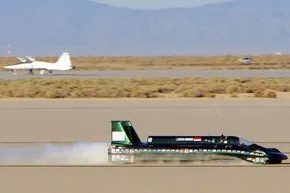
We tend to assume the automotive future is strictly electric. Fossil fuels go out, batteries come in. It’s the narrative we’re sold. But a small group of engineers and tinkerers think we’re looking at the wrong history. They believe the solution isn’t new tech, but old tech, refined. Specifically, steam.
It sounds like a joke. A relic. But the idea isn’t dead; it’s just been sleeping.
A History Written in Vapor
The concept of steam propulsion isn’t a modern invention. It dates back to the 1600s. In 1672, a Jesuit priest named Ferdinand Verbiest sketched out a small, steam-powered vehicle while at the Chinese imperial court. Whether he actually built it remains unclear. We don’t have proof.
But Nicolas-Joseph Cugnot did. In 1769, he built a steam-powered carriage. It was slow. It ran out of steam almost immediately. It was also the size of a small house by modern standards. Still, it proved the concept worked.
By the late 19th century, steam was a serious contender on the road. The Stanley Motor Carriage Company in the US made vehicles known as “Flying Teapots” because of their distinctive boilers. They were fast for their time. They started easily in the cold. They were popular in the early 1900s.
Then internal combustion engines (ICE) took over. Why? Size and efficiency. An ICE burns fuel inside the cylinder. The explosion pushes the pistons. It’s compact. It’s efficient. Steam uses external combustion. You heat water outside the engine to create pressure. The machinery was bulky. It was heavier. The market voted with their wallets.
The Closed-Loop Innovation
That dynamic is shifting. Not because we want nostalgia, but because we want efficiency.
Enter Harry Schoell and Cyclone Power Technologies. Schoell isn’t trying to rebuild a 19th-century boiler. He’s building a steam engine that fits in the space of a standard gas engine. The key is a closed-loop system. It heats and cools the water continuously. This reduces waste. It improves thermal efficiency significantly.
The steam gets so hot and pressurized that it behaves more like a liquid than a gas. This allows for denser energy transfer. More power in a smaller package.
The Cost of Complexity
Here is where the comparison gets interesting. An ICE needs a transmission. It needs a catalytic converter to meet emissions standards. It needs a muffler to quiet the explosions. It needs oil changes.
A steam engine needs none of that.
No transmission. No catalytic converter. No muffler. No oil.
The maintenance profile is drastically simpler. The parts count is lower. This should mean lower manufacturing costs. And lower long-term upkeep.
Fuel Agnosticism
Perhaps the strongest argument for a steam revival is fuel flexibility. In an ICE, you are tied to the chemical properties of gasoline or diesel. You need specific combustion characteristics.
Steam doesn’t care.
You burn any fuel to heat the water. Gasoline. Diesel. Biofuels. Natural gas. Even solid biomass. The engine only cares about heat. This decouples the vehicle from the fuel source. It allows you to switch fuels based on availability and price without modifying the drivetrain.
Does this make it viable for mass production? Can it compete with the entrenched infrastructure of electric and hybrid vehicles?
The technology exists. The mechanics work. The question is whether the industry will embrace a 200-year-old idea that somehow feels brand new.
Modern Steam: Faster Starts and Cleaner Burns
Forget the explosions. That’s the first myth to bury. Modern high-pressure steam engines don’t blow up like old movie props. The real hesitation people have is the warm-up time. Will you be standing in the driveway for twenty minutes watching steam hiss?
No.
The Cyclone steam engine wakes up in 10 to 15 seconds. Full power is on tap in under a minute. That is faster than a modern diesel needs to reach operating temperature. It’s not slow. It’s just different.
Fuel Flexibility vs. The Hybrid Trap
The biggest selling point isn’t just efficiency; it’s what you put in the tank. Early automakers didn’t worry about peak oil. Now they do. Steam engines don’t care if you feed them ethanol, biodiesel, jet fuel, or standard gasoline. This flexibility is a strategic asset in a world choking on fossil fuel dependency.
But how does a steam-powered car actually compare to the current green leaders? Hybrids and EVs are necessary steps, but they aren’t the finish line.
Hybrids still burn gasoline. They just burn less of it. They still emit pollutants, just fewer. Electric vehicles? Their cleanliness depends on your grid. If your local power plant burns coal, your EV is just a different kind of smokestack.
Steam changes the equation.
The Cyclone system burns fuel longer and hotter. This thorough combustion incinerates particulates before they can exit the tailpipe. Emissions are significantly lower than conventional internal combustion engines (ICE). And because the fuel source is flexible, the carbon footprint shrinks further as cleaner fuels become available. It’s an engine that gets greener as the grid gets greener.
From Lawn Mowers to Military Contracts
This isn’t just theoretical engineering anymore. Manufacturers are waking up.
Popular Science noted that Cyclone Power secured deals to power lawn mowers and garden equipment. That seems mundane, but it’s the testing ground. More importantly, in April 2011, Cyclone signed a contract with Raytheon. A defense contractor.
Why would the military care? Logistics. Troops deployed in hostile environments need fuel. Supply lines are vulnerable. A steam engine vehicle that can run on whatever fuel is locally available—kerosene, diesel, or even synthetic blends—reduces the logistical tail. It’s about operational freedom, not just environmentalism.
Will It Ever Hit the Showroom?
For mass consumer adoption, the price tag is the final boss. If manufacturing costs align with traditional ICE engines, the shift could happen. An oil crisis wouldn’t be a distant threat; it would be an immediate catalyst.
Today’s steam engines are efficient, compact, and versatile. They are far removed from the clunky giants of the 19th century. The technology is ready. The only thing missing is the will to build it at scale.
The Original Steam Hauler
It’s worth remembering where this tech started.
Richard Trevithick, a British engineer, didn’t just dabble in steam. He built it. In 1804, his prototype hauled 10 tons of iron and 70 men ten miles along a track in Wales. It was heavy. It was loud. It worked.
Railways became the backbone of the Industrial Revolution. Steam locomotives dominated transportation for over a century. They proved that high-pressure steam could move massive weight with relative efficiency.
We took the technology, shrunk it, refined the thermodynamics, and are now trying to put it back on the road. The history books say it couldn’t be done. The physics says it can. The market is still deciding if it wants to pay for it.