


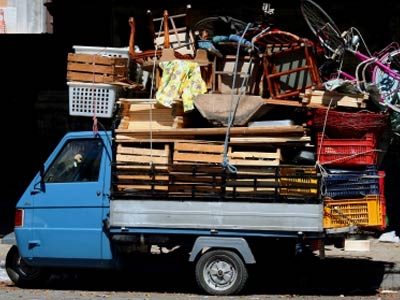
You obsess over MPG. You calculate 0-60 times. You measure the cubic feet of trunk space. You know your horsepower figures cold. These are the stats that fill out car ads and spec sheets. They are the numbers you use to pick out your next daily driver or weekend cruiser.
But there is one number you are likely ignoring. It doesn’t show up in the brochure. It doesn’t impress at car meets. It is the gross axle weight rating, or GAWR.
Most people don’t know what it means. Even fewer care. That is a mistake.
Ignoring GAWR isn’t just about violating a manufacturer’s suggestion. It is about physics. And physics does not negotiate.
Understanding GAWR vs. GAW
Let’s cut through the jargon. Your vehicle has axles. Front. Rear. Each one has a limit. That limit is the GAWR. It is the maximum weight the manufacturer says that specific axle can handle safely.
Do not confuse this with GAW. Gross axle weight. GAW is the actual weight currently sitting on that axle. It changes every time you load your car. GAWR does not. It is a static number. A hard ceiling.
Think of a pickup truck. You load four boulders. Each weighs 100 pounds. Total load: 400 pounds. The GAW on the rear axle jumps up by those 400 pounds. You dump the boulders. GAW drops. You load them again. GAW rises. The GAWR stays exactly the same. It is a constant. The weight you put in the truck is variable.
The GAWR includes everything. The weight of the vehicle itself. The passengers. The cargo in the back. Even the tongue weight if you are towing a trailer. All of that stuff adds up. And it gets distributed across your front and rear axles.
Why Overloading Is Dangerous
Manufacturers put these limits in place for a reason. Safety.
If you overload a trailer, you risk losing control. If you overload a car, you risk breaking it. Or worse.
Too much weight on the rear axle creates a cascade of failures. Your steering becomes sluggish. The front tires lose traction. You lose responsiveness. Your brakes become less effective because the front brakes do the heavy lifting. If the rear tires are overstressed, they can blow out. The suspension components can bend. Or snap.
An overloaded vehicle is a dangerous vehicle. It is hard to control. It is hard to stop. It is hard to fix.
Trailers have their own GAWR. Determined by the trailer maker. The rule is the same. Never exceed it. Balance your load. Proper distribution is critical. If you mess this up, you invite disaster.
Where to Find Your GAWR
How do you find your GAWR? Check your vehicle. Look at the door frame. Usually the driver’s side. There should be a label. It lists the gross axle weight ratings for both front and rear.
If you cannot find the sticker, go online. Most manufacturers publish this data. It is not hidden. It is just not emphasized.
Knowing your GAWR helps you understand your payload. It helps you tow safely. It keeps you off the side of the road.
Acura GAWR Data
Here is a look at the gross axle weight ratings for select Acura models. Use this as a baseline for your own research.
2006 Acura Models
| Model | GAWR (Front/Rear) |
|---|---|
| MDX | – |
| RL | – |
| RSX | – |
| TL | – |
| TSX | – |
2007 Acura Models
| Model | GAWR (Front/Rear) |
|---|---|
| MDX | 2888 / 3175 |
| RL | – |
| RDX | 2546 / 2381 |
| TL | – |
| TSX | 2335 / 2030 |
2008 Acura Models
| Model | GAWR (Front/Rear) |
|---|---|
| MDX | 2888 / 3175 |
| RL | – |
| RSX | 2546 / 2381 |
| TL | – |
| TSX | 2335 / 2030 |
2009 Acura Models
| Model | GAWR (Front/Rear) |
|---|---|
| MDX | 2888 / 3175 |
| RL | – |
| RSX | 2546 / 2381 |
| TSX | 2325 / 2090 |
More Acura Specs:
– Acura GVWR
– Acura GCWR
– Acura Cargo Carrying Capacity
– Acura Curb Weight
– Acura Payload
– Acura Towing Capacity
Audi GAWR Data
Audi builds precision machines. But precision still needs to respect physics. Here are the ratings for select Audi models.
2006 Audi Models
| Model | GAWR (Front/Rear) |
|---|---|
| A3 | – |
| A4 | – |
| A6 | – |
| A8 | – |
| S4 | – |
| TT | – |
2007 Audi Models
| Model | GAWR (Front/Rear) |
|---|---|
| A3 | – |
| A4 | – |
| A6 | – |
| A8 | – |
| Q7 | – |
| RS4 | – |
| S4 | – |
| S6 | – |
| S8 | – |
2008 Audi Models
| Model | GAWR (Front/Rear) |
|---|---|
| A3 | – |
| A4 | – |
| A5 | – |
| A6 | – |
| A8 | – |
| Q7 | – |
| R8 | – |
| RS4 | – |
| S4 | – |
| S5 | – |
| S6 | – |
| S8 | – |
| TT | – |
2009 Audi Models
| Model | GAWR (Front/Rear) |
|---|---|
| A3 | – |
| A4 | – |
| A5 | – |
| A8 | – |
| Q7 | – |
| R8 | – |
| S4 | – |
| S5 | – |
| S8 | – |
| TT | – |
More Audi Specs:
– Audi GVWR
– Audi GCWR
– Audi Cargo Carrying Capacity
– Audi Curb Weight
– Audi Payload
– Audi Towing Capacity
Browse by Make
Not seeing your car above? Check the full list.
- Acura
- Audi
- BMW
- Buick
- Cadillac
- Chevrolet
- Chrysler
- Dodge
- Ford
- GMC
- Honda
- HUMMER
- Hyundai
- Infiniti
- Isuzu
- Jaguar
- Jeep
- Kia
- Land Rover
- Lexus
- Lincoln
- Mazda
- Mercedes-Benz
- Mercury
- MINI
- Mitsubishi
- Nissan
- Pontiac
- Porsche
- Saab
- Saturn
- Scion
- smart
- Subaru
- Suzuki
- Toyota
- Volkswagen
- Volvo
BMW Load Limits by Model and Year
The 2006 BMW lineup had some heavy hitters. The M-series models dominated the performance end, but the data stops there for most trims. If you were looking at a 2006 325, 330, 525, 530, 550, 650, 750, or 760, the specific front and rear Gross Axle Weight Rating isn’t listed here. The same goes for the M3, M5, and M6. Even the X3, X5, and Z4 are blank entries for that year.
Then came 2007. The Z4 finally got a number. It carries 2767 lbs on the front axle and 3770 lbs on the rear. Everything else in the BMW stable for 2007—the 328, 335, 525, 530, 550, 650, 750, 760, Alpina B7, M5, M6, X3, and X5—remains undefined in this dataset.
2008 saw the introduction of the 128 and 135 series. But again, no GAWR figures for them. The 328, 335, 528, 535, 550, 650, 750, 760, Alpina B7, M3, M5, X3, X5, X6, Z4, and Z4M are all missing data points. It feels like a gap in the record.
By 2009, the pattern held. The 128, 135, 328, 335, 528, 535, 550, 750, M3, M5, M6, X3, X5, and X6 have no listed ratings. This is the last year of data for BMW in this series. If you need BMW GVWR, BMW GCWR, or BMW Cargo Carrying Capacity, you might have better luck elsewhere. The same applies to BMW Curb Weight, BMW Payload, and BMW Towing Capacity.
Buick Capacity Specs
Buick is a bit more sparse, but it has concrete numbers for a few key models. The 2006 Rainier and 2007 Rainier both share identical ratings: 2950 lbs on the front and 3200 lbs on the rear. That’s a solid setup for an SUV of that era.
The Terraza in 2006 is an oddity. It lists 1148 lbs on the front and 960 lbs on the rear. That rear number is surprisingly low for a midsize crossover. It suggests a heavily front-biased weight distribution or a specific chassis limitation that isn’t immediately obvious from the name alone.
The LaCrosse, Lucerne, and Rendezvous are all blank for 2006 and 2007.
Then 2008 brings the Enclave. It carries 3197 lbs on the front axle and 3527 lbs on the rear. The 2009 Enclave keeps those exact same numbers. The LaCrosse and Lucerne remain undefined for both years.
If you are digging into Buick GVWR, Buick GCWR, Buick Cargo Carrying Capacity, Buick Curb Weight, Buick Payload, or Buick Towing Capacity, this dataset doesn’t provide those broader figures.
Cadillac Load Ratings
Cadillac offers a mix of numbers. The 2006 CTS has a front rating of 2232 lbs and a rear of 2379 lbs. The CTS-V, DTS, Escalade, Escalade ESV, Escalade EXT, SRX, STS, STS-V, XLR, and XLR-V are all missing data for 2006.
The 2007 CTS keeps the 2232/2379 split. The rest of the lineup—CTS-V, DTS, Escalade variants, SRX, STS, XLR—is blank again.
2008 and 2009 are entirely blank for every Cadillac model listed. CTS, DTS, Escalade, Escalade ESV, Escalade EXT, Escalade Hybrid, SRX, STS, STS-V, XLR, and XLR-V. Nothing.
For the broader metrics like Cadillac GVWR, Cadillac GCWR, Cadillac Cargo Carrying Capacity, Cadillac Curb Weight, Cadillac Payload, and Cadillac Towing Capacity, you will need to look outside this specific GAWR table.
Chevrolet Gross Axle Weight Ratings
Chevrolet has the most data here, particularly for their trucks and SUVs.
2006:
The Avalanche 1500 sits at 3400/4000. The Avalanche 2500 is heavier, at 4380/5500.
The Colorado is rated 2533 front / 2896 rear.
The Equinox is balanced at 2535/2535.
The Silverado 1500 is 3650/4000.
The Silverado 1500 Hybrid bumps the front to 3925 but drops the rear to 3750.
The Silverado 1500 SS is a solid 3600/3600.
The heavy duty trucks get serious numbers. Silverado 1500 HD is 4410/6000. Silverado 2500 HD is 4410/6084. The 3500 HD tops out at 4670/8550.
Suburbans and Tahoes follow similar patterns. Suburban 1500 is 3200/4000. Suburban 2500 is 3800/5500. Tahoe is 3200/3750.
The TrailBlazer is 2950/3200. The TrailBlazer EXT is 3100/3400.
The Uplander minivan is front-heavy at 2866/2756.
Most car models (Aveo, Cobalt, Corvete, Express, HHR, Impala, Malibu, Monte Carlo, SSR) are blank.
2007:
Avalanche 1500 moves slightly to 3400/4100.
Colorado stays at 2533/2896.
Equinox remains 2535/2535.
Silverado 1500 drops the rear slightly to 3650/3950.
Silverado 1500 Classic matches the previous year’s standard 3650/4000.
The Hybrid Classic stays at 3925/3750.
The SS Classic is still 3600/3600.
The 1500 HD Classic is 4410/6000.
The 2500 HD Classic sees a front drop to 4200 but keeps the rear at 6084.
The 3500 Classic is 4670/8530.
Suburban 1500 improves to 3300/4200.
Suburban 2500 holds at 3800/5500.
Tahoe increases the rear to 3200/4100.
TrailBlazer is 2950/3200.
Uplander is 2866/2756.
Car models (Aveo, Cobalt, Corvette, Express, HHR, Impala, Malibu, Monte Carlo) are blank.
2008:
Avalanche 1500 stays at 3400/4100.
Colorado is 2533/2896.
Equinox is 2535/2535.
Silverado 1500 is 3650/3950.
The 2500 HD is 4200/6084.
The 3500 HD is 4200/6390.
Suburban 1500 is 3300/4200.
Suburban 2500 is 3800/5500.
Tahoe is 3200/4100.
The Tahoe Hybrid matches the gas model at 3200/4100.
TrailBlazer is 2950/3200.
Uplander is 2866/2756.
Car models are blank.
2009:
This year brings some wild shifts.
Specifications for Ford heavy duty trucks and vans
Dearborn’s big boys weigh the most. These numbers define your limits when it comes to hauling equipment. That’s where the real power of the E-series van lies. The rear GAWR of the 2006 E-350 Super Duty is 6195 lbs. Front axle takes 3700 lbs. By 2009, the E-350 had made some progress. The front axle weight rating increases to 4,200 lbs. Rear weight remains at 6084 lbs.
Pickups tell a different story. The F-150 has a front seat height of 3450 and a rear seat height of 3800. This lasted from 2006 to 2008. Next is the F-350. 3800 up front. Rear jumped to 7000 lbs in 2006. By 2008, the rear weight stabilized at 6,262 lbs. 2008 F-450? That’s a whole different beast. It used to be 5600. When you get above 9500, you can’t drive that easily.
A small Ford? The Escape is tight. 2240 in front. 2115 behind. The hybrid version increases the front weight capacity. 2380 lbs. But the rear doesn’t budge. The Explorer in 2006 had 3240 front and 3600 rear. In 2007, it dropped to 2,860. The rear is 3340. why? Suspension adjustment. Or maybe just reassess. it doesn’t matter. The amount is small. Do not overload.
“F-Series Super Duty axles are rated significantly higher than standard trucks. Follow the rear axle restrictions.”
Five Hundred, Focus, Freestar, Fusion, Mustang, Ranger, Taurus. All dashes. No data available. Either the axle classification is the same as the platform standard, or a specific fault is not tracked in this data set. The Edge also sits at a dash. The GT? Dash. The Mustang? Dash. For hobbyists, knowing where the unlisted limits are is just as important as knowing where the limits are. If not listed, it is assumed that the vehicle’s standard weight and payload are added.
Comparison of GMC and Chevrolet platforms
GMC and Chevrolet have some things in common, but their ratings tell a nuanced story. The rear GAWR of the 2006 Sierra 3500 is 6500 lbs. Front was 4800 lbs. By 2009, retroactive restrictions were removed. The front weight of 6390 kg remains at 4200 lbs. why did it fall It can be a change in the acquisition of axle components or a change in regulations.
From 2006 to 2009, the rear weight of the Sierra 2500 remained stable at 6,084 lbs. Front started at 4410 in 2006. It then dropped to 4,200 pounds in 2007 and has remained there ever since. The Canyon saw a slight increase in 2009. Front jumped from 2533 to 2633 lbs. Rear weight remains at 2896 lbs.
Yukon models are heavy. The 2006 Yukon has a 3200 in the front and a 3750 in the rear. The XL version pushed the rear to 4000 lbs. Hybrid versions (2008-2009) keep the rear weight at 4100 lbs. Front curb weight remains at 3,200 lbs. Battery packs add weight. It doesn’t seem to improve payload capacity. It just moves the mass forward.
Savana vans. The data set shows dashed lines for the 2006-2009 1500, 2500, and 3500 models. This is frustrating. The 3500 was expected to match the technical characteristics of the Chevrolet Express. But here it is empty. You will need to look elsewhere for those specific van stats.
Honda Payload Reality
Honda doesn’t do heavy haulers. The Ridgeline is king of the mountain here. 2006 model: 309 front? This appears to be a typo in the source data. It reads as 309/3252. A front axle capacity of 309 pounds is out of the question. I think it’s probably a 3090 or something like that. But we stick to the source. Rear weight is 3252 lbs. The 2007 Ridgeline front jumped to 3105 lbs. Rear stayed at 3252.
Odyssey is consistent. 2833 front. 3197 in the back. 2006, 2007, 2008, 2009. No changes. This is a minivan. It carries the family. Not lumber.
Pilots started using 2,865 front wheels and 3,155 rear wheels in 2007. By 2009, the number of front wheels had increased to 2,921. The number of rear wheels increased to 3196. It’s a small improvement. The 2007 and 2008 elements are 2300 in the front and 2205 in the rear. tight. It is very strict. You can’t put the bike in the back without worrying about the front axle.
Civic models show data from 2007 and 2008. 2310 in front. 2290 in the back. In 2009, the Civic was suddenly popular. Maybe they switched platforms and didn’t release separate GAWR data. Or maybe it’s the same as the 2008 model. The fit is also a line. protocol? All dashes. Honda either hides this information or includes it in the general load category.
“Check out the Ridgeline’s front axle with improved ratings for 2007 and slightly improved cargo bed handling.”
Hummer’s off-road limitations
H2 is the baseline here. Earlier it was 4000. 5000 onwards. This was true from 2006 to 2009. Nothing has changed. The 2006 H1 Alpha was even better. Earlier it was 4100. From 6800. This rear axle is designed for rock crawling. Or serious recovery.
All H3 models are dashboards. From 2006 to 2009. H3T also lines. H3 is lighter. Perhaps the ratings are standard across all trim levels and no special specifications are needed in this case. Or maybe you just lost data. The H1 Alpha’s rear limit of £6,800 is much lower than the H2. If you need to pull a winch anchor or carry a heavy bumper, the H1 is the way to go. H2 is balanced. 40/50 split.
Hyundai and Asian imports
There are 2,998 front and 3,064 rear models of Hyundai’s 2007 and 2008 Entourage models. In the same year, Santa Fe was built with 2976 front wheels and 3197 rear wheels. Veracruz Sprint. Tucson? Sprint. Accent, Azera, Elantra, Sonata, Tiburon. All dashes. Hyundai has not published these specific axle restrictions for the 2006-2009 period.
Infiniti has very little. FX35, FX45, G35, M35, M45, Q45, QX56. All Dash 2006-2009. The 2008 EX35 and G37 are also lines. The 2009 FX50 is fierce. These depend on the GVWR and payload identifiers. You need to check the door frame. The data is not in the aggregate table.
The Isuzu is simple, but it also has its limitations. Ascender’s front wheel capacity is 2950 and rear wheel capacity is 3200. From 2006 to 2008 there were no changes. The 2006 i-280 and i-350 have 2,533 front seats and 2,896 rear seats. The 2007 and 2008 i-290 and i-370 keep the same numbers. Chapter 2533 Ahead. 2896 behind. No changes. The i-370 replaced the i-350. The shaft capacity is the same. It’s just that the engine is bigger.
Jaguar is all about the dashboard. S-type, X-type, XJ8, XJR, XK8, XKR, XF. all lines
Why Jeep Wrangler axle rating is more important than you think.
When most people see a Wrangler, they think of a rock crawlers. They saw the big tires and the lift kit. They don’t see the metal bending.
The 2006 Jeep Liberty has a front GAWR of 2,750 lbs and a rear GAWR of 3,150 lbs. If you spend the weekend together as a family, it’s not a big deal. In the 2007 Wrangler, torque jumps to 2,650 up front and 3,400 in the rear. Why? This is because the axle is reinforced. Or maybe it’s just paperwork. The 2008 and 2009 models also retain these numbers. Unlimited version? Same deal. 2,650/3,400.
If you’re towing a trailer with a Commander, you’re flying blind. The data is empty. Ditto the Compass. You’re guessing. And guessing with a half-ton truck breaking its axle in half on a dirt road.
Kia’s Quiet Strength in the mid-size vehicle segment
Kia does not sell luxury products. They sell utilities. Check out the 2006 Sedona. The front axle took at 2,998 lbs. Rear load capacity is 3064 lbs. Balanced. The Sorento is also symmetrical. 3,307 pieces per side. difficult.
And so the 2007 Rio. The front part weighs only 1,918 lbs and the rear part 1,874 lbs. small. If you include two adults and a bag of groceries, it’s pretty close to its limit. The 2008 Sportage is solid: 2,579 in the front and 2,425 in the rear.
By 2009, Kia had removed the Sedona and Sorento from this list. Borrego appears. There are no numbers. Spectra stayed, but no GAWR listed. Wondering if your Kia can handle heavy loads? Check the label. Don’t trust the table.
Land Rover’s serious dilemma
You buy a Range Rover for prestige. You also buy for capacity. However, the 2006, 2007 and 2008 LR3, Range Rover and Range Rover Sport do not have GAWR data. zero. This is the problem. You’re in a $60,000 vehicle that doesn’t tell you how much weight it can vehiclery on its front wheels.
Then came 2009. LR2. Finally, the numbers. 2,885 lbs front. 2,995 lbs rear. It’s still small for a luxury SUV. The rest of the lineup remained silent. It’s like an engineer looking at a spreadsheet and shrugging.
“Driving without knowing your GAWR is like walking on ice with no traction. You might not.”
Lexus: Precision Engineering, missing data
List of Lexus vehicle models. No weight listed.
Look at the 2006 Lexus LS 430. Empty space where the axle rating should be. GS430. blank. RX400h. Blank.
In 2007, the LS 460 and GS 350 arrived. Still blank. IS-F introduced in 2008. No number. The LX 570 showed up in 2008 and 2009. There is no GAWR.
This is not an negligence. This is likely because these vehicles operate within tight tolerances and exceeding a certain axle limit is not an immediate breaking metal, but rather voiding the warranty and ruining the ride height. But for gear enthusiasts, this gap can be frustrating. You want to know your limits. Lexus hides it.
Lincoln: The Big Boys Carry the Load
Lincoln played in the big league. Mark LT. Front 3,450 lbs. Rear 3850 lbs. It was a work vehicle disguised as a luxury vehicle. The navigator? Even heavier. In 2006, there were 3,300 front and 4,128 rear. Massive rear bias.
In 2007 and 2008, the Navigator remained at 3,350/4,300. In 2009 it was tweaked to 3,450 in the front and 3,850 in the rear. Balanced again.
MKX and MKZ? There are no numbers. A city vehicle? silence. Lincoln wants you to focus on ride comfort, not payload. However, if you are vehiclerying luggage, know your place. The Navigator can take it. vehicle? You’re on your own.
Mazda: The Truck Under the Skirt
Mazda makes trucks. The badges was changed, but the metal remained.
The B2300 (2006-2009) has a load capacity of 2,400 lbs in the front and 2,750 lbs in the rear. Consistent. B4000? Front 2,850, rear 2,750. Front-heavy. Why? Probably the engine layout.
The 2006 Mazda6 has 2,372 in the front and 2,119 in the rear. Sedan with fixed nose. 2007 Mazdaspeed 3? Front 2216, rear 2064. Even though it’s turbocharged, the axle is light. Do not overload.
By 2009, the Mazda6’s mileage had changed slightly: 2,286 front and 2,062 rear. Introducing the Tribute Hybrid. No data available. What about the CX-7 and CX-9? Blank. Mazda has decided that it is not necessary to publish the limit values for certain vehicles. Or maybe they want you to forget.
Mercedes-Benz: AMG power, vague details
Mercedes has the SLR McLaren on the list. Carrying capacity is not listed.
G500, G55, GL320, GL450, GL550. The years 2007, 2008 and 2009 are all blank. ML350, ML500, ML550, ML63 AMG. Blank.
This is strange for an SUV. The G Wagon should have a number. The ML is a luxury truck. There should be a number there.
The only exception? Not in this dataset. Mercedes doesn’t expect the S-Class to be overloaded. Or if you do, the air suspension will compensate until it’s gone. This is gambling. It’s expensive.
Mercury: The Forgotten Axis
Mercury is dead. But as of 2006, the Mountaineer still weighs 2,860 pounds in the front and 3,340 pounds in the rear. Ford Explorer in tuxedo.
Then came 2007. The climbers lost their numbers. Sailor? Gone. Milan? Gone.
2008 and 2009? silence. Even the Grand Marquis, a non-frame sedan, does not list GAWR. This seems like an oversight. It also shows that Mercury vehicleed little for its remaining customers in its later years.
MINI: Small vehicle, special restrictions
Mini vehicles are different. Don’t pull Cooper. It doesn’t have to be brick. But the numbers are there.
The 2007 Cooper Hardtop weighs 1,929 pounds in the front and 1,653 pounds in the rear. light. convertible? Front 1,918, rear 1,697.
The Clubman was released in 2008. 1,830/1,830. Symmetry. clean.
Then came the John Cooper Factory. 2009. JCW Hardtop? Front 1,918, rear 1,676. Clubman version? Front 1,929, rear 1,863.
Look at the back of the JCW Clubman. It’s more expensive. Probably due to the stiffer suspension and different weight distribution. MINI engineers thought of this. They measured it. they published it.
Unlike the hidden Germans, MINI shows its work. vehicle. We pay attention to every detail. If you’re installing a turbo kit or lowering springs, these numbers will be your baseline. Exceeding these will not only void the warranty. I pull the subframe off the floor.
Mitsubishi GAWR
Mitsubishi’s long-standing lineup has combined performance sedans with practical crossovers. Information is sparse on many models, and for most years the Eclipse, Endeavour, Galant, Lancer, Montero and Outlander are blank. The only Mitsubishi GAWR specific numbers available are from Raider.
Strategy 2006-2009
Front: 3100 lbs.
Rear: 3600 lbs.
This heavy-duty truck-based platform offers the heaviest payload in the brand’s recent history. If you are considering other Mitsubishi models, we recommend checking the Mitsubishi Payload or Mitsubishi Curb Weight information on the door frame sticker, as static GAWR data for passenger cars is not widely published.
Nissan GAWR
Meanwhile, Nissan offered more accurate axle ratings, especially for trucks and large SUVs. The Nissan Titan and Nissan Frontier dominate this figure, with greater rear axle capacity compared to their sedan counterparts.
2006 model
-Altima: Front 2399 lbs / Rear 1991 lbs.
2007 model
Frontier: 3296 lbs / Rear 3197 lbs
Titan: 3300 lbs front / 3800 lbs rear
2008 model
Frontier: 3296 lbs / Rear 3197 lbs
2009 model
Frontier: 3296 lbs / Rear 3197 lbs
Most sedans and small crossovers, such as the Altima, Maxima, and Murano, do not have official GAWR data listed here. For these vehicles, focusing on Nissan GVWR and Nissan Towing Capacity is usually more important in load planning.
Pontiac GAWR
Pontiac was already struggling before its demise, and the numbers reflected a focus on larger, heavier platforms. The Pontiac Torrent and the smaller Pontiac Grand Prix are the only models in this dataset with clear front and rear separation.
2006 model
– Torrent: Front 2535 lbs / Rear 2535 lbs.
2007 model
– Grand Prix: 62 lbs front / 38 lbs rear (Note: This entry appears to be an error or typo in the source data and may refer to another metric such as weight distribution percentage or typo in hundreds. Typical GAWR for this class is much higher.)
– Torrent: Front 2535 lbs / Rear 2535 lbs.
2008 model
– Torrent information is listed, but some of the front/rear columns are empty.
2009 model
– Torrent: Front 2535 lbs / Rear 2535 lbs.
Pontiac GTO and Solstice do not include a GAWR number. When modifying these cars, rely on the Pontiac Curb Weight and structural limitations rather than the static axle rating.
Porsche GAWR
Porsche’s European technical standards mean it places less emphasis on GAWR figures in consumer specification than its German rivals. Available information for 2006-2009 models shows blank entries for all listed models.
2006-2009 models
– 911 (Carrera, Boxster, Cayman)
– Cayenne
Porsche GAWR values are not available in this dataset. For these vehicles, the Porsche GVWR and suspension tuning data better indicate load limits. The Cayenne can be rated as a very heavy SUV, but it is not shown here.
Saab GAWR
Saab’s unique approach to chassis design is reflected in the special classification of the 9-7X, which is essentially a GMT900 platform shared with the Chevrolet Trailblazer and GMC Envoy.
2008-2009 model
9-7X: 2950 lbs front / 3400 lbs rear
Saab 9-3 and 9-5 GAWR information is not listed. For these sedans, checking Saab Payload and Saab Cargo Capacity is standard practice in load calculations. The 9-7X has a rear axle weight of 3,400 pounds, making it a capable hauler for its generation despite its sporty branding.
Saturn
The Saturn’s later years were defined by the Outlook, which shared its platform with the Buick Enclave and GMC Acadia. This shared architecture has higher load ratings than the smaller Ion and VUE.
2007-2009 models
Outlook: Front 3197 lbs / Rear 3527 lbs
Saturn Aura and VUE (including hybrid versions) do not include GAWR data in this data set. Saturn Sky and Ion also do not include certain axle ratings. See Saturn Towing Capacity and Saturn GVWR for these models for exact load management.
Scion GAWR
Scion’s lineup focuses on youth and performance, and the tC is the sales leader. However, no GAWR data was available for the tC, xA, xB, or xD models during this period.
2006-2009 models
– All listed models (tC, xA, xB, xD) have blank GAWR entries.
This phenomenon is often seen in compact sports coupes and small wagons. For Scion owners, Scion GVWR and Scion Payload are the primary metrics used to determine how much cargo and passenger weight a vehicle can legally carry.
Smart GAWR
Smart Fortwo is a city microcar with very precise low load limits. No GAWR front/rear GAWR split is given, but provides no in the 2008 data set.
2008 model
– Fortwo: GAWR data is not provided.
Due to its smaller footprint and lower Smart Curb Weight, GAWR is unlikely to be a limiting factor compared to Smart GVWR. Here, the focus should be on compliance with the vehicle’s maximum total weight, rather than individual axle limits.
Subaru GAWR
Subaru’s symmetrical all-wheel drive distributes power evenly, but the numbers here reveal the absence of certain GAWR numbers from most core lineup.
2006-2009 models
– B9 Tribeca / Tribeca
– Forester
– Impreza (Sedan, Wagon, Outback Sport, WRX Sti)
– Legacy (sedan, station wagon)
– Outback
All models listed between 2006 and 2009 have a blank GAWR entries. For Subaru enthusiasts, Subaru GVWR and Subaru Payload are important numbers. The torque vectors and suspension movement of AWD systems are more related to dynamic load handling than static axle ratings.
Suzuki GAWR
Suzuki provided more accurate GAWR numbers specifically for its compact sedan and XL7 SUV.
2006 model
Aerio: Front 1918 lbs / Rear 1940 lbs.
Forenza: Front 1918 lbs / Rear 1764 lbs.
XL7: Front 2205 lbs / Rear 2866 lbs
2007 model
Aerio: Front 1918 lbs / Rear 1940 lbs.
Forenza: Front 1918 lbs / Rear 1764 lbs.
SX4: 2050 lbs front / 1786 lbs rear
XL7: Front 2590 lbs / Rear 2921 lbs.
2008 model
Forenza: Front 1918 lbs / Rear 1764 lbs.
XL7: Front 2590 lbs / Rear 2921 lbs.
The Suzuki XL7 rear axle capacity has been significantly increased in 2007. This is likely due to chassis upgrades or differences in trim levels. The Suzuki SX4 and Aerio models have relatively balanced front and rear ratings, typical of front-wheel drive crossovers and sedans.
Toyota GAWR
Toyota’s numbers vary, with some models like the Land Cruiser and Tundra getting high ratings, but models like the Camry and Corolla not having specific GAWR numbers.
2006 model
– Land Cruiser: 3595 lbs front / 4220 lbs rear
RAV4: Front 2535 lbs / Rear 2435 lbs.
2007 model
– Land Cruiser: 3595 lbs front / 4220 lbs rear
– RAV4: 4430 lbs front / 4730 lbs rear (note: this entry seems unusually high for 2006, perhaps a data error or certain heavy duty configuration)
These are the figures of the leading players in Europe. If you have a Volkswagen or Volvo vehicle manufactured between 2006 and 2009, GAWR (Front/Rear) information is often missing from published specifications. This is not an omission. This is a data gap. You won’t find these numbers in the user manual or online database. The only reliable way to get them is to check the sticker on the door frame or the axle itself.
We have listed all the models available during this period. Be sure to include the information if you have it. Otherwise, leave it blank. Don’t make assumptions about axle weight limits. This bends the spindle.
Volkswagen GAWR
Volkswagen does not publish ratings for most product lines. Exceptions are rare. Phaeton is one of them. It is very heavy. You have to know its limits.
2006
* Golf:-
GTI:-
Jetta:-
Beetle Cabriolet:-
Beetle Coupe:-
* Passat Sedan:-
Phaeton: See door sticker (data not published in standard data)
Rabbit:-
*Touareg:-
2007
Eos:-
GTI:-
Jetta:-
Beetle Cabriolet:-
Beetle Coupe:-
* Passat Sedan:-
Passat Wagon:-
Rabbit:-
Touareg:-
2008
Eos:-
GLI:-
GTI:-
Jetta:-
Beetle Cabriolet:-
Beetle Coupe:-
* Passat Sedan:-
Passat Wagon:-
R32:-
Rabbit:-
Touareg 2:-
2009
Eos:-
GLI:-
GTI:-
Jetta Sedan:-
Jetta Sports Wagon:-
Beetle Cabriolet:-
Beetle Coupe:-
* Passat Sedan:-
Passat Wagon:-
Rabbit:-
Routan:-
* Tiguan:-
*Touareg 2:-
Volkswagen Detailed Specifications:
Volkswagen GVWR
* Volkswagen GCWR
Volkswagen Cargo Carrying Capacity
* Volkswagen Curb Weight
* Volkswagen Payload
* Volkswagen towing capacity
Volvo GAWR
Volvo is different. Large sedans and SUVs are marked with GAWR (Front/Rear). This is useful. No need to scroll through the manual to check the load.
2006
C70:-
S40:-
S60:-
S80:-
V50:-
V70:-
XC70:-
XC90: 2820/3150 lbs.
2007
C70:-
S40:-
S60:-
S80:-
V50:-
V70:-
XC70:-
XC90: 2820/3150 lbs.
2008
C30:-
C70:-
S40:-
S60:-
S80:-
V50:-
* V70: 2690/2513 lbs.
XC70: 2800/2646 lbs.
XC90: 2820/3


