Towing feels like a massive undertaking. One minute you’re checking tire pressure; the next, you’re drowning in acronyms like GVWR and tongue weight. It’s easy to get lost in the weeds of online forums and trailer supply counters. We talk endlessly about drawbar pull, trailer brakes, tie-down hangers, and those heavy-duty tow bars. But we forget the small stuff. The tiny components.
Take grease caps. Or dust caps if you prefer the older term.
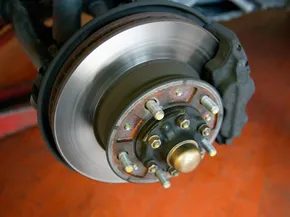
They sit at the center of your wheel. Small. Round. Metal. Often ignored until you hear a ominous grinding noise and find yourself stranded on the shoulder, waiting for a tow truck. You might think they’re just chrome garnish. A nice touch on a plain wheel. They aren’t.
They are your first line of defense.
The Real Purpose of Grease Caps
Without a grease cap, your wheel bearings have zero chance. Out there on the highway, you aren’t just fighting wind resistance. You’re fighting dirt. Dust. Sand. Water. Road salt. Grime. All of it loves to get into your bearings. Once it gets in, it destroys them. Fast.
Grease caps keep that debris out. Simple as that.
But they do more than just act as a shield. They manage the lubrication. Your wheel bearings are packed with thick bearing grease every time you service them. That grease stays in place because of the cap. If the cap were missing, the grease would eventually wash away or get contaminated. The bearings would run dry. They’d seize. You’d be in trouble.
Packing the Cap Matters
Here is where most people go wrong. They pack the bearings perfectly. Then they slap the cap on empty.
That’s a mistake.
You need to pack the grease cap itself. Full. Completely filled with fresh grease. Why?
Two reasons.
First, it provides a reserve. As the bearings heat up and expand during travel, that extra grease in the cap ensures there’s always a supply nearby. Second, it acts as a plug. If the cap is empty, grease can migrate into the hollow space of the cap. It leaves the bearing dry while filling the cap. That’s the opposite of what you want.
“If the cap were empty, the grease might eventually work its way into the cap, filling the cap but leaving the bearings dry.”
So, when you’re servicing your trailer this weekend, don’t just look at the bearings. Look at the cap. Pack it. Tighten it. It’s small. It’s cheap. But it’s the difference between a smooth haul and a roadside disaster.
Using Grease Caps

Why Grease Caps Are Non-Negotiable for Trailer Longevity
You don’t have a luxury of choice here. Dirt, dust, water, salt, and sand are waiting to eat your wheel bearings alive. Grease caps exist for one reason: to keep those contaminants out. Use them properly and your bearings last. Ignore them and you will be replacing bearings in a hurry.
The Annual (Or Biannual) Ritual
Proper trailer maintenance is not a suggestion. It is a schedule. You need to remove, clean, and repack wheel bearing grease at least once a year.
If you are hauling a boat, especially into saltwater, that timeline shrinks. Do it twice a year. This routine requires pulling the grease caps off. Do not forget to refill them with fresh grease before you put them back on. Empty caps are just empty space for grime to enter.
Press-On vs. Screw-On: A Critical Distinction
Grease caps come in every size, shape, and finish. They are custom-fit to applications. But they are installed in two fundamentally different ways.
Some are press-on types. Most are threaded. Think of it like a lid on a jar.
This distinction matters. If you treat a screw-on cap like a press-on one, you might force it. You might bend it. You could crack it. Or puncture it.
Once that happens, you need a new cap. The good news is they are cheap. Usually only a few dollars. The bad news is you cannot drive anywhere until you replace it. Exposed bearings risk immediate contamination. That is a slow death for your hub assembly.
Stop Using Screwdrivers as Pry Bars
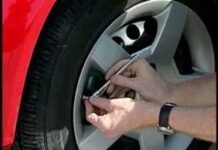
Here is where most people make expensive mistakes. They try to pry caps away from the wheel hub with a screwdriver.
Don’t do that.
Several companies make specific removal tools. These tools are designed to engage the cap properly. If you service your bearings frequently, buy one. It saves time. It saves money. It saves your sanity.
Force is not a strategy. Precision is.
“Knowing if the caps are the press-on or screw on-type is critical when you’re removing the grease cap.”
The Cost of Neglect
Forcing a cap can lead to immediate failure. A cracked cap lets moisture in. Salt accelerates corrosion. Sand acts as grinding paste. Your bearings will seize.
A cheap tool prevents this. A proper removal technique preserves the seal. The difference between a five-dollar cap and a destroyed hub assembly is significant.
Related articles often discuss Gross Trailer Weight (GTW) and Tongue Weight. These are vital stats. But they mean nothing if your bearings fail on the highway.
Green Towing initiatives focus on efficiency. Yet, maintenance is the most efficient way to tow. A well-packed hub uses less energy. It creates less heat.
For deeper dives into transmission coolers or trailer suspension, check the links below. But first, check your caps.
Sources:
– eHow Cars Editor. “How to Remove Wheel Bearing Dust Caps.”
– etrailer.com. “How to Replace Bearings, Races, and Seals on a Trailer Hub Assembly.”
– Johnson, Benjamen. “Save Your Dust Caps.” Toolmonger.
– Trailer Parts Warehouse. “Trailer Suspension – Grease Caps & Hub Bearings.”