


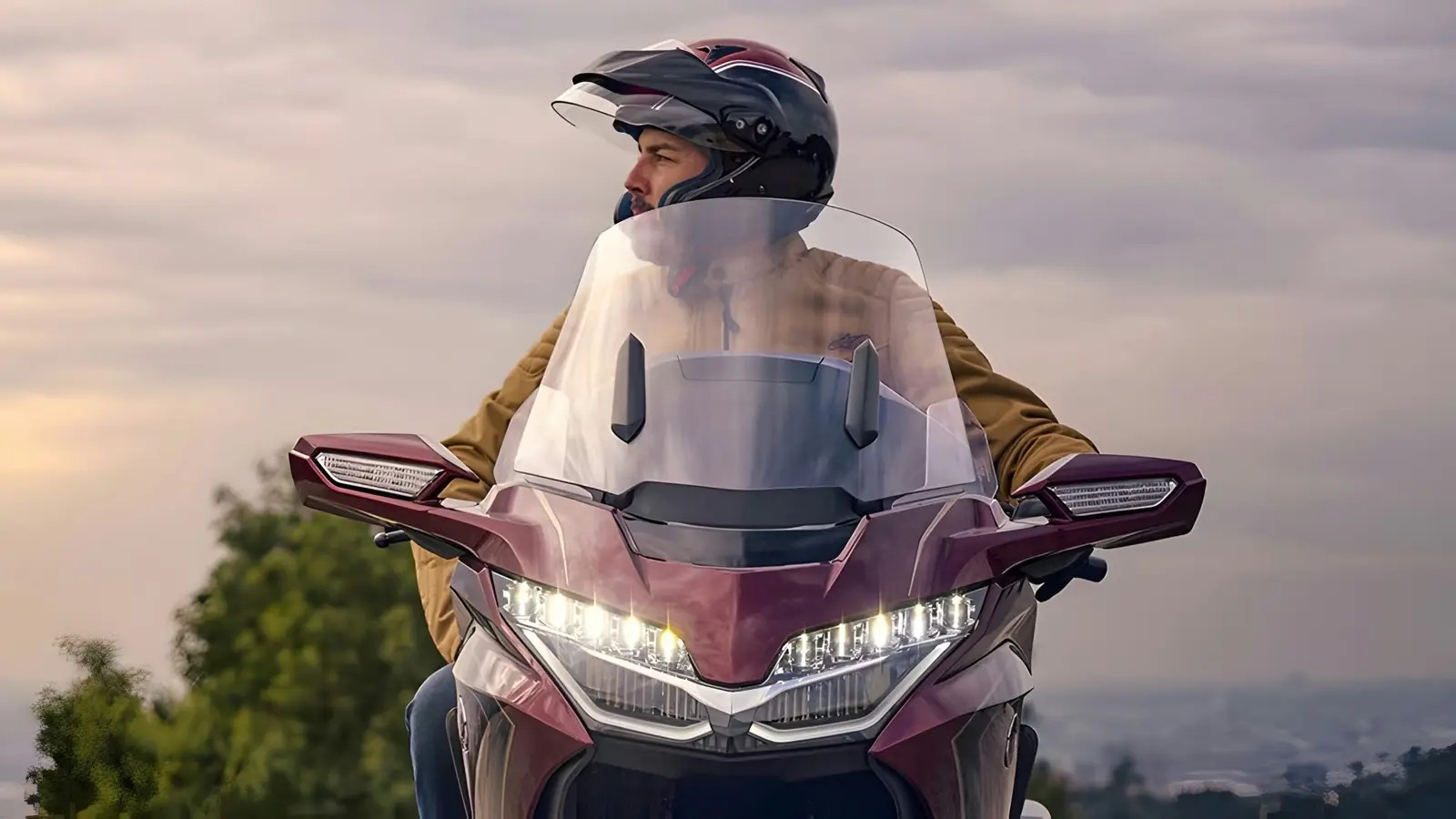
Motorcyclists love the traditional touring bike. There are plenty of modern options today. Cross-touring rigs, adventure bikes, sport-tourers. But nothing feels quite like a big, honest-to-God full-dresser.
You want laid-back luxury. You want to eat up miles without your shoulders hurting. You need proven reliability. Mix those ingredients and you get a machine most riders refuse to let go of. Honda’s answer to that desire is the Gold Wing 2026 Tour.
It sits at the top of the pile. Not because it is flashy, but because it works. It bridges the gap between classic Honda engineering and modern tech. It competes directly with Harley and Indian. But it wins on longevity.
Why Traditional Full-Dressers Dominate Cross-Country Trips
Touring motorcycles have one job. Go far. Comfortably.
The design logic is simple. Relaxed ergonomics inherited from cruiser culture. Big seats. Heavy windshields. Integrated hard luggage that you don’t have to strap down in the rain.
Modern segmentation has confused buyers. Sport-touring leans into speed. Adventure-touring leans off-road capability. Crossover models try to do both poorly. The traditional full-dresser ignores those trends. It focuses on the highway.
A low center of gravity helps here. These bikes sit heavy but low. That translates to eerie stability at 75 mph. Wind noise? Minimal. The fairing is designed to shield the rider from every gust.
Fatigue is the enemy on long rides. Traditional tourers solve fatigue through sheer bulk and comfort. They absorb road vibration. They protect against weather.
Almost every major manufacturer sells one in 2026. But most compromise on either comfort or handling. Honda keeps the balance.
What Actually Matters On A Long Ride?
When planning a 2,000-mile trip, you don’t care about cornering speed. You care about survival. And enjoyment.
- Range: Large fuel tanks (usually over 5 gallons) mean fewer gas stops.
- Luggage: Hard bags are waterproof. They are secure. You pack once at home.
- Protection: A full fairing stops rain, wind, and bugs from ruining your day.
- Seats: Wide. Padded. Enough space for a passenger who won’t hate you later.
- Power: Big displacement engines with torque everywhere in the power band.
The list is short. But executing it well is hard.
2026 Honda Goldwing Tour: Specs And Price Breakdown
Starting MSRP: $29,500 (Manual) / $30,500 (DCT)
Top Trim (Airbag): Starts at $33,80
The Honda Gold Wing put Japanese touring on the map. Half a century ago. It is still there.
The 2026 model carries forward the core DNA that has worked since 1988. That is not a bug. That is the feature. Honda refines components. They do not reinvent the wheel. This approach justifies the price tag.
Adding the DCT (Dual Clutch Transmission) adds $1,000. It simplifies riding in traffic. It makes the bike urban-ready, if that’s your thing. The top tier adds the world’s first motorcycle airbag system.
Is it worth nearly $34k? If you buy to sell, no. If you buy to keep for 15 years, absolutely.
The Secret To The Goldwing’s Bulletproof Reputation
The heart of the bike is a flat-six cylinder engine. Honda debuted this layout in 1988 with the GL1500.
They kept it. They improved it.
In 2001, they added fuel injection and increased displacement. The current version uses four valves per cylinder. It adds a sixth gear. It moves from 1,500cc to 1,833cc.
Why does age matter? Reliability compounds. Parts have been stress-tested for decades. Tolerance stacks are known. Failure modes are understood.
A 2015 model has exceeded 700,00 miles. On its original engine.
Regular models reach 100k–150k miles easily. Just change the oil. Inspect belts. It is that simple.
Performance numbers?
* Horsepower: 125 hp @ 5,500 rpm
* Torque: 125 lb-ft @ 4,50 rpm
* Feel: Linear. Punchy. No flat spots.
This power curve makes the Goldwing an easy “1000-miler.” You shift up. The throttle opens. The world falls away.
How The Transmission Choices Work
Base models use a 6-speed manual.
It sounds archaic for a luxury cruiser. It isn’t. Honda added reverse gear using an integrated starter generator. It pulls you backward in tight parking spots.
Then there is the DCT.
It is unique. The only production 7-speed dual-clutch transmission on a motorcycle.
It learns your riding style. It shifts based on inputs. You can take control via handlebar paddles if you prefer manual intervention. Or let it automate entirely. The result is seamless power delivery without a clutch lever to drop.
Chassis Tweaks For Better Handling
Weight is usually the enemy of touring bikes. Not here.
The current generation shed about 90 pounds compared to predecessors. How? Lighter engine internals. Aluminum frame components.
The frame is a die-cast aluminum structure. It balances rigidity with weight savings.
Suspension is sophisticated.
* Front: Double-wishbone.
* Rear: Pro-Link monoshock with a single-sided swingarm.
This setup separates steering from suspension functions. Less brake dive. More stability in corners. The rider sits closer to the front axle, improving leverage.
Comfort Is Functional Styling
Don’t look at the Goldwing Tour and think it’s just a appliance. It looks sharp. Aggressive, even.
The fairing is sculpted. Wind doesn’t just hit it. It flows around it. The windscreen is electrically adjustable. 4.9 inches of range. Dial in your neck support perfectly.
Side fairings protect the rider’s legs from cold wind. They also feed air to the radiator. Form follows function.
Nano-tech paint protects against swirl marks. The auxiliary lights are tucked neatly into the side panels. They blend into the engine architecture.
Seat height is a modest 29.3 inches flat and firm. Most riders can put two feet on the ground. It is accessible despite its heft.
Storage: The Real Deal For Touring
Base models offer weatherproof saddlebags. That gives you 15.85 liters. Enough for a weekend trip? Sure.
The Tour model adds a hard top case. Total storage jumps to 32 liters.
You can fit two full-size helmets up front. Or a week’s worth of clothes in the back.
Locks work remotely via keyless entry. The system is integrated. No separate padlocks. No frustration in the wind.
Designed for two. The passenger gets heat. They get leg protection. They get comfort equal to the rider.
Technology That Solves Problems, Not Creates Them
Tech on motorcycles can feel gimmicky. On the Gold Wing Tour, it feels necessary.
A 7-inch TFT instrument cluster dominates the view. Wireless Android Auto. Wireless Apple CarPlay. HomeLink integration for garage doors.
Navigation works inside tunnels thanks to a gyrocompass. GPS drops out; the wing keeps going straight.
Standard amenities:
* Heated hand grips
* Heated seats (optional)
* 55-watt Bose stereo system
* Cruise control
* Keyless ride
Safety isn’t an afterthought either. Four ride modes: Tour, Sport, Rain, Econ.
Honda Selectable Torque Control acts like ABS for the rear wheel. Tire Pressure Monitoring is standard. Hill Start Assist keeps you from rolling back on inclines.
DCT models get “Walking Mode.” It lets the bike creep forward or backward at walking pace. Essential for navigating crowded parking lots alone.
Is It Worth More Than The BMW K 160?
Price-wise, the competition is close.
BMW K 160 GTL / Grand America starts around $30k. But that is the base sticker. Add options. Suddenly you are looking at $40k+.
The BMW bikes are great. Powerful. Feature-rich. German engineering shines in performance and agility.
But reliability? Ownership costs?
Honda holds the crown there. When you start logging high miles, repair intervals matter. Honda intervals are predictable. Costs are lower. The BMW might feel sharper in the corners. But it won’t hit 700k miles on the stock engine like the Goldwing did.
American rivals? The Harley-Davidson Street Glide/Road Glide Limited and the Indian Roadmaster.
They look better, maybe. They command more attention.
But they are more expensive. Heavier. Less agile. Their feature sets lag behind the Goldwing’s tech integration. Their engines require more attention over time.
The Kawasaki Vulcan 1700? Outdated. Don’t compare.
The Bottom Line On Touring Value
$29,500 is a lot of money. It’s a small car.
But consider what you buy. A vehicle ready for any highway from the showroom. No aftermarket windshields. No bag swaps. No speaker installations.
The creature comforts are high-end. The performance is effortless.
The Goldwing Tour remains the benchmark. It sets the standard by being boring in the best possible way. It goes where you point it. It stays there.
Reliability isn’t exciting until something breaks. The Honda Goldwing refuses to break. It just goes.


