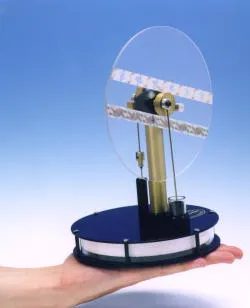
Most of us know how a gas engine works. Fuel burns. Piston explodes. Power moves. It’s loud. It’s messy. It’s internal combustion.
The Stirling engine is different. Invented by Robert Stirling in 1816, this machine operates on a completely different principle. It’s a heat engine. But unlike the engine in your daily driver, it doesn’t explode fuel inside the cylinders. It uses a closed loop of gas. A fixed amount of air or helium. Sealed tight. Never leaves the system.
This design means no exhaust valves. No sparks. Just quiet, steady mechanical work.
Why don’t we see Stirling engines in every driveway? Efficiency was the dream. They could beat gasoline or diesel engines in thermal efficiency. But manufacturing complexity killed mass adoption. Today, you’ll find them in specialized spots. Submarines. Silent operation is key there. Yachts. Where generators need to hum, not roar. Auxiliary power for remote stations. High-power inventors are still chasing the holy grail of practical, high-efficiency Stirling cycles. But for now, they remain niche tools.
The Physics of the Closed Loop
To understand how a Stirling cycle engine generates power, you have to ignore combustion. There is no fire inside the cylinder. The heat comes from outside.
The core concept relies on gas laws. Specifically, how pressure and temperature interact when volume is constrained.
- Heat a fixed amount of gas in a fixed space, and pressure rises.
- Compress a fixed amount of gas, and its temperature rises.
A simplified Stirling engine uses two cylinders. One hot. One cold. Connected by a passage. The pistons are mechanically linked. When one moves down, the other moves up. This linkage dictates the timing.
The cycle has four distinct phases.
- Expansion (Power Stroke). External heat hits the gas in the hot cylinder. Pressure builds. The piston is forced down. This is the only part of the cycle that produces useful work. Everything else is just housekeeping.
- Transfer. The hot piston rises. The cold piston drops. This pushes the expanded gas from the hot chamber into the cold chamber. The gas cools rapidly. Pressure drops. This step is critical. Lower pressure makes the next step easier.
- Compression. The cold piston pushes the gas back toward the hot side. The gas is compressed. Heat from this compression is immediately sucked away by the cooling source. If you didn’t cool it, the pressure would skyrocket, fighting the piston.
- Return. The cold piston rises. The hot piston drops. The cooled gas is pushed back into the hot cylinder. It heats up instantly. Pressure spikes. The cycle restarts.
Notice the asymmetry. Only phase one creates power. Phase three consumes power to compress the gas. The net output is the difference between these two forces.
Boosting Output: The Regenerator
How do you make a Stirling engine more powerful? You tweak the pressure extremes.
Higher pressure in phase one = more push. Lower pressure in phase three = less resistance.
You can raise the temperature of the heat source. But there’s a catch. The gas loses heat as it moves from the hot side to the cold side. That energy is wasted unless you catch it.
Enter the regenerator. This is a mesh-like matrix sitting in the flow path. As hot gas moves to the cold side, it dumps heat into the regenerator matrix. The matrix stores it. When the gas is pushed back from cold to hot, it picks up that stored heat.
This pre-heats the gas before it even hits the external heat source. The result? Higher peak pressure in phase one. Lower energy cost in phase three. More net power.
Without a regenerator, a Stirling engine is inefficient. With one, it climbs toward theoretical maximums.
Real-world engines aren’t perfect. Physical limitations blur the idealized lines of the cycle. Friction exists. Heat leaks. But the fundamental logic holds.
Next, we look at the two main ways builders arrange these components. The displacer-type engine is the most intuitive. It separates the functions of moving gas and compressing gas into two distinct pistons. One moves gas back and forth. The other does the heavy lifting of compression. It’s easier to visualize. But it’s not the only way to build a Stirling engine.
How the Displacer Controls the Cycle
Forget the dual-piston setups you see in textbooks for a moment. The displacer-type Stirling engine strips things down to a single piston and a displacer. The displacer isn’t pushing the power out; its only job is to shuffle the gas back and forth between hot and cold zones. It acts as a thermal valve.
You’ve probably seen one of these spinning on a teacher’s desk or sitting in a DIY kit box. They are low-power demos, but they prove the concept works. All it needs is a temperature difference between the top and the bottom of the cylinder. A human hand on the base and cool room air on the top? That’s enough to get it turning.
The mechanics rely on two distinct moving parts:
- The power piston: This is the tight-sealing, smaller piston at the top. It does the actual work. As the gas expands, this piston gets forced upward.
- The displacer: This is the loose-fitting, larger piston below. It seals poorly on purpose. Air flows around it freely. It simply shuttles the gas volume.
When the displacer rides to the top, it traps the gas in the heated lower chamber. The gas warms, expands, and pushes the power piston up. Pressure spikes.
When the displacer drops to the bottom, it moves the gas into the cooled upper section. The gas chills and contracts. Pressure plummets. The power piston falls back down, squeezing the gas.
It’s a rhythmic heating and cooling loop. The engine extracts energy from that expansion and contraction cycle, over and over.
The Two-Piston Power Stroke
Real-world applications usually ditch the displacer for a more robust two-piston Stirling engine. Here, you have a heated cylinder and a cooled cylinder. The heater uses an external flame. The cooler uses air-cooling with fins to shed heat efficiently.
A flywheel connects the two pistons via rods and discs. This inertia keeps the system moving even when neither piston is actively generating torque. The flame doesn’t stop burning. It just waits.
The cycle breaks down into four distinct phases:
- Expansion: Pressure builds in the hot cylinder. The heated piston moves left, doing useful work. The cooled piston hangs near the top of its stroke, momentarily stationary as it reverses direction.
- Transfer: Both pistons move. The hot piston retreats to the right while the cold piston rises. This action pushes the majority of the gas through the regenerator. The regenerator is usually a wire mesh with high surface area. It acts as a thermal battery, absorbing heat from the hot gas as it passes through. This pre-cools the gas before it hits the cold cylinder, meaning the cooling fins have less work to do.
- Compression: The cold piston begins its downward stroke. It compresses the now-chilled gas. The heat generated by that compression is immediately sucked away by the cooling fins.
- Return: Both pistons move again. The cold piston drops while the hot piston moves left. This forces the gas back across the regenerator. This time, the gas picks up the heat stored in the mesh during the previous cycle. It enters the hot cylinder already warmed up. The cycle restarts.
Why Stirling Engines Aren’t In Your Driveway
If the efficiency is so high and the design is so clean, why don’t you see Stirling engine-powered hybrid cars zipping around? Or standard hybrids, for that matter?
The problem is thermal lag. Because the heat source is external, the engine can’t react instantly. Heat has to conduct through the cylinder walls before it actually warms the gas inside.
This creates two fatal flaws for automotive use:
- Slow warm-up: The engine needs time to reach operating temperature before it produces useful power. You can’t just start a Stirling engine and drive off in a city commute.
- Poor throttle response: The engine cannot change its power output quickly. If you need to accelerate hard, the heat transfer rate is too slow to provide the necessary torque spike.
These characteristics effectively kill the idea of replacing the internal combustion engine in standard vehicles. The lag is simply too pronounced for the stop-and-go nature of driving.
A Stirling-engine hybrid might still be feasible if the engine ran at a constant, optimal speed to charge a battery, bypassing the need for rapid throttle response. But for a direct-drive car? It’s a non-starter.
The Bottom Line
Stirling engines offer high efficiency, quiet operation, and the ability to run on any external heat source. They are versatile tools for renewable energy projects. But they come with a price. High initial costs and complex designs make them less practical for widespread adoption compared to conventional engines.
You might wonder if the thermal lag can be overcome with better materials or smaller geometries. Maybe. But right now, the physics of heat conduction keeps them out of the garage.