


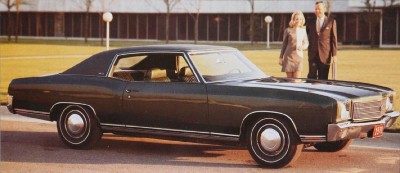
The year was 1970. The automotive landscape was shifting. Chevrolet needed a new player. They needed something stylish. Something fast. Something that screamed sophistication but could handle a drag strip. Enter the Monte Carlo.
It wasn’t just another car. It was a statement.
Chevy called it their debonair entry into the personal-luxury car category. The term was fresh. It described a segment that was exploding in popularity. These weren’t your grandmother’s sedans. They were two-door coupes with plush interiors and sleek lines. They were designed to appeal to buyers who wanted comfort without sacrificing style. The Monte Carlo fit the bill perfectly.
But the story doesn’t end there.
The initial design was sleek. Clean. Modern. It had a long hood and a short deck. A profile that looked good from every angle. It was an instant hit. But as the years rolled on, the Monte Carlo evolved. It didn’t just stay in its lane. It expanded. It grew. It became something much larger than its original purpose.
This is not just a history lesson about a car. It’s a look at how a vehicle can transcend its origins. How it can occupy a much wider field. The Monte Carlo became more than just a personal luxury coupe. It became a staple of American automotive culture. A symbol of an era. A piece of history that still turns heads today.
The Birth of a Style
The Monte Carlo debuted in 1970. It was built on the GM A-body platform. This was the same platform that held the Chevelle. But the Monte Carlo was different. It was longer. Lower. Wider. It had a distinct identity.
Chevy wanted to capture the market. The personal-luxury segment was booming. Buyers wanted the best of both worlds. They wanted the comfort of a luxury car. The performance of a sporty coupe. The Monte Carlo delivered.
It wasn’t just about looks. It was about presence. The grille was bold. The headlights were hidden. The lines were smooth. It looked expensive. It felt expensive.
The Monte Carlo wasn’t just a car. It was an experience.
Chevy positioned it as a rival to the Ford Thunderbird and the Oldsmobile Cutlass Supreme. It was a direct challenge. And it was a challenge that Chevy intended to win.
More Than Just Luxury
As the 1970s progressed, the Monte Carlo changed. It grew. It became bigger. Heavier. More powerful. But it never lost its soul.
The second generation, introduced in 1973, was longer. It had a more formal roofline. It was designed to compete with the Ford Thunderbird and the Mercury Marquis. It was a true personal luxury car.
But the Monte Carlo didn’t stop there. It continued to evolve. It adapted to changing tastes. To changing regulations. To changing times.
And in doing so, it became something more. It became a cultural icon. A car that represented a time of optimism. Of change. Of possibility.
Why It Matters Now
The Monte Carlo is more than just a memory. It’s a reminder of a time when cars were designed with passion. With style. With purpose.
It
The Boulevard to Backstretch Pipeline
The 1970 Chevrolet Monte Carlo wasn’t just a car. It was a statement. Debonair personal-luxury coupe designed to steal thunder from the Ford Thunderbird. It arrived in showrooms with a sleek two-door profile and a price tag that promised luxury without the full-size footprint.
This debut started a lineage that would dominate American roads and NASCAR tracks for decades. The Monte Carlo didn’t just survive. It evolved. From the 1970 launch to the end of the 2007 model year, the nameplate persisted. There was only one interruption. One brief gap in production that makes the continuity all the more impressive for a midsize American coupe.
Early Power and Late Downsizing
The early years were defined by big block power. The rare Monte Carlo SS wasn’t a badge exercise. It was a serious performer. Under the hood sat a 454-cubic-inch V-8. That engine turned the Monte Carlo into a credible competitor on the dragstrip, not just the boulevard.
By 1977, the oil crisis hit hard. American automakers were forced to shrink. The Monte Carlo underwent a timely downsizing. It shed weight. It shed size. It stayed relevant.
The SS badge returned in 1983. A revival that kept enthusiasts engaged. But the era of rear-wheel drive was ending. The 1989 Monte Carlo marked the last of the rear-drive models. It was the end of an era. A heavy, traditional American coupe fading into history.
The Front-Wheel Drive Shift
1995 brought a fundamental change. The Monte Carlo transitioned from rear-wheel drive to front-wheel drive. It was a shift that reflected the broader industry trend. The personal luxury segment was shrinking. Efficiency was becoming king.
“It was still a coupe, still had midsize dimensions, and still was a true Chevrolet.”
Did the shift kill the soul of the car? Some purists argued yes. The handling changed. The driving dynamics altered. But the Monte Carlo remained a midsize coupe. It retained its core identity. It stayed true to the Chevrolet brand.
The 1995 model year proved that the Monte Carlo could adapt. It didn’t need a massive V-8 to remain desirable. It just needed to remain a true Chevrolet. The lineage continued. The tradition of the midsize American coupe endured. Into the 21st century. With less noise. But with more efficiency. And a continued presence in the rearview mirror of automotive history.
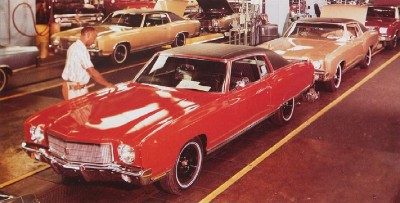

The second generation arrived in 1970 with a twist that most buyers never noticed but collectors now prize. GM didn’t just slide the Monte Carlo onto a shared assembly line with the A-body intermediates. They built it separately.
The car rolled off its own dedicated production track at the Detroit Assembly Plant. This wasn’t a marketing gimmick. It was a structural reality. The A-body chassis was too narrow and too short to handle the Monte Carlo’s extended wheelbase and unique body lines.
Why the separate line mattered
You might assume shared platform sharing meant shared destiny. In this case, it didn’t. The 1970 Monte Carlo used a stretched version of the intermediate chassis. GM extended the frame by six inches. That gave the coupe a longer hood and a more aggressive stance.
But the suspension geometry changed too. The front suspension picked up wider tracks and revised mounting points. The rear axle was mounted differently to handle the extra length. Trying to shoehorn these changes into the standard Chevelle or Malibu line would have caused massive bottlenecks.
So, GM isolated the build process.
This separation allowed for tighter tolerances. The body panels were larger. The glass area was bigger. The rear deck was longer. All of that required different tooling, different jigs, and different assembly techniques. The dedicated line ensured quality control stayed high. It also kept production costs predictable despite the complexity.
Styling that defined a generation
The 1970 Monte Carlo looked nothing like the 1968 original. The first generation was a fastback. It was sleek. It was controversial. The second generation? It was muscular. It was traditional. It was exactly what the market wanted.
The front end got a new grille. It was wider. It was lower. The headlights were hidden behind flip-up covers. This gave the car a clean, aggressive face. The bumper was heavy chrome. It wrapped around the corners. It added visual weight.
The side profile was where the stretch showed. The wheelbase was 117 inches. That’s six inches more than a standard A-body. The roofline sloped gently into a wide rear deck. The C-pillar was thick. It framed the rear window perfectly.
The rear end was bold. Full-width taillights. A chrome strip running across the width. A license plate holder centered in the bumper. It looked expensive. It looked important.
Interior and trim choices
Inside, the 1970 Monte Carlo offered a choice of comfort levels. The base model had vinyl bucket seats. The upholstery was durable. It was easy to clean. It didn’t scream luxury. It screamed value.
The mid-range option added cloth inserts. The seats were more comfortable. The door panels were trimmed in matching cloth. The dash pad was padded. The steering wheel was larger. It felt substantial.
The top-tier option was the Luxury Package. It included leather-trimmed seats. Real wood grain on the dash and door panels. A premium sound system. Carpeted floors. It felt like a personal luxury coupe. It competed directly with the Ford Thunderbird and the Mercury Cougar.
Engine options and performance
Under the hood, GM didn’t skimp. The 1970 Monte Carlo came with a range
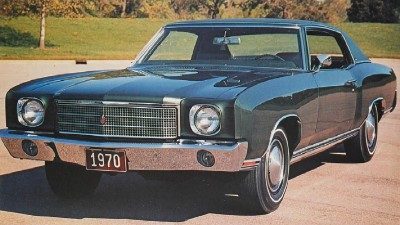

The 1970 Chevrolet Monte Carlo Redefined Personal Luxury
It arrived as Chevy’s answer to the personal-luxury coupe craze. The 1970 Chevrolet Monte Carlo wasn’t just a restyle. It was a clean slate. Billed as “a fine car at a Chevrolet price,” it aimed to steal thunder from the Ford Thunderbird.
The platform was familiar, though you wouldn’t know it at first glance. Chevy took the 116-inch wheelbase sedan from the Chevelle and modified it. That was the only real kinship. The front end dropped the Chevelle’s quad-headlight setup for a simpler, sleeker dual-headlight look.
Styling was the main event. Long hood, short deck. The proportions were tight despite the car stretching to 205 inches. It was the longest hood Chevrolet had ever fitted to a car. Rear fender skirts added to that near-classic profile. Inside, it was plush. Simulated burled elm trimmed the instrument panel. Round gauges sat behind the wheel. Drivers faced a cluster of more than 25 lights, switches, and buttons.
“Solid gentlemanly comfort without bombast,” the ads promised.
Under the hood, there were no four-cylinders. Only V-8s. The base engine was a 350-cubic-inch unit making 250 horsepower. You could step up to a 300-horsepower 350. Or choose the Turbo-Fire 400 at 265 horses. For just $111 more, the 330-horsepower 400 was available.
Standard equipment included power front disc brakes. Concealed wipers were hidden away. Low-profile 15-inch tires rolled on full wheel covers. Astro Ventilation kept the cabin fresh. An electric clock was standard. Personalization was easy. Vinyl tops came in five colors. You could dig into the options list and build a machine that looked like yours.
The SS Package and the LS-6 Myth
Performance buffs weren’t left out of the luxury rush. The Monte Carlo SS package existed for a reason. It came with aggressive styling and serious hardware.
The standard SS engine was a 360-horsepower 454-cubic-inch V-8. Dual exhausts piped the exhaust gases out. Automatic level control kept the rear from sagging. G70 wide-oval tires sat on 15×7 wheels. Discreet badging kept the look clean.
Then there was the LS-6 option. It made a claimed 450 horsepower. Brochures called the SS “a very deceptive car.” It looked like a cruiser. It drove like a missile.
Sales reflected the appeal. The 1970 Chevrolet Monte Carlo outsold the Thunderbird in its debut year. Chevy built 130,657 units. Starting at $3,123, it was a handsome machine. Only 3,823 of those Montes got the SS 454 package.
Did buyers want comfort or speed? They bought both. The Monte Carlo proved you could have plush interiors and a V-8 that snapped heads. It set the template for the segment. Subsequent years would tweak the formula, but 1970 was the year it all began. The personal-luxury market had a new king. And it wore a bowtie.
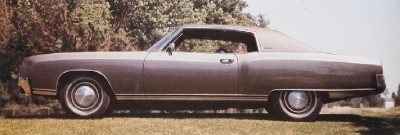

The 1970 Chevrolet Monte Carlo wasn’t just a car. It was a statement. Chevrolet wanted to prove that a personal luxury coupe could handle a curve without losing its composure. They didn’t just slap a fancy grille on a Malibu and call it a day. They tuned the suspension. They added the big-block options. They built a machine that looked like a yacht but handled like a sports car.
The result was a perfect storm of style and substance. It weighed 3,460 pounds. That’s heavy for a coupe. But it moved. The base price landed at $3,123. In 1970 dollars, that’s a lot of money. You weren’t buying a beater. You were buying a badge of honor.
Chevrolet built 130,657 of them. That number matters. It shows demand. It shows that buyers wanted this specific blend of comfort and power. They didn’t have to settle for a boring sedan. They didn’t have to choose between luxury and performance. They got both.
The Weight and Price Equation
Let’s look at the numbers. 3,460 lbs. That’s the curb weight. It’s not lightweight. It’s not a Lotus. It’s a full-size coupe with a heavy emphasis on comfort. The interior was plush. The ride was soft. But under the hood, things got interesting.
The $3,123 price tag put it in the premium segment. It competed with the Ford Torino GT and the Pontiac Grand Prix. But it had a different vibe. It was softer. More refined. Less aggressive. But don’t mistake refinement for weakness. The V8 options were potent. The handling was sharp for its size.
Why the Monte Carlo Mattered
The Monte Carlo wasn’t just another GM car. It was a trendsetter. It defined the personal luxury coupe segment. Before this, you had sports cars or sedans. The Monte Carlo created a new category. It was for people who wanted to look good while they drove. It was for people who wanted comfort without sacrificing speed.
The 130,657 units sold prove it worked. People loved it. They still love it. It’s a classic for a reason.
1971 Chevrolet Monte Carlo
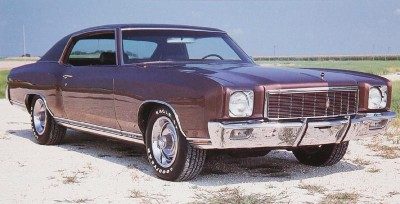

1971 Monte Carlo: Subtle Changes and the SS 454 Legacy
The 1971 Monte Carlo didn’t reinvent the wheel. It barely touched it. GM was two years into the personal luxury coupe boom, and the second model year usually means tweaking rather than overhauling. But the changes were visible if you knew where to look.
The grille got a finer mesh pattern. It looked sharper. More refined. Round parking lights were swapped for square units. A stand-up hood ornament appeared, adding a touch of pretension that actually worked. The lines remained clean. Smart, even.
Critics loved to hate the interior. Specifically the dashboard. Chevrolet used simulated Carpathian burled elm trim. It was plastic. Fake wood. Critics called it out immediately. But owners didn’t care. The sales brochure even boasted, “only termites will know the difference.” The gauges were still Chevelle-based. Functional. Reliable. Not luxurious, but satisfying to the buyer who wanted style without sacrificing utility.
Chevrolet marketed it as a unique offering. “The only car of its kind made in the U.S.A.” They promised luxury. Dependability. Resale value. Craftsmanship. It was a lot of promises for a car built on a muscle car platform.
Production Hiccups and Performance Options
The year didn’t go smoothly for GM. A lengthy strike hit early in the model year. Production suffered. Output dropped slightly. 128,600 cars rolled off the line compared to 130,657 the previous year. A small dip, but noticeable in a segment where volume mattered.
Under the hood, the base engine was the 245-horsepower 350 V-8. But you could spec higher. A 270-horsepower 350 was available. Or the 300-horsepower “396.” Technically a 402-cubic-inch engine. Don’t let the name fool you.
Then there was the SS 454.
Only 1,919 customers opted for this top-tier performance package. It wasn’t just an engine swap. It was a complete performance overhaul.
- Engine: 454-cubic-inch V-8, rated at either 365 or 425 horsepower depending on configuration.
- Suspension: Heavy-duty springs.
- Handling: Automatic level control.
- Wheels: G70x15 tires on rally wheels.
- Trim: Black rear trim panel.
It was a serious option. One that turned a luxury cruiser into a legitimate threat on the quarter mile. The Monte Carlo was never just about style. It was about hiding performance behind a sleek, wood-grain veneer. And for nearly two thousand buyers, that was enough.
1972 Chevrolet Monte Carlo
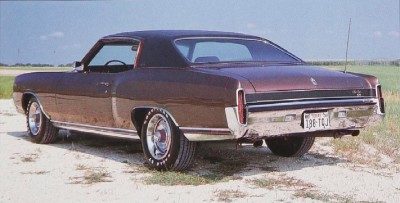
The 1971 Monte Carlo carried SS badging on the black rear trim panel. That visual cue is one of the few hard facts we have left for that specific year’s SS trim in this dataset, but it highlights a shift in how Chevrolet marketed the personal luxury coupe. By 1972, the Monte Carlo had fully cemented its role as a bridge between cruiser comfort and sporty styling, even if the actual horsepower numbers were starting to succumb to the emissions regulations of the early ’70s.
For enthusiasts tracking the lineage, the 1971 stats are telling. Weighing in at a svelte 3,488 lbs, the Monte Carlo managed to stay relatively light despite the growing curb weight trends of the era. At a sticker price of $3,416, it was a premium proposition for the average buyer in 1971. Chevrolet moved 128,600 units that year. That volume speaks to the car’s broad appeal—it wasn’t just for the hardcore muscle car crowd; it was for the guy who wanted a Gran Turismo that looked fast enough to scare his neighbors.
1972 Chevrolet Monte Carlo
When the 1972 model year arrived, the Monte Carlo didn’t just evolve; it refined. The design language became smoother, shedding some of the sharper edges of the previous generation in favor of a more cohesive, aerodynamic profile. This wasn’t just about aesthetics. The 1972 Monte Carlo featured updated front-end styling with a distinctive grille that set it apart from the Chevelle, reinforcing its identity as a standalone personal luxury vehicle rather than a Chevelle derivative.
Under the hood, the big-block options were still available for those willing to pay the premium, but the focus shifted slightly toward torque and reliability over peak horsepower. The V8 engine choices included the 350 cubic-inch small block as the standard powerplant, with the 454 big block remaining the top-tier option for performance seekers. While exact horsepower figures for the 1972 model vary depending on the specific carburetion and emissions equipment installed, the torque numbers remained robust, ensuring the Monte Carlo could still pull away from light-offs with authority.
The interior of the 1972 Monte Carlo saw subtle updates, with improved upholstery materials and a more driver-focused dashboard layout. The instrumentation became clearer, and the comfort features—power windows, air conditioning, and the plush seating Chevrolet was known for—were better integrated into the cabin experience. This was a car designed for long highway cruises, offering a smooth ride that could swallow miles without demanding constant attention from the driver.
For collectors, the 1972 Monte Carlo is significant because it represents the peak of the “personal luxury coupe” era before the market shifted toward fuel efficiency and smaller cars. The production numbers for 1972 were strong, continuing the trend of high volume that had made the Monte Carlo a staple of American driveways.
If you are looking to restore or purchase a 1972 Monte Carlo, pay close attention to the VIN decoding to verify the original engine and transmission combination. The SS package was also available in 1972, featuring unique badging, a more aggressive suspension tuning, and distinctive wheels. These details matter when assessing value.
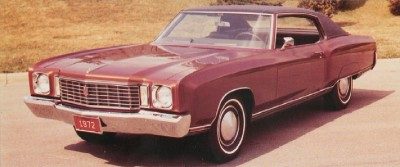

The 1972 Monte Carlo: Luxury With a Large Displacement Engine
Chevrolet pushed the “America’s most attainable luxury car” narrative hard for 1972. The goal was simple. Blend sportiness with high-end comfort. The result was the 1972 Chevrolet Monte Carlo.
The front end got a makeover. Parking lights now flanked a wide-mesh grille. It looked cleaner. Less cluttered. The rear stayed familiar with tall vertical taillights. But a new horizontal bright trim strip sat above the bumper. It added a touch of sophistication.
Under the hood, the options list told a story of diminishing returns for speed. The top dog was the 454-cubic-inch V-8. It made 270 horsepower (net). You had to pay extra for it. The sticker price jumped by $261. Just below that sat the 402-cubic-inch V-8. It produced 240 horsepower. It was still badged as a “396.” That added $142 to the bill.
Emissions Hit California Buyers Hard
If you lived in California, your choices were limited. The state’s strict emissions standards killed the larger engines. Californians could only choose between two smaller V-8s. The 350-cubic-inch engine came in at either 165 or 175 horsepower. No 402. No 454. Just smaller displacement and less power.
Chevrolet’s marketing team leaned into the lifestyle angle. They claimed owning a Monte Carlo was like “having your cake and driving it too.” Base prices started at $3,362. That got you a coupe with a long list of luxury conveniences. It was meant to suit any owner’s taste.
The End of the Super Sport Era
Marketers made a deliberate choice this year. They killed the Super Sport (SS) option package. Why? It diluted the luxury image. The Monte Carlo was supposed to be “beautifully quiet, quietly beautiful.” Features like a floor shifter or hood scoops were seen as clutter. They belonged on a muscle car, not a personal luxury coupe.
Lack of sporty fittings was framed as a benefit. It kept the interior clean. It kept the ride smooth. It appealed to buyers who wanted comfort over corner-carving capability.
The Monte Carlo stood alone in its niche. No SS badges. No hood scoops. Just a sleek coupe with big engines for most of the country. And a distinct lack of them for the rest.
Which Engine Defined the 1972 Model Year?
The 454 V-8 remains the standout. It was the powerplant for those who wanted max performance without sacrificing luxury. For everyone else, the 402 was the sweet spot. But in California? The 350 V-8 was the only choice. It was a compromise. A necessary one.
The Monte Carlo carved out a specific identity. It wasn’t just a car. It was a statement. A statement about what luxury could look like in the early 70s.
Where Was the Monte Carlo Positioned in the Market?
It sat between a standard sedan and a full-blown sports car. It was personal. It was luxurious. It was attain
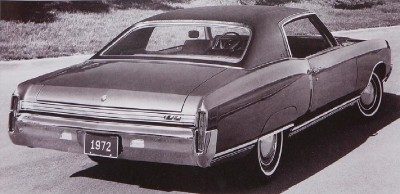

The 1972 Chevrolet Monte Carlo didn’t need a complete redesign. It barely needed a touch-up. If you squinted, you might have missed the differences from the previous year. The styling remained largely unchanged. The lines were smooth, the presence imposing. But beneath the chrome bumper, things were shifting.
The Numbers Don’t Lie
Chevrolet built 180,819 of these coupes in 1972. That’s a lot of sheet metal. The base price sat at $3,362. For a car that felt substantial, the weight came in at 3,506 lbs. It wasn’t light. It never was. But it felt planted.
This was an era of transition. Emissions controls were getting stricter. The economy was cooling. Yet, the Monte Carlo held its ground. It wasn’t trying to be a sports car. It was a personal luxury coupe. That distinction mattered.
“Modest changes” is the understatement of the decade.
Why Did Changes Feel So Minimal?
You might wonder why GM didn’t shake things up. The answer is simple. The 1970 model year was a disaster. Sales plummeted. The 1971 redesign had already addressed the biggest complaints. The 1972 model was about stabilization. It was about holding the line.
The body style remained identical to 1971. The wheelbase was the same. The track width was the same. The only real visual cues were in the details. The taillights got a slight tweak. The grille changed subtly. It was enough to justify a new model year badge.
Under the Hood: Power and Efficiency
The engines remained largely the same as 1971, but with one critical exception. The V8 options were detuned. Horsepower ratings dropped across the board. This wasn’t just about emissions. It was about fuel economy. The oil crisis wasn’t here yet, but the writing was on the wall.
The 454 cubic-inch big-block was still available. It was still slow. It was still thirsty. But it was still there. For those who needed it, the 454 was the only option. The 400 and 350 were the sensible choices. They offered better torque curves. They were easier to live with.
The Interior: Comfort First
Inside, the Monte Carlo was plush. Vinyl bucket seats were standard. The center console was wide. The dashboard was curved. It felt like a living room on wheels. The materials were durable. The fit and finish were decent.
Noise insulation improved slightly. The ride was soft. It absorbed bumps without transmitting them to the spine. That was the point. You weren’t driving to feel alive. You were driving to arrive relaxed.
How 1972 Fits Into the Monte Carlo Legacy
The 1972 model is often overlooked. It’s sandwiched between the controversial 1970 and the slightly revised 1971. But it’s important. It shows the Monte Carlo’s resilience. It proves that a car doesn’t need to change drastically to remain relevant.
Sales figures confirm this. 180,819 units
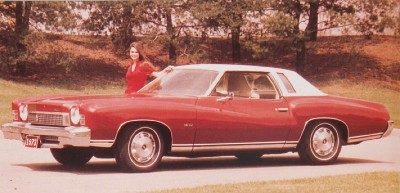

The 1973 Monte Carlo Redesign
John Z. DeLorean didn’t just leave GM in 1972; he left a legacy in the suspension tuning department. Before his departure, the general manager ordered the Monte Carlo to be sport-tuned. The goal? Beat the top imported sedans on handling, not just style. That directive hit the 1973 model year hard. The result was a car that looked softer, flowed with curvier lines, and drove sharper than its predecessors.
Chevy marketed the 1973 1973 Chevrolet Monte Carlo as a personal luxury car that didn’t break the bank. But don’t let the “price” tag fool you. With the right options, this coupe could hang with the best of them.
Sculpted Lines and New Styling
The sheet metal got a complete overhaul. Designers gave the body deeply sculpted sides and those iconic opera windows in the rear roof quarters. It looked swoopy. Aggressive, in a smooth way.
The front end changed drastically. A new wraparound bumper crossed the fine-mesh grille. Headlights moved inboard, sitting alongside the grille rather than protruding from the fenders. Parking lights? They moved to the fender tips.
Size increased too. The wheelbase stayed put, but overall length grew by four inches. Width added two. The silhouette kept that classic long-hood/short-deck ratio, but everything else felt wider, lower, and more substantial.
Suspension and Handling
This is where DeLorean’s fingerprints are clearest. The redesign brought a full-coil suspension. Road-testers at the car-buff mags loved it. They also praised the “wide-stance” chassis. Front and rear stabilizer bars were standard.
Add radial-ply tires to the mix, and you had a setup that prioritized grip and quiet luxury. Owners gave high marks to the handling. It wasn’t just a cruise machine anymore. It was a competent performer.
Engine Lineup and Power
Under the hood, the 1973 Monte Carlo offered a spread of V-8s. The entry point was the 307 cubic-inch small-block. Then came a pair of 350-cubic-inch options. But the headline was the big-block.
The 454 cubic-inch V-8 was still there. Rated at 245 horsepower. It was no longer the screaming race engine of the late 60s, but it was a massive torque monster. The 402-cubic-inch engine was gone. No more confusion. Just 307, 350, and 454.
For those who wanted to go fast, a tachometer and extra gauges could be installed. It turned the luxury cruiser into a respectable performer.
Sales and Trim Levels
Production numbers were impressive. Chevy moved 290,693 Monte Carlos in 1973. The lineup split into three distinct trim levels:
- Sport Coupe: The seldom-seen base model. Rare. Hard to find.
- “S” Coupe: The best-seller. The volume driver.
- Landau Sport Coupe: The middle ground. Elegant. Equipped with a vinyl top ($123) or an open-it-up Sky Roof ($325).
The Landau
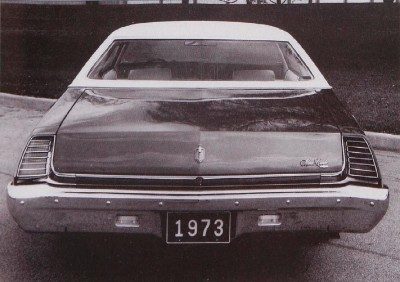

The 1973 Monte Carlo didn’t change much. It kept that familiar long hood and short deck silhouette that had defined the model since its debut. If you were looking at a ‘73, you were looking at a car that felt like a continuation of a successful formula rather than a revolution.
Chevrolet built 290,693 of these coupes. That’s a lot of metal. The price tag when they left the lot ranged from $3,415 to $3,806 depending on the engine and options. Weight sat between 3,713 and 3,722 pounds. Solid. Heavy. American.
This was the last year for the second-generation Monte Carlo before the boxy third generation arrived. Enthusiasts often look back at this specific year with a mix of nostalgia and pragmatism. It was the bridge between the wild early seventies and the stricter, safer eighties.
Why the 1973 Model Matters
The second generation (1971-1973) was all about elegance over raw muscle. By 1973, emissions regulations were tightening. Horsepower numbers were dropping across the board. But the Monte Carlo still held its own as a personal luxury coupe.
It wasn’t just about looks. The body structure remained rigid. The ride was compliant. And the interior? Plenty of vinyl and color. You could get it in blue, gold, green, or that classic white. The dashboard was simple. Analog gauges. A steering wheel that didn’t shrink until later years.
Engine Options and Specs
Under the hood, you had choices. The base engine was the 350 cubic-inch V8. It produced 175 horsepower. Not a lot by today’s standards. But it moved nearly 3,700 pounds adequately.
For those who wanted more, there was the 454 cubic-inch big block. Rated at 245 horsepower. That was the top-tier option. You could also spec a 400 cubic-inch V8 in between.
Transmission choices were standard two-speed automatic or a three-speed manual. The three-speed was rare. Most buyers ordered the Turbo-Hydramatic 400. It was smooth. It was durable. It was what you expected.
Design Details
The front end featured hidden headlamps. They were pop-up units. Clean lines. No grille clutter unless you ordered the optional chrome mesh. The rear was simple. Rectangular taillights. A chrome bumper that wrapped around slightly.
Side moldings were standard. Wheel covers came with most models. The wheels were 14-inch. Tires were 7.75-14. Wide-whitewall tires were optional. They looked good. They also added a bit of glare.
Interior and Features
Inside, the Monte Carlo offered a two-tone upholstery scheme. The bench seat was standard. Bucket seats were an option. They made entry and exit harder. But they looked sportier.
The steering column was adjustable. The glove box was large. Storage pockets were in the doors. The radio was AM-only. FM was optional. Most people didn’t care. They just wanted to drive.
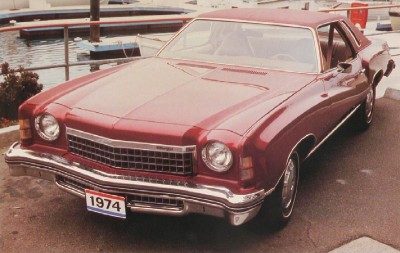

The 1974 Monte Carlo: Luxury on a Budget
The 1974 Chevrolet Monte Carlo was already established as a personal-luxury staple, but this year’s update leaned harder into its “posh” identity. Chevrolet refined the front and rear styling to shed any remaining utilitarian vibes. The headline change was the new eggcrate-patterned grille. It sat alongside significantly bigger parking lights, making the nose look wider and more assertive.
Overall length grew by three inches. That extra real estate didn’t just sit idle. It stretched the profile, giving the coupe a slightly more substantial presence on the road.
Which trim should you choose?
If you were walking into a dealer in 1974, you had exactly two choices. The “S” package took over as the base model. It became the most popular Monte of the year. But if you wanted the ritziest version of the 1974 Monte Carlo, you went straight for the Landau.
That vinyl-topped Landau was the prestige pick. It wasn’t just a badging difference. It added specific visual cues that screamed “personal luxury.”
“Its elegance is basic. From the ground up, a car you can be proud of.”
The sales brochure didn’t shy away from the aspirational tone. They wanted buyers to feel that pride in ownership.
Under the hood: Power figures
Chevrolet kept the engine lineup relatively stable compared to previous years. The base engine pushed out 145 horsepower. It was adequate for the new length, but not thrilling.
For those who needed more pull, the top-tier 454-cubic-inch V-8 remained available. It stuck with 245 horsepower. It was a big block in a mid-size body.
There was also a middle ground. The 400-cubic-inch V-8 offered a 180-horsepower rendition. It sat between the base eight and the big block, offering a compromise for drivers who didn’t want to drag the massive 454 everywhere but still wanted more than the base unit.
Interior and options
Inside, the cabin saw updates that reinforced the luxury angle. A new bright-framed, color-keyed instrument cluster was installed. It looked sharper against the dashboard.
Seats were a point of pride. You could still spec manually operated swing-out Strato-bucket seats. But there was a new option up top. A power-operated sliding steel Skyroof cost $325. That was a significant chunk of change in 1974, but it fit the premium positioning.
The suspension received refinements. It was a radial-tuned setup, designed to absorb road imperfections while keeping the car planted.
The Landau trim added its own layer of sophistication. Beyond the vinyl half-roof, it included body accent striping. Sport mirrors were standard. Turbine II wheels gave it a distinct look. And “discriminating” crests were placed strategically around the body.
Options lists were long. Electric door locks were available. Power trunk openers. Power windows. Console packages. The Comfortilt steering wheel adjusted for driver preference.
Then there was the child safety seat named the “Love Seat.” It sounds ironic today. Back then, it was a serious safety feature wrapped in a catchy name.
The
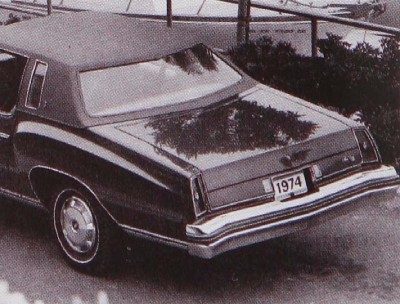

The 1974 Monte Carlo Landau didn’t just hint at luxury. It screamed it. The vinyl roof was the tell. You saw it from a mile away.
Chevy built 312,217 of these things. That’s a lot of steel for one year. The weight sat between 3,926 and 3,928 pounds. Heavy. The kind of heavy that makes tires sweat on a cold start.
New car buyers shelled out between $3,885 and $4,129. A lot of money in 1974. Inflation was biting hard. But people still wanted the look. They wanted the space. They wanted the American coupe experience.
It wasn’t about lap times. It was about cruise control and comfort. About hitting the highway with a full tank and zero worries. The Landau package added that extra flair. The extra cost bought you the vinyl top and the subtle upgrades that set it apart from the base model.
1975 Chevrolet Monte Carlo
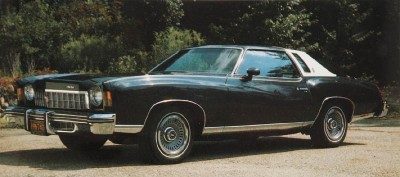

1975 Monte Carlo: The Final Big-Block and Design Shifts
The 1975 Chevrolet Monte Carlo didn’t set the world on fire with sales, but it didn’t need to. It held its ground. Buyers still gravitated toward that distinctive vinyl half-roof and the narrow rear quarter windows that defined the second-generation body style. It was a look that said “class” even as the decade turned ugly.
Total production took a hit, dropping 17 percent from 1974. But the mix of buyers shifted. The upscale Landau trim remained the crowd favorite.
- 110,380 Landaus rolled off the line.
- 148,529 basic “S” models were sold.
Those base models cost $270 less. A small saving for a big compromise in luxury.
Grilles, Taillights, and the Big-Block Goodbye
This was the last time the Monte Carlo got a major visual refresh before the eighth-generation cut. The front grille got a restyle. It wasn’t revolutionary, just different. The rear told a more significant story. New wraparound taillights stretched across the back end. It was a subtle change, but one that marked the end of an era for the body shape.
Under the hood, history was being made. 1975 Monte Carlo buyers could finally purchase the big-block 454-cubic-inch V-8.
It was the last gasp. The monster was now rated at 215 horsepower. A far cry from the muscle car days of the early seventies, but still a statement. You couldn’t just buy this engine by accident. It was a specific order.
Base power came from a 350-cubic-inch V-8. It was a modest setup.
- 145 horsepower with a two-barrel carburetor.
If you needed more punch, GM offered two upgrades.
- A four-barrel 350 making 155 horsepower.
- A 400-cubic-inch V-8 pushing 175 horsepower.
All of these engines sat on broader GR70x15 radial tires. A practical move for handling and wear, even if it didn’t scream “performance.”
Interior Choices and Marketing Speak
Chevrolet’s advertising machine went into overdrive. The brochure didn’t talk about torque or horsepower. It talked about feelings.
“When it makes you feel good about yourself, that’s character.”
They called the Monte Carlo “honest, tasteful, with classic design and elegance.” It was a nice way of selling a heavy coupe in an era of falling gas prices and rising fuel costs.
Inside, the cabin got a new option: the Custom interior. This wasn’t just a trim level; it was a layout change.
- Buyers could choose 50/50 reclining front seats.
- Or opt for swivel bucket seats.
Standard models stuck to the bench seat. It was a conservative choice. The driver faced a color-keyed instrument panel, steering wheel, and column. Everything matched. It was clean. It was orderly. It was 1975.
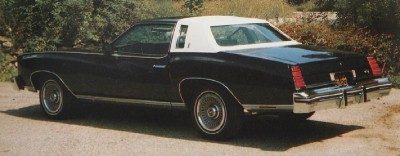

The 1975 Monte Carlo wasn’t just a badge-engineered Caprice for the coupe market. It was a distinct machine, heavily influenced by the need to meet stricter emissions and safety standards while trying to maintain an image of luxury and performance. The Landau trim level, in particular, tried to bridge that gap.
One of the most visually striking options available for the 1975 Monte Carlo Landau was the Sky-roof. This wasn’t just a sunroof. It was a large panel of glass that covered most of the roofline, extending well past the front seats. For buyers who wanted that open-air feel without sacrificing the sleek profile of a hardtop coupe, it was a compelling, if expensive, choice. The glass was tinted, helping to mitigate the greenhouse effect that plagued American cars in the 70s, though you still needed to be prepared for a sauna experience on sunny days.
Performance and Engineering Context
The ’75 Monte Carlo sat in a turbulent era for American automotive engineering. The V8 engines were getting smaller, not bigger, due to federal regulations and the oil crisis. Yet, the weight remained stubbornly high.
Here is the hard data for the 1975 model year:
| Metric | Details |
|---|---|
| Model | Chevrolet Monte Carlo |
| Weight Range | 3,927 – 3,930 lbs |
| New Price Range | $4,249 – $4,519 |
| Total Units Built | 258,909 |
That price tag of over $4,200 for a base model was significant. Adjusted for inflation, that’s well over $25,000 today. But you weren’t just paying for the badge. You were paying for a car that weighed nearly 4,000 pounds, which meant acceleration was less about raw power and more about managing torque.
The Sky-Roof Appeal
Why did the Sky-roof matter? It wasn’t just about ventilation. In an era before panoramic glass roofs were common on SUVs or sedans, the Monte Carlo Landau’s version offered a sense of spaciousness that felt premium. The roof panel was fixed at the rear but opened at the front, or could be fully retracted depending on the specific mechanism installed by the factory or dealer options.
Owners of these cars often report that the Sky-roof is a rare find on surviving examples. Many were removed later due to leaks or structural concerns. Finding one intact adds a layer of desirability for collectors who understand that factory-original components are the holy grail of restoration.
Market Positioning
The Monte Carlo was positioned between the Camaro and the Caprice. It was a personal luxury coupe. In 1975, that meant a focus on comfort, ride quality, and appearance. The Landau trim added vinyl roof inserts, which complemented the glass roof option nicely. The combination created a two-tone effect that was subtle but distinct.
The sales numbers—258,909 units—show that the concept still worked. Buyers were willing to pay the premium for a car that looked
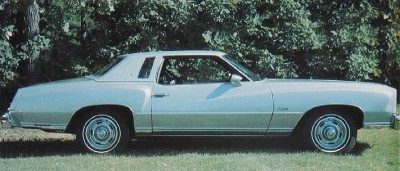

The 1976 Monte Carlo: Record Numbers and Styling Shifts
Chevrolet set a production record in 1976. Total Monte Carlo coupe output hit 353,272 units. This number stunned the industry. Most cars struggled to move in the mid-Seventies. Personal luxury coupes were different. They rolled off showroom floors with ease.
The body sides remained sculpted and unchanged. The styling held its ground. But other areas saw revision. Stacked quad headlights led the redesign. A new horizontal-slot grille looked elegant. It gave the front end a cleaner face. Rear lights were flatter. They were plainer in appearance. Less chrome. More function.
Market Dominance and Trim Breakdown
Monte Carlos dominated their mid-size segment. Sales data proves it.
- 191,370 “S” coupes were built.
- 161,902 Landau coupes rolled out.
The Landau model cost $293 more. It included standard Turbine II wheel covers. A vinyl half-roof came with it. Dual sport mirrors were also standard. The “S” trim kept things simpler. Yet it still moved in massive volumes.
Engine Lineup and Standard Equipment
Powertrain choices shifted for 1976. The big-block 454 was gone. That was a loss for purists. But Chevrolet offered sensible alternatives.
The standard engine was a 305-cubic-inch V-8. It made 140 horsepower. It was thriftier. Drivers wanted fuel economy. This engine delivered.
Top-tier performance came from the 400-cubic-inch V-8. It produced 175 horsepower. Two 350-cubic-inch options sat in the middle. One made 145 horses. The other pushed 165.
Transmission duties were handled by a three-speed Turbo Hydra-Matic. It became the standard Monte transmission. No more manual options for the base model. It simplified ownership.
Exterior Styling Details
Chevrolet tried a new look with “Fashion Tone” paint. It joined the options list. Contrasting colors appeared on front fenders. Doors got different shades. Quarter panels followed suit. The goal was a pseudo-classic aesthetic. It mimicked two-tone customs. Some buyers bought it. Others ignored it.
The vinyl half-roof on Landau models added to the luxury feel. It hid the roofline. It made the car look longer. It felt more expensive.
Sales figures tell the whole story. 353,272 units. That is a lot of steel. The market wanted these cars. They were comfortable. They looked good. They had decent power.
Why did the 454 disappear? Fuel prices were rising. Buyers were getting cautious. The 350 and 305 were safer bets. They offered enough power for daily driving. They didn’t guzzle gas.
The styling changes were minor but noticeable. Quad headlights became common. But the Monte did it first. Or at least earlier than many competitors. It looked distinctive.
Did the Fashion Tone scheme work? Not really. It looked dated quickly. The vinyl roof lasted longer in popularity. It became a staple of personal luxury styling.
The “S”
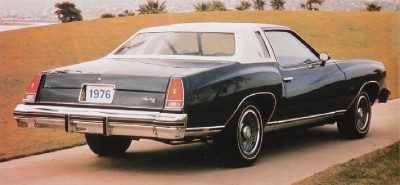

The numbers for the 1976 Chevrolet Monte Carlo aren’t just a footnote. They are a screaming headline.
Sales in ’76 topped 1975 figures by more than 90,000 units.
That is a massive jump. It signals a market that was hungry for the style and presence the Monte Carlo offered. The car was a volume seller, not a niche curiosity.
Here is the hard data for the 1976 model year.
1976 Chevrolet Monte Carlo Specs
| Model | Weight (lbs.) | Price Range (New) | Number Built |
|---|---|---|---|
| Monte Carlo | 3,907 | $4,673 – $4,699 | 353,272 |
The weight sits at 3,907 pounds. That is heavy.
The price range is tight. You paid between $4,673 and $4,699 depending on your options. For a personal luxury coupe in the mid-70s, that is a solid price point.
Total production hit 353,272 units.
That volume matters. It shows GM was hitting a sweet spot in the personal luxury segment. Competitors were struggling with emissions regulations and fuel costs. The Monte Carlo just kept moving.
Why the 1976 Sales Jump Matters
You might ask why sales spiked so hard.
The early-to-mid 70s were rough. Oil crises hit. Emissions controls got tighter. Horsespower dropped.
Yet, the Monte Carlo thrived.
It wasn’t just about speed. It was about comfort. Style. Presence.
The 1976 model year refined what worked in previous years. The styling was clean. The interior offered that personal luxury feel buyers wanted.
It wasn’t a muscle car in the raw sense. It was a grand tourer.
And the market agreed.
What Built the 353,272 Number?
Several factors drove those sales figures.
First, the personal luxury car segment was booming. Buyers wanted coupe bodies with V8 power and leather interiors.
Second, GM had the distribution network.
Third, the price was accessible.
At under $4,700, it was an attainable dream for many middle-class buyers.
The weight of 3,907 pounds suggests a solid build. Not a featherweight racer. A cruiser.
That aligns with the intended use. Highway cruising. Weekend drives. Showing off.
The Legacy of the 1976 Model
The 1976 Monte Carlo stands as a high-water mark for the first generation.
It proved the concept was viable even in tough economic times.
Subsequent years would see changes. The second generation would bring a different shape. A different feel.
But the 1976 model locked in the brand’s identity for years to come.
It remains a iconic piece of American automotive history.
For enthusiasts, finding one today is about more than nostalgia. It’s about owning a piece of that sales surge. A piece of that era.
The Monte Carlo
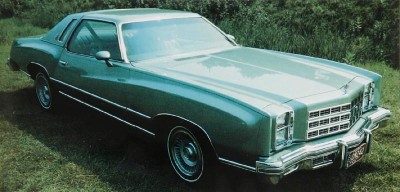

The 1977 Monte Carlo: Sales Surge Amidst Styling Stagnation
Chevrolet’s personal luxury coupe wasn’t winning beauty contests anymore, but it was certainly winning at the dealership. The front end had become overstyled to the point of ugliness, yet the 1977 Monte Carlo sold like hotcakes. In fact, volume actually climbed higher than the previous year.
Shoppers were flocking to showrooms. They bought 224,327 of the standard “S” sport coupes. Another 186,711 buyers opted for the Landau version with its vinyl roof. That is a lot of metal moving off the lot despite the polarizing design.
Market Position and Pricing
The Monte Carlo held its ground against increasing competition. Since its 1970 debut, rivals had been scrambling for a slice of the “personal-size luxury” pie. But the Chevy remained a stalwart. Only the Oldsmobile Cutlass outsold it in the mid-size coupe category.
Prices started at $4,968 for the base model. Landau trims set buyers back $5,298. It was a premium for the extra cloth and chrome, but buyers clearly didn’t mind paying up.
Engineering Quirks and Powertrain
Here is where things get interesting mechanically. Chevrolet had downsized its full-size cars to share the 116-inch wheelbase with the Monte Carlo. Logic suggests the smaller coupe should be lighter.
It wasn’t. The Monte Carlo actually weighed more than the big-bodied sedans and coupes it shared a frame length with. It was a strange engineering contradiction.
Engine choices had been pruned down to just two V-8 options. The base motor was the 305-cubic-inch unit. It rated 145 horsepower. Not earth-shattering, but adequate.
Want more power? You had to step up to the optional 350-cubic-inch V-8. It bumped output to 170 horsepower. Every single Monte Carlo came standard with Turbo Hydra-Matic transmission. No manual options. No three-speeds. Just the automatic slushbox.
Visual Details and Options
The styling changes were subtle but specific. Grilles were broken into small segments. A new hood ornament featured the Monte Carlo crest. Rear lights were wider and sat lower on the panel. They were horizontally segmented, splitting the light bar into distinct chunks.
Buyers could customize the look with padded vinyl roofs. Sport mirrors were available for a sharper profile. Wheel choices included Turbine II designs or classic Rally wheels.
Landau models got their own flair. Pinstriping ran along the body. A vinyl half-roof distinguished them from the standard S coupes. It was a way to differentiate the top-trim models when the base car looked increasingly dated.
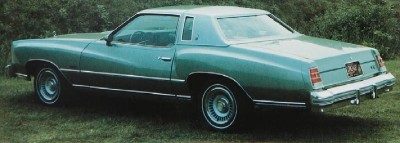

1978 Chevrolet Monte Carlo
The horizontal segmentation of the 1977 taillights carried over, but the styling got a sharper edge. The grille lost its previous chrome-heavy look. It became a single, thin horizontal bar. It looked cleaner. The bumper guards were now integrated directly into the body color. No more chrome protruding where it didn’t belong.
It was a subtle shift. But it mattered. Enthusiasts noticed.
Under the Hood
Chevy kept the engine lineup mostly static. You could still get the base 305 cubic-inch V-8. It made 145 horsepower. Not exactly thrilling. The heart of the Monte Carlo remained the 400 cubic-inch V-8. This was the engine that kept the coupe relevant in a market that was starting to turn against big, heavy cars.
The 400 produced 180 horsepower. That was decent. Enough to push the heavy sheet metal if you had the right transmission. The TH350 three-speed automatic was standard. The TH400 four-speed was optional. It handled the torque better. It survived more abuse.
Fuel economy was not a selling point. You could expect 14 mpg in the city. 22 mpg on the highway if you kept your foot off the floor. The 1970s were ending. Regulations were tightening. The muscle car era was fading. But the Monte Carlo hung on.
Sales and Spec
| Model | Weight (lbs.) | Price range (new) | Number built |
|---|---|---|---|
| Monte Carlo | 3,852 | $5,122-$5,498 | 236,984 |
The price went up. Inflation did. You paid more for less than you did the year before. But sales numbers dropped. People were buying smaller cars. Compact imports were gaining ground. The Monte Carlo still sold well compared to competitors, but the trend was clear.
Why It Matters
The 1978 Monte Carlo is often overlooked. It doesn’t get the hype of the ‘70-’72 models. It doesn’t have the big-block legends. But it represents a turning point. Chevy tried to modernize the look without losing the coupe’s essence. The thinner grille. The integrated bumpers. These were steps toward the cleaner, safer cars of the 1980s.
It’s a bridge. Between the raw, chrome-laden days and the more restrained, efficiency-focused future. If you’re looking for a classic Monte Carlo that isn’t overly expensive, the ‘78 is a solid candidate. It’s rare enough to be interesting. Not so rare that it’s unobtainable.
“The 1978 Monte Carlo is a quiet observer of the end of an era.”
For more on classic Chevys, check out the guides on muscle cars and sports cars. They cover the golden age. The Monte Carlo fits in that timeline, even if it wasn’t a pure muscle car. It was a personal luxury coupe. But it had the same spirit.
If you need help with safety recalls or trouble spots for older Chevys, the used car search reports are useful. They list the common issues. Transmission
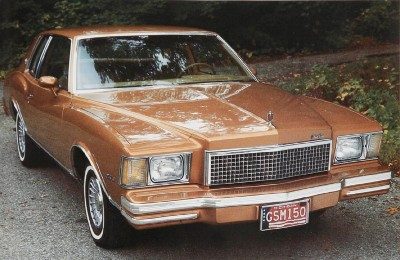

1978 Monte Carlo: The Fuel-Efficient Pivot
The 1978 Chevrolet Monte Carlo underwent a significant shift. It was downsized to prioritize fuel economy. This third-generation model weighed 800 pounds less than its 1977 predecessor. It was also a foot shorter. The reduced overhang improved handling. Parking became easier. The turning circle tightened.
Chevrolet introduced a 231-cubic-inch V-6 as the standard engine. It produced 105 horsepower. This was the first time a six-cylinder powered a Monte Carlo. Buyers could upgrade to a 305-cubic-inch V-8. It generated 145 horsepower. The cost was just $150 extra. A three-speed manual transmission was standard. California models received only automatic transmissions.
Styling and Interior Updates
The sales brochure called it a “trim and timely new edition.” It promised to retain the Monte Carlo’s personality. The front end featured a grid-patterned grille. Rectangular headlights flanked it. The interior was marketed as a driver’s suite. It had a delta-spoked soft-vinyl steering wheel. The dashboard was padded.
Options included power locks. Rally wheels were available for the sport coupe. Strato-bucket seats were an option. A Power Skyroof could be added. Power windows and a power trunk opener were also available. The suspension was road-tuned. It included front and rear stabilizer bars.
Production and Platform Sharing
Chevrolet produced 358,191 Monte Carlos in 1978. Less than 40% were Landau coupes. The rest were basic sport coupes. The Landau version included an automatic transmission. It had deluxe wheel covers. Sport mirrors were added. Pinstriping decorated the sides. The rear roof was covered in elk-grain vinyl. Wide sill moldings completed the look.
The Monte Carlo shared its platform with the “new-size” Malibus. The wheelbase was 108 inches. These Malibus were a foot shorter than 1977 Chevelles. They weighed up to half a ton less. The downsizing trend continued across the line.
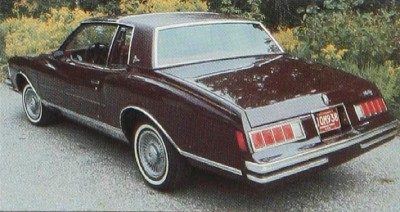

The 1978 Monte Carlo didn’t break new ground. It looked almost identical to the models that came before it. General Motors was stretching the first generation out as long as they could. But under the sheet metal, things were shifting. The muscle car era was fading, replaced by efficiency and compliance with new federal mandates.
Here is where the 1978 model stood in the market.
The Numbers That Defined 1978
This wasn’t a year for record-breaking performance. It was a year for survival in a shrinking market.
- Model: 1978 Chevrolet Monte Carlo
- Weight Range: 3,040 – 3,175 lbs
- Price Range (New): $4,785 – $5,828
- Number Built: Approximately 358,191 units
The weight figure might seem low by modern standards, but keep in mind the safety equipment added over the years—bumpers, airbags, and reinforced structures. The price range reflects the base trim up to the more loaded Luxury Touring packages. You were paying for style and brand loyalty more than raw power.
Why the Stagnant Look?
The 1978 Monte Carlo retained the general lines of earlier models. GM hadn’t updated the body style since 1973. By 1978, the design felt dated compared to the sharper lines of competitors. Yet, it still sold. Why?
Because the Monte Carlo had carved out a niche. It wasn’t a true muscle car anymore. It was a personal luxury coupe. Buyers wanted comfort, chrome, and that distinct two-door silhouette. The engine options were smaller, too. The big block V8s were gone or heavily restricted. The 400 cubic-inch V8 was still available, but it was detuned for emissions and reliability.
Performance in a Changing World
If you bought a 1978 Monte Carlo, you weren’t buying it to drag race. The horsepower numbers had dropped significantly from the late 60s. A 255 cubic-inch V8 was the standard. It moved the car, but not briskly. The 400 cubic-inch option provided some grunt, but torque converters were softer, and transmissions were geared for fuel economy.
“The 1978 Monte Carlo was less about speed and more about presence.”
The weight-to-power ratio suffered. At 3,175 lbs, even the bigger engines struggled to move the car with enthusiasm. Handling was boat-like. The suspension was tuned for comfort, not cornering.
Production Volume and Legacy
GM built roughly 358,191 of these in 1978. That’s a solid number, but it hints at the end of an era. The personal luxury segment was consolidating. Buyers were starting to look at smaller, more efficient imports. The Monte Carlo held on because of Chevrolet’s dealer network and brand recognition.
What Comes Next?
The 1978 model was the end of the line for the first generation. GM was already working on a complete redesign. The next iteration, the 1979
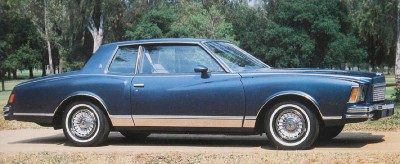

The 1979 Monte Carlo: Subtle Tweaks and Vinyl Roofs
Chevrolet had already pulled off a massive redesign for the 1978 Monte Carlo. So for 1979, they didn’t touch the underlying architecture. They just polished the chrome. The front grille lost its bulk for a fine-patterned crosshatch look. Parking lights got segmented. Taillights wrapped around the corners. It was a facelift designed to keep the car from looking like last year’s used car while the engineers sat back.
Color choices shifted. Trim levels changed. But the body? Same bones.
Landau editions got the real treatment. You had to want the aristocratic vibe to opt for the canopy-style vinyl roof. Textured, padded vinyl created an arch over the cabin. Pinstriping ran along the sides. Rocker panels were blacked out. Deluxe wheel covers and sport mirrors completed the look. It was expensive. It was flashy. It was exactly what buyers wanted in the late seventies.
Under the hood, things were less exciting. The muscle days were gone. You had four engines to pick from if you weren’t in California.
- 200-cubic-inch V-6: 94 horsepower. A commuter’s engine.
- 231-cubic-inch V-6: 115 horsepower. The baseline option.
- 267-cubic-inch V-8: 125 horsepower. The entry-level V8.
- 305-cubic-inch V-8: 160 horsepower. The strongman of the group.
Most buyers would skip the V-6s. The 305 was the only real choice for anyone who cared about passing power. It wasn’t fast by 1970 standards. It was sluggish. But it was smooth. And it was standard in many configurations.
California buyers faced stricter emissions rules. They couldn’t touch the small V-6s. Their menu was narrower. You picked the 231-cubic-inch V-6 or the 305 V-8. That’s it. No 200. No 267. And if you went with the 305 in the Golden State, you lost the manual option. A floor-shifted three-speed was standard elsewhere. But California Montes came only with an automatic. No stick shifts allowed. Not for the big engine anyway.
Chevrolet’s marketing team called the car “a car that stands apart.” Their copy promised a unique look. A distinct feel. A personality all its own. They claimed the interior “massages your spirit with easeful luxury.” It was sales speak. But it worked. The seats were soft. The ride was quiet. It insulated you from the chaos of the era.
Then there was the roof. You could order removable tinted-glass panels. They stowed in the trunk. Pull them out. Snap them in. Open up the sky. Who could resist that? Even if the engine was barely keeping up with traffic.
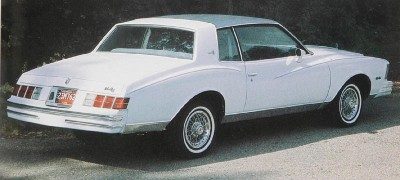

The Vinyl Roofs of ’79
It was 1979, and the luxury trim package was evolving. Chevrolet added a specific vinyl-roof treatment to the 1979 Monte Carlo Landau Sport Coupe. It wasn’t just a cosmetic tweak; it was a statement about status in an era where chrome and cloth mattered more than horsepower figures.
By The Numbers
The stats for that model year tell a story of volume over exclusivity.
- Weight: 3,039 to 3,169 lbs.
- Price: $5,333 to $6,448.
- Production: 316,923 units built.
That production number is massive. Over 300,000 of these were sold. It wasn’t a niche coupe anymore. It was a mainstay.
Looking Ahead
Where does the line go from here? The momentum doesn’t stop.
1980 Chevrolet Monte Carlo
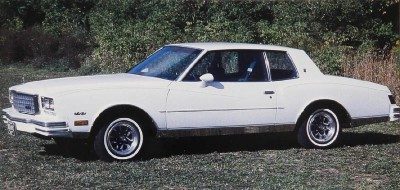

The 1980 Chevrolet Monte Carlo got a quiet refresh. It was the first update since the car was downsized for the 1977 model year. The front end changed slightly. A new “eggcrate” grille sat between rectangular side-by-side headlights. That was about it for exterior tweaks. The body lines stayed largely the same.
Under the hood, things shifted. Engine displacements and horsepower ratings got a slight shuffle. You could still find the 229 or 231 cubic-inch V-6s. The V-8 options were the 267 and 305 cubic-inch engines. Horsepower ranged from 110 to 155 across the board.
The Turbo V-6 Option
A new addition for 1980 was a turbocharged version of Buick’s 231-cubic-inch V-6. It was rated at 170 horsepower.
Performance enthusiasts had reason to be disappointed. The four-speed manual transmission that was available in 1979 was dropped. The three-speed automatic became the standard—and only—option.
Turbocharged engines typically don’t make much power at low speeds. Coupled with the automatic transmission and a tall 2.29:1 rear axle ratio, off-the-line punch was not a strong suit. The 0-60 time was around 13.0 seconds. That was little if any better than the 5.0-liter V-8. The V-8 option actually cost $200 less.
Personal Luxury Features
The Monte Carlo remained a personal-luxury coupe. It offered a host of “personalizing” options. Buyers could choose Custom Cloth or Vinyl upholstery. Sound systems were available, some with built-in CB radios.
Power windows, locks, and seats were common. There was also a power trunk opener and a power sunroof. “Removable Glass Roof Panels” were available, more commonly known as T-tops.
Pricing and Sales Decline
Monte Carlo prices went up sharply. In 1979, a base V-6 coupe retailed for $5,333. For 1980, it was up to $6,524. A Landau edition was also offered. It added a vinyl top, pin striping, deluxe wheel covers, and visor vanity mirrors. The Landau cost $250 more than a base Monte. It didn’t sell as well.
Sales of Monte Carlos as a whole dropped significantly. They fell from 282,000 in 1979 to only 126,000 for 1980. Increased prices were partly to blame. The gas crisis also played a role. It labeled most traditional large American cars as “guzzlers.”
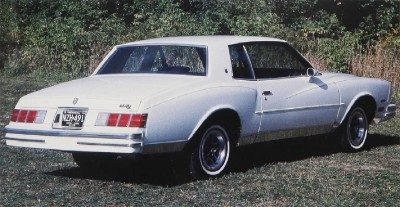

The 1980 model year was a transitional period for the Monte Carlo. It rode on the older, heavier body style and came standard with a 3.8-liter V-6. That engine was decent but not exciting. It sat in a body that had been around since 1974. Then came 1981.
This was the year everything changed. GM moved the Monte Carlo to a completely new platform. They called it the L-body. The car was lighter. It was more aerodynamic. And it looked different.
The New L-Body Platform
The 1981 Chevrolet Monte Carlo was the first year for this new generation. It shared its underpinnings with the Pontiac Grand Prix. But it was distinct. The styling was sharper. The lines were cleaner. The drag coefficient dropped significantly. This wasn’t just a facelift. It was a ground-up redesign.
The old 3.8-liter V-6 remained an option. But there was a new powertrain available. A 2.8-liter V-6. This engine was smaller. It was designed for better fuel economy. It produced less power but helped the car meet stricter emissions standards.
For those who still wanted some punch, the 5.0-liter (305 cubic inch) V-8 was still on the table. It wasn’t the wild 455 of the muscle car era. But it was still a big block by modern standards. It provided torque. It sounded good.
Specifications and Sales
The weight of the new coupe dropped. The 1980 model ranged from 3,104 to 3,219 lbs. The 1981 model was lighter. This helped performance and fuel economy.
The price also shifted. The 1980 model sold between $6,524 and $6,852. The 1981 models started slightly higher due to new equipment and inflation. But the value proposition improved. You got more car for the money.
Sales figures tell the story. In 1980, GM built 148,842 Monte Carlos. The 1981 model year saw a different number. The market was changing. Buyers wanted efficiency. They wanted style. The L-body delivered both.
Why It Matters
The 1981 Monte Carlo marked the end of an era. The old body style was gone. The new shape would define the coupe for the next decade. It was a stylish two-door. It was practical. It was comfortable.
Today, these cars are gaining attention. Collectors like the clean lines. Enthusiasts like the simplicity. It’s not a rare car. But it’s not common either.
If you’re looking for a classic Chevy coupe, this is a good place to start. It’s affordable. It’s reliable. It’s fun to drive.
The 1981 Monte Carlo wasn’t just a new car. It was a statement. GM was adapting to a new world.
What to Look For
When searching for a 1981 Monte Carlo, check the rust. The L-body was prone to corrosion in the rocker panels.
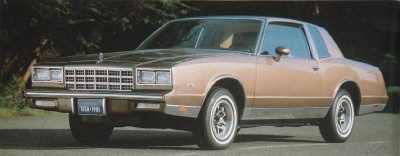
1981 Monte Carlo: The Sole GM Model With Sales Growth
While most of the General Motors lineup suffered through the stagnation of the early eighties, the 1981 Chevrolet Monte Carlo stood out. It was the only Chevy to see a sales increase that year. The numbers tell the story clearly. Volume jumped more than 25 percent. Total sales hit 187,850 units. That is a significant win for a mid-size personal luxury coupe in a market dominated by smaller, more economical imports.
But this success didn’t come from raw power or cutting-edge tech. It came from a mild reskinning that felt, for once, like an improvement.
New Face, Same Bones
The 1981 Monte Carlo looked familiar if you had been paying attention to the 1980 model. But look closer and the differences were stark. The front end lost its rounded edges. It went lower. It got squared off. The most noticeable change? Body-colored bumpers replaced the heavy, rubber-jacketed units of previous years.
The rear told a similar story of angularity. Vertical taillights were ditched for horizontal lenses. The tail itself sat higher. It was boxier. Again, the bumpers were body-colored. This created a more cohesive look that moved away from the bubbly shapes of the late seventies toward the sharper lines that would define the mid-eighties.
The sweeping fender creases remained. They were a Monte Carlo trademark for decades. But they were toned down. The profile became more slab-sided. It wasn’t a revolution in design. It was a correction. And in 1981, correction was exactly what the model needed.
Under the Hood: CCC and Efficiency
GM didn’t change the engine lineup. Instead, they changed how those engines behaved. All powerplants were fitted with the new Computer Command Control (CCC) emission system. This was GM’s response to stricter federal regulations. It prioritized cleanliness and fuel economy over peak output.
The results were mixed depending on which block you chose.
The base 229-cubic-inch V-6 lost power. It dropped from 115 horsepower to just 110. In California, the 231-cubic-inch Buick V-6 was substituted. It also made 110 horsepower. Efficiency was the goal. Performance was sacrificed.
V-8 buyers had more options. The 267-cubic-inch V-8 returned with 115 horsepower. The 305-cubic-inch V-8 made 150 horsepower. These weren’t fast numbers. But they were adequate for the era.
There was one exception. The top power option remained the turbocharged 3.8-liter V-6. It pushed out 170 horsepower. This was the only way to get any real snap out of the 1981 Monte Carlo. It was the enthusiast’s choice. The rest of the buyers were likely just happy the car started.
Transmission upgrades were subtle but important. A lock-up torque converter was added to the standard three-speed automatic. This reduced slippage at highway speeds. It improved fuel economy. It made the drive slightly more efficient. Small gains. But in 1981, small gains were everything
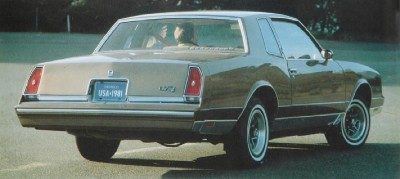

The 1981 Monte Carlo: A Study in Formality
The 1981 Monte Carlo arrived looking handsome, though perhaps a bit stiff. It was a coupe that prioritized formal lines over raw attitude. If you were shopping for one new, you were looking at a specific slice of early-eighties American design.
1981 Chevrolet Monte Carlo Facts
Model
Monte Carlo
Weight range (lbs.)
3,102-3,228
Price range (new)
$7,299-$8,056
Number built
187,850
That price tag sat in a middle ground. Not cheap, not exorbitant. The weight range tells you it wasn’t light. You were moving a fair amount of metal. Over 187,000 of them rolled off the line. A decent run.
“The Monte Carlo continued in production through the 2007 model year.”
It wasn’t the last word in performance, but it wasn’t trying to be. It was about presence.
For more picture-packed articles about Chevys and other great cars, see:
- Classic Cars : Learn about more than 400 of the world’s finest classic and collectible automobiles.
- Muscle Cars : Look back at tire-smoking Chevys and scores of other machines from the golden age of American high performance.
- Sports Cars : Discover the pleasure of sports motoring at its purest in these captivating articles on the best sports cars from around the world.
- Consumer Guide Automotive : Here’s your source for news, reviews, prices, fuel-economy and safety information on today’s cars, minivans, SUVs, and pickups.
- Consumer Guide Used Car Search : In the market for a used Chevy or virtually any other pre-owned vehicle? Check out these reports, which include safety recalls and trouble spots.
- All Chevrolet Monte Carlos : The Chevrolet Monte Carlo continued in production through the 2007 model year. Learn about the modern history of this stylish Chevy coupe.
1982 Chevrolet Monte Carlo
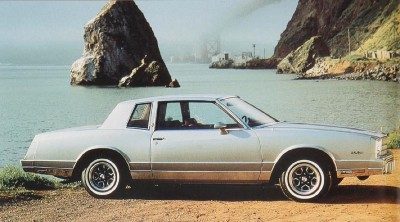

The 1982 Monte Carlo: A Quiet Year of Shrinkage
The 1982 Chevrolet Monte Carlo didn’t scream for attention. It looked smart. It remained handsome. But underneath the sheet metal, things were shifting.
Exterior changes were subtle. A finer-mesh grille broke up the front fascia. That was about it. Inside, Chevy dropped the bucket seat option. No more individual front chairs. You got bench seats now. Six passengers fit comfortably. Or uncomfortably. Depending on how you looked at it.
Under the hood, the shuffle was real. With the Malibu coupe dead and buried, the Monte Carlo was losing its distinct identity. It was becoming less of a standalone model and more of a two-door Malibu with a better attitude. The Malibu’s own facelift that year mirrored Monte Carlo styling cues. The lines blurred. The distinction vanished.
Prices followed suit. The Monte Carlo sank into the Malibu’s price bracket. Previously, you paid a premium for the Monte Carlo badge. Not anymore.
Powertrain: What Stayed and What Left
Chevy aligned powertrain availability with the Malibu. The standard engine was the familiar 3.8-liter (229-cubic-inch) V-6. It made 110 horsepower. Reliable? Maybe. Exciting? Absolutely not.
Optional power came from two V-8s. A 4.4-liter (267-cubic-inch) unit with 115 horsepower. And the old faithful 5.0-liter (305-cubic-inch) V-6 with 150 horsepower.
But here’s what you didn’t get. The 3.8-liter turbocharged V-6. That thing introduced in 1980 was gone. Turbocharging in the early 80s was fraught with issues. Delay, lag, reliability nightmares. Chevy pulled the plug.
In its place? Diesels.
Chevy offered a 5.7-liter (350-cubic-inch) V-8 diesel making 105 horsepower. And a 4.3-liter (262-cubic-inch) V-6 diesel with a mere 83 horsepower. Peak performance.
“Notable by its absence was the turbocharged V-6… replacing the turbo were a pair of diesels.”
Sales Plummet
Even without the Malibu coupe cannibalizing its sales, the Monte Carlo tanked.
1981 sales sat at nearly 188,000 units.
1982 sales? Less than 93,000.
A drop of over 50 percent.
Why did buyers walk away? The market was shifting. Gas prices were volatile. Japanese imports were gaining ground with better efficiency and reliability. The Monte Carlo was heavy. Slow. And suddenly, not much different from its cheaper cousin, the Malibu.
Chevy knew it had a problem. They had tricks up their sleeve for 1983. But 1982 was a year of consolidation. Of shrinking. Of losing identity.
1982 Chevrolet Monte Carlo Specifications
| Spec | Detail |
|---|---|
| Model | Monte Carlo |
| Weight | 3,190 lbs |
| New Price Range | $8,177 – $8,247 |
| Units Built | 92,392 |
The base model Monte Carlo remained smart. But it was becoming less of a statement and more of an afterthought.
For enthusiasts looking back at the golden age of American muscle, the Monte Carlo’s decline in the early 80s marks a pivotal shift. It was no longer just about horsepower. It was about survival.
Classic car collectors often overlook this era. They prefer the roaring 60s or the high-compression 70s. But the 1982 Monte Carlo tells a story of transition. Of a brand trying to figure out what it was becoming.
The Malibu coupe was dead. The turbo was dead. The Monte Carlo’s soul? Well, that was on life support.
Consumer Guide Automotive and similar resources now highlight these years as crucial for understanding the evolution of the mid
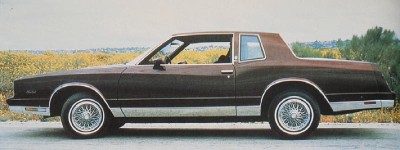

The Face of Change
The front end barely blinked for the 1983 model year. Aside from a slightly revised grille, the base Monte Carlo looked identical to its 1982 predecessor. It was a holdover year before the real shift happened mid-cycle.
Engine choices got thinner. Chevy deleted the small 4.4-liter V-8 option entirely. For the standard 49-state market, the base engine remained the 3.8-liter V-6 producing 110 horsepower. California models used a similar Buick-built engine to meet stricter emissions standards.
Option lists were sparse. You could upgrade to a 150-horsepower 5.0-liter V-8. Or you could choose diesel. There were two options: a 4.3-liter V-6 with 85 horsepower and a 5.7-liter V-8 with 105 horsepower.
Neither diesel caught on. They were heavy, slow, and frankly, unpopular.
Enter the SS
Spring arrived, and with it, a new breed of Monte Carlo. The 1983 Monte Carlo SS was Chevy’s attempt to restart the midsize muscle car formula. It didn’t just dabble. It committed.
The heart of this package was a high-output 5.0-liter V-8. Chevy tuned it with a high-lift cam and low-restriction dual exhaust. The result was 180 horsepower. That was serious power for a car built in the early eighties.
The styling reflected this intent. The SS featured a smoother front fascia compared to the standard model. The bumper was integrated directly into the bodywork. A lower lip spoiler added aggression without clutter.
“A real ‘blast from the past,’ with spirited acceleration the likes of which had not been seen in a midsize Chevy for a very long time.”
Badging was specific to the trim. You saw SS badges on the grille and fenders. A small rear spoiler sat on the decklid. The suspension was stiffened to handle the extra torque and sharper handling demands.
Color choices were limited. You could only get the SS in white or dark metallic blue. It was a stark, clean look. Not cluttered with extra graphics. Just lines and power.
The Numbers
How did they sell? And what did they cost?
The base Monte Carlo weighed between 3,220 and 3,328 pounds depending on options. Prices started at $8,552 and climbed to $10,474 for a loaded model.
Chevy built 96,319 units. That’s a decent run for a niche coupe in a fuel-conscious era. It wasn’t a mass-market failure. It was a focused play.
The SS changed the dynamic. It proved that the Monte Carlo could still bite. The V-8 option, especially in SS trim, offered performance that felt久违 (forgotten) in a segment dominated by economy.
The diesels? Gone. The small V-8? Deleted. The only way up was the 5.0-liter V-8. Either the standard 150-horsepower version or the SS-specific 180-horsepower tune.
The message was clear. If you wanted speed, you bought the SS. If you wanted economy,
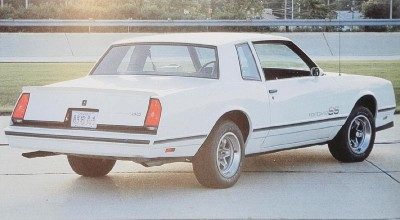

1984 Chevrolet Monte Carlo
The 1983 Monte Carlo SS held its ground with a 5.0-liter V-8 pumping out 180 horsepower. That engine mated to a sport suspension package. It was competent. But the calendar flipped to 1984. The rules changed.
For 1984, Chevy didn’t just tweak the Monte Carlo SS. They redefined what a personal luxury coupe could be. The body got sleeker. The lines grew sharper. This wasn’t just a restyle. It was a generational shift in American design language.
The previous year’s model felt a bit like a final effort before a major overhaul. The 1984 version arrived with a clean slate. The greenhouse shrunk. The beltline dropped. You sat lower in the chassis. It looked aggressive. It felt faster than it actually was. But that illusion mattered.
Under the hood, the powertrain remained largely familiar. The 5.0-liter V-8 was still the heart of the SS. It still made 180 horsepower. But the transmission choices widened. The automatic was smoother. The manual option, though rare, gave drivers a direct link to the drivetrain.
Handling improved. The suspension tuning was firmer. Body roll decreased. You could actually put the car through a corner without worrying about the fenders scraping the pavement. This was a car that wanted to be driven. Not just parked.
The interior received a similar treatment. The dashboard was simpler. The gauges were easier to read. Materials felt more durable. The seats held you better during hard acceleration. It was a cockpit designed for speed. Or at least the appearance of it.
1985 Chevrolet Monte Carlo
The momentum continued into 1985. The 1984 design was refined. The 1985 Monte Carlo SS looked even more integrated. The bumpers were body-colored. This wasn’t just aesthetic. It reduced drag. It made the car look like it was carved from a single block of metal.
The engine options expanded slightly. The 5.0-liter V-8 was still the star. But other V-8s were available for those who wanted more torque. The base models still offered V-6s. But the SS buyers wanted power. They got it.
Fuel injection became more standard. The throttle-body injection system was reliable. It started in the cold. It ran smoothly. It didn’t require constant tuning. This was practical performance. Real-world usability without sacrificing the thrill.
Sales figures reflected the success. People bought the 1985 Monte Carlo SS. They liked the look. They liked the feel. They liked the badge. It was a statement. Not just on the highway. But in the driveway.
The competition was fierce. Ford Thunderbird. Oldsmobile Cutlass Supreme. But the Monte Carlo stood out. It was bold. It was confident. It was American.
1986 Chevrolet Monte Carlo
By 1986, the Monte Carlo had settled into a groove. The design was mature. The engineering was proven. The 5.0-liter V-8 was refined further. Power output remained steady. But efficiency improved. Emissions controls were tighter.
The suspension was tweaked again. Ride comfort increased slightly
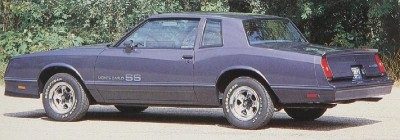

The SS Factor and the Malibu Void
The 1984 Chevrolet Monte Carlo wasn’t just another update cycle. It was a consolidation of power. With the Malibu sedan and wagon quietly dropped from the lineup, the Monte Carlo stood alone as Chevy’s last midsize rear-wheel-drive option. That structural shift forced a pivot. The car needed a new identity.
It got one via the SS badge.
The 1984 Chevrolet Monte Carlo SS brought back the 5.0-liter V-8 and styling cues that screamed “performance” without actually delivering supercar speeds. This macho packaging gave the entire lineup a sportier image. It worked. Sales jumped by 40 percent.
Was it because people who wanted a Malibu suddenly preferred a two-door coupe? Probably not. The sedan buyers were likely gone for good. The boost came from a different demographic. Buyers who wanted quick, good-looking cars were still out there. They just hadn’t had a viable GM option until the SS returned.
Under the Hood: Engine Choices and Emissions
Chevy kept things simple. Or at least, they tried. Changes were minimal, mostly involving powertrain shuffling. One notable addition was optional front bucket seats, but only if you ordered the center console. It was a mandatory pairing for the sporty look.
The engine lineup saw a reduction, not an expansion.
The 4.3-liter V-6 diesel was gone. Lack of interest killed it. That left the 5.7-liter V-8 diesel at 105 horsepower, though you couldn’t get it in California. The state’s emissions standards were too strict for that old tech.
For the rest of the country, the base engine was the 3.8-liter V-6. It made 110 horsepower. Standard fare. California buyers got a similar Buick-built V-6 instead.
If you wanted speed, you looked up the stack.
The 5.0-liter V-8 was optional on base models, pushing out 150 horsepower. But the real star was the SS version. It ran a tuned 5.0-liter V-8 rated at 180 horsepower. All engines came standard with a three-speed automatic transmission. You could upgrade to a four-speed automatic on most models, with the exception of the California Buick V-6 variants.
The Numbers Don’t Lie
The popularity surge was undeniable. But what did that cost, and how heavy was it?
Here is the hard data for the 1984 Chevrolet Monte Carlo:
- Weight Range: 3,165 to 3,434 lbs
- Price Range (New): $8,936 to $10,700
- Total Production: 136,780 units
That production number tells the story. Nearly 137,000 of these two-door coupes rolled off the line. The 1984 Chevrolet Monte Carlo proved that even in an era of rising fuel prices and stricter regulations, there was still a market for American V-8s with a distinct look.
It wasn’t about efficiency. It was about presence. And with the Malibu gone, the Monte Carlo owned the midsize segment entirely. For those who missed the sedan
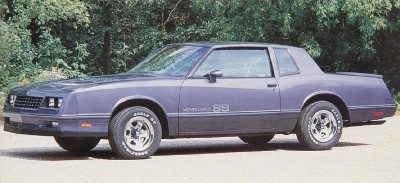

The 1985 Chevrolet Monte Carlo: A Year of Refinement
The 1984 Monte Carlo SS didn’t just sell well. It set a new tone. Sales surged. The market responded. Chevy knew they had struck gold with the bold styling and performance package. But 1985 arrived with a different mandate. The goal was refinement over revolution. The body lines softened. The aggression dialed back. Yet the heart of the machine remained.
Styling Tweaks and Interior Shifts
Look closely at the 1985 model. The changes were subtle but distinct. The front end lost some of the sharp angles of ’84. The grille became smoother. The headlights retained their rectangular shape but felt more integrated into the bumper. It wasn’t ugly. It was just… polite.
Inside, the cabin saw some updates. The dashboard layout remained familiar to owners of the previous year. But the materials improved. Vinyl and cloth combinations became standard in many trim levels. The SS version still offered its signature bucket seats. They were firm. Supportive. Built for cornering, not just cruising.
“The 1985 Monte Carlo didn’t scream for attention. It whispered confidence.”
Engine Options and Performance
Under the hood, the options remained largely consistent with the late ‘80s strategy. The base model often carried the 205 cubic-inch V-6. It was adequate. Not thrilling. But it got the job done for daily commuting.
The real story was in the V-8 department. The 305 cubic-inch Small Block remained the workhorse. Rated at around 145 horsepower in many applications, it wasn’t a muscle car by ‘70s standards. But in a lightweight coupe like the Monte Carlo, it felt spry.
For those who wanted the SS badge, the 350 cubic-inch V-8 was the choice. Output varied. Some sources cite 180 horsepower. Others suggest figures closer to 160 depending on the transmission and exhaust setup. Regardless, it moved the car with authority. The handling was tuned for comfort. But there was enough grip to keep the tires happy on a backroad.
Sales and Legacy
The 1985 Monte Carlo continued the upward trajectory. Sales figures stayed strong. Why? Because it offered luxury. It offered style. It offered V-8 power. In an era where Japanese imports were gaining ground on reliability, Chevy leaned into American excess.
The Monte Carlo became a staple. It was in malls. It was at high school dances. It was parked outside diners across the country. The 1985 model year cemented its status as a classic. Not because it broke records. But because it defined an era.
Looking Ahead
By the end of 1985, the formula was set. Refinement. Comfort. Subtle power. The next few years would see more electronic fuel injection. More aerodynamic tweaks. But the core identity remained. The Monte Carlo was a personal luxury coupe. And the 1985 SS proved that you didn’t need to shout to be heard.
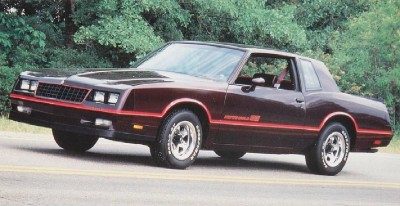

The Stagnant Powerplant That Defined the 1985 Monte Carlo SS
The 1985 model year brought a strange contradiction to Chevy’s rear-wheel-drive personal-luxury segment. While most Monte Carlo trims saw their output increase, the 1985 Chevrolet Monte Carlo SS was the only model that didn’t get more horsepower. It was a year of expansion in other areas, but the big block stayed exactly where it was.
Diesel power made no return to the lineup. This was the first time since 1981 that buyers couldn’t option a diesel engine. The market had shifted. Interest in fuel efficiency had cooled, or perhaps the reliability issues of the early 80s had finally faded from public memory. Either way, the 1.8-liter diesel was gone.
Engine Lineup Updates
Base models saw a significant bump under the hood. The standard 3.8-liter V-6 was replaced by a larger 4.3-liter unit. It came with throttle-body fuel injection. This change added 20 horsepower. The base V-6 now pushed 130 hp. It was a modest gain.
The optional 5.0-liter V-8 also got stronger. Chevy raised the compression ratio. The result was a jump from 150 to 165 horsepower. Simple math. More compression. More power.
But the SS? The High Output 5.0-liter V-8 remained locked at 180 horsepower. No tweaks. No upgrades. Just the same output as the previous year.
Transmission and Trims
The V-6 and base V-8 could be paired with either a three-speed or four-speed automatic transmission. Flexible. Accessible.
The SS changed that. The H.O. V-8 in the Monte Carlo SS came only with the four-speed automatic. No three-speed option. This focused the driving experience. It demanded more engagement.
Exterior Changes
The base coupe looked identical to 1984. No new sheet metal. No new lights.
The SS was different. Color choices expanded. Previously, you could only pick white or dark blue metallic. Now, silver, maroon, and black were available. More variety. More personality.
T-tops arrived midyear. Removable glass roof panels gave the SS a sportier profile. It opened up the cabin. It let light in. It made the car feel less like a boat.
Sales Numbers
Despite an aging design, nearly 120,000 Monte Carlos sold in 1985. A solid number. Down slightly from 1984, but still strong.
The SS model told a different story. Sales climbed from 24,050 to 35,484 units. That’s a 48% increase. Buyers wanted performance. They wanted the SS badge. Even without extra horsepower, the package resonated.
Why It Mattered
The 1985 Monte Carlo SS wasn’t about raw power. It was about styling. Options. And that reliable 180 hp V-8. It proved that a personal-luxury coupe could still sell well. Not by evolving. But by refining.
The SS sold. People bought it. They liked the look. They liked the
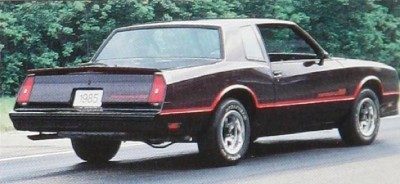

The palette shifted. Where 1984 offered a limited selection, the 1985 Chevy Monte Carlo SS finally got room to breathe. Color choices expanded from two to five. You could pick from that deep maroon hue or go with other options that didn’t feel like an afterthought. It was a small tweak, but it mattered to buyers who wanted the SS to look the part.
The numbers tell a different story than the aesthetics. General Motors moved serious metal.
1985 Model Year Breakdown
- Model: Monte Carlo
- Weight: 3,139 to 3,385 lbs.
- New Price: $9,540 – $11,380
- Production: 119,057 units built
That weight range is tight. You weren’t lugging around excess steel just for the sake of it. The price tag reflected the SS badge, but it was accessible. Nearly 120,000 units rolled off the line. That’s a lot of asphalt covered by mid-80s GM engineering.
Looking Ahead to 1986
The momentum didn’t stop. The 1986 Chevrolet Monte Carlo carried the torch. If you were tracking the lineage, you knew this was a pivotal era. The styling evolved. The engineering refined. But the core appeal remained the same: a stylish coupe with a V8 under the hood.
For deeper dives into these machines, check out the archives. You can explore classic car histories, muscle car legends, and sports car reviews. Consumer Guide Automotive has the news, reviews, and safety data. If you’re hunting for a used Chevy, their reports flag recalls and trouble spots before you buy. All Chevrolet Monte Carlos continued through 2007. The modern history of this coupe is long, but the 1985 model held its own.
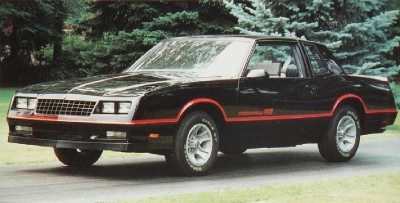
The 1986 Monte Carlo LS and the SS’s New Look
The 1986 Chevrolet Monte Carlo isn’t just a carry-over year. Chevy dropped a new top-tier trim to fight the luxury compact sedans eating their lunch. It was called the LS. Sleek. Serious. It wore a distinct aerodynamic nose that actually did something for drag coefficients. Flush-mounted composite headlights replaced the popped-up units. Wraparound taillights rounded out the rear, giving it that late-80s wedge shape everyone wanted.
Under the hood, the story gets weird. You might think power went up. It didn’t always. The standard 4.3-liter V-6 gained 10 horsepower to hit 140. That’s a solid bump. But the base 5.0-liter V-8? It lost 15 horses. Down to 150. Why? Emissions. Always emissions. The High Output (H.O.) 5.0-liter V-8 in the SS stayed put at 180 horsepower. No changes there.
Transmission choices were strict. The V-6 defaulted to a three-speed automatic. You could pay extra for a four-speed. The V-8s? They only took the four-speed automatic. No manual option in the spreadsheet for these big V-8s.
Stiffer Shocks and New Wheels
Every Monte Carlo in 1986 got a retuned suspension. Stiffer shocks. The ride was firmer. The handling sharper. The instrument panel got a complete overhaul to fit new Delco electronic radios. Gauge graphics were tweaked too. The SS got specific aluminum wheels that looked faster than they probably were.
The 1986 Monte Carlo LS showed off a luxurious new trim with a distinctive aerodynamic nose and flush-mounted composite headlights.
The Mid-Year Aerocoupe: A NASCAR Necessity
Halfway through the year, Chevy did something strange. They introduced a special SS model. Very limited numbers. Called the Aerocoupe. It had a sloped rear window. A massive one. It changed the roofline entirely.
Why? NASCAR.
Stock car racing rules at the time were draconian. If a manufacturer wanted to homologate a body style for competition, they had to build 200 copies for the public. You couldn’t just make one for the racetrack. So Chevy built 200 Aerocoupes. Sold them to the general public. Just to keep the cars legal on the track.
Those 200 cars are now coveted collector items. A piece of NASCAR history disguised as a boulevard cruiser.
Which Engine Should You Choose?
If you’re looking at a 1986 Monte Carlo today, the engine choice defines the car. The V-6 is economical. 140 horsepower. Three-speed auto standard. It’s a comfortable cruiser. The base V-8 is underwhelming. 150 horsepower. Why buy it? Maybe because it’s a V-8. But the SS’s H.O. V-8 at 180 hp is the sweet spot. It’s not fast by modern standards. But it’s smooth. Reliable. And it came with the stiffer suspension and aluminum wheels.
The LS trim offers luxury without the SS badge. Flush headlights.
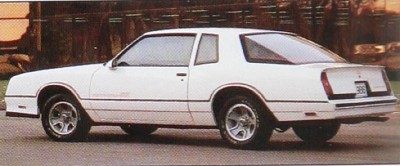

The aerodynamics of the mid-eighties were a wild west. Every manufacturer was chasing downforce with spoilers, wings, and body kits that looked like they belonged on a spaceship. But none of it mattered if you couldn’t race it. That was the problem for General Motors. To compete in NASCAR’s premier series, the rules required a homologation special. You had to build a certain number of street-legal cars based on the race car to prove the design was real.
Enter the 1986 Chevrolet Monte Carlo SS Aerocoupe.
This wasn’t just a trim package. It was a limited-edition fastback-glass coupe designed specifically to qualify the shape for NASCAR competition. The goal was simple: create a production version of the race car and sell it to the public. The result was one of the most aggressive-looking street cars to ever leave Flint.
The numbers behind the aero
The Aerocoupe sat in a strange place in the Monte Carlo lineup. It shared the same underlying platform as the standard Monte Carlo, but the roofline was completely different. The “Aerocoupe” name came from that sleek, sloping rear window. It wasn’t just for looks. The lower profile reduced drag and helped stabilize the car at high speeds on restrictor-plate tracks.
Here is how it stacked up against the rest of the 1986 range:
- Weight range (lbs.): 3,138-3,440
- Price range (new): $10,241-$14,191
- Number built: 119,210 (Total Monte Carlo production)
The Aerocoupe itself was a tiny fraction of that total. GM only built 2,000 of them. Two thousand units. That’s it. If you see one today, you’re looking at a rarity. The price tag reflected that scarcity. At the time, a base Monte Carlo started around $10,000, but the SS package with the aero body kit pushed prices up. You were paying for the plastic cladding, the special badging, and the engineering tweaks.
Most came with the 5.0-liter V8. It wasn’t a supercharged monster. It was a carbureted pushrod engine making roughly 190 horsepower. But in NASCAR, horsepower wasn’t everything. It was about aerodynamic efficiency and driver confidence. The Aerocoupe gave teams a legal way to use their race-bred body styles in production form.
Why the roof mattered
NASCAR rules in the mid-eighties were strict about body contours. Teams would tweak sheet metal to improve airflow, but they could only do so if the production version matched the race car’s dimensions. The Aerocoupe’s fastback roof was the key. It allowed GM to homologate a body shape that cut through the air better than the traditional notchback design.
Drivers like Darrell Waltrip loved it. The car tracked straighter at high speeds. It felt planted. On tracks like Bristol or Talladega, those marginal gains added up. You could carry more speed into the corners. You could brake later. It wasn’t about raw power.
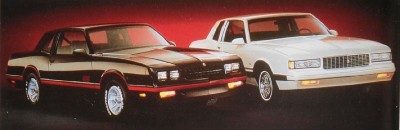

The Final Bow for Rear-Drive Monte Carlo SS and LS
The 1987 and 1988 Chevrolet Monte Carlo closed a significant chapter in personal-luxury coupe history. These were the last years for Chevy’s rear-drive iteration before the nameplate went into a long dormancy. The models pictured here represent the final LS and SS variants before the platform shifted gears.
Chevy dropped the base model for 1987, focusing entirely on the LS and SS trims. The exterior received subtle updates, most notably revised taillights that gave the nose-to-tail profile a sharper look.
The Rare 1987 Monte Carlo SS Aerocoupe
For 1987, the Chevrolet Monte Carlo SS was available in two distinct body styles: the traditional notchback coupe and the aggressive fastback Aerocoupe.
The Aerocoupe was a limited-production special. First introduced for the 1986 model year, it was initially restricted to just 200 units. That number was specifically chosen to meet homologation rules for stock car racing. By 1987, those restrictions loosened. Production jumped to 6,052 units, making it a much more common sight than its debut year, though still a rarity compared to standard coupes.
Engine Specs and Powertrain Choices
Under the hood, the 1987 Chevrolet Monte Carlo LS started with the throttle-body-injected 4.3-liter V-6. This engine saw a minor bump, gaining five horsepower to reach 145 total. It was paired with a standard three-speed automatic transmission.
Buyers opting for the LS could also choose the base 5.0-liter carbureted V-8. This engine produced 150 horsepower and was mated to a four-speed automatic. Interestingly, this four-speed was also an optional transmission for the V-6 models, offering slightly better gearing for those wanting a bit more low-end torque or highway cruising capability.
The Chevrolet Monte Carlo SS retained its performance edge. It came standard with the H.O. (High Output) carbureted 5.0-liter V-8. This powerplant pushed 180 horsepower, providing the punch expected from the top-tier trim.
The 1988 Chevrolet Monte Carlo: A Solitary Figure
The 1988 model year brought a major shift in Chevrolet’s lineup. With the discontinuation of the full-size Caprice two-door body style after 1987, the Monte Carlo became Chevy’s sole remaining rear-drive six-passenger coupe.
This isolation meant the Monte Carlo stood alone in its segment for GM. Production numbers for this swan-song season totalled just over 30,000 units. More than half of those sales belonged to the SS version, proving that enthusiasts still wanted the sportier badge for the final send-off.
Changes for 1988 were functional rather than cosmetic. The four-speed automatic transmission became standard equipment across the board, reflecting the market’s shift away from three-speed units. However, the Monte Carlo SS Aerocoupe was retired. The fastback style disappeared with the 1987 model year, leaving the notchback as the only body style for the
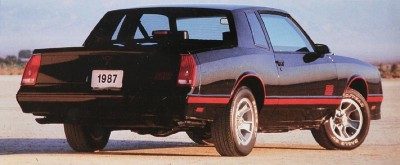

The rear-wheel-drive Monte Carlo died in 1988. That’s the hard fact. Before the platform shift to front-wheel drive changed the character of the coupe entirely, GM gave us two final years of the traditional layout. We are looking at the 1987 and 1988 models here. Specifically, the 1987 Monte Carlo SS. This was not just a trim package update. It was a farewell to a specific kind of American muscle car philosophy.
1987 Chevrolet Monte Carlo Facts
Let’s look at the numbers for the penultimate year of the RWD era. The weight ranged from 3,283 to 3,526 pounds. That is substantial. The price tag when new started at $11,306 and climbed to $14,838 for higher trims. GM built 79,045 of them.
That volume matters. It wasn’t a rare bird. It was mainstream performance. The SS badge carried the weight of heritage, even if the engineering was beginning to show its age compared to the sharper European imports arriving on US shores.
1988 Chevrolet Monte Carlo Facts
The final year tells a different story. Production dropped significantly. Only 30,174 units left the factory. Why? The market was shifting. Front-wheel drive was gaining ground. The Monte Carlo was preparing for a life under a different chassis architecture.
Weight actually decreased slightly, sitting between 3,212 and 3,267 pounds. Prices crept up modestly, ranging from $12,330 to $14,320. The higher price on fewer units suggests a consolidation of the buyer base. These were likely the enthusiasts who refused to let go of the rear-wheel-drive configuration until the very last moment.
Why These Years Matter
If you are hunting for a 1987-1988 Monte Carlo SS, you are looking for the end of an era. These cars represent the last chance to own a Monte Carlo with a traditional drivetrain layout before GM moved everything to the N-body platform. The transition to front-wheel drive in 1995 brought a different kind of comfort and technology, but it lost the mechanical simplicity and driving dynamics that defined the earlier decades.
For collectors, the 1987 Monte Carlo SS is particularly notable. It sits on the cusp. The 1988 model is the final gasp. Both are valuable not just for their specs, but for what they represent in the lineage of Chevrolet’s personal luxury coupe.
What Comes Next?
After 1988, the Monte Carlo lived on. It continued through the 1995 model year with a completely new front-wheel-drive underpinnings. Then, it stayed in production until 2007. But those last two RWD years? They are unique. They are the twilight of a specific automotive design language.
If you want to dig deeper into the broader context, there are resources covering over 400 classic and collectible automobiles. You can explore the golden age of American high-performance machines with tire-smoking Chevys and other legends.
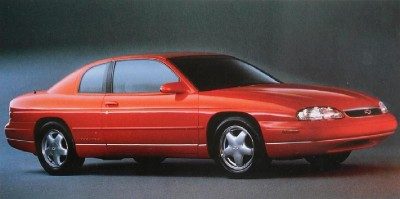

Rebirth of a Nameplate
The 1995 Monte Carlo wasn’t just a new model; it was a revival. Chevy brought back the name after letting it sit dormant since 1988. The goal was simple. They wanted to recapture the crowd that loved the old rear-drive personal coupes. The Monte name used to mean something specific to car buyers who wanted style without the bulk of a full-size sedan. But the engineering underneath told a different story.
Platform Sharing Explained
Chevy didn’t reinvent the wheel for this launch. They built the 1995 Chevrolet Monte Carlo on the same front-wheel-drive platform as the four-door Lumina sedan. It was an efficiency play. Powertrains were shared. Interior layouts were nearly identical.
Yet, they made it look distinct. The roofline dropped. The front and rear fascias got unique styling cues that separated it from the family sedan. Inside, the Monte Carlo tried to feel more premium. A fake wood-grain stripe stretched across the dash and wrapped into the door panels. The mainstream Lumina didn’t get that trim. It was a subtle luxury signal.
Trims and Powertrains
Two main trims dominated the lineup. The LS and the Z34.
The LS version mirrored the Lumina LS sedan. It offered a bench front seat. That meant six-passenger capacity. It was about utility disguised as style. Under the hood sat Chevy’s 3.1-liter V-6. The numbers were up. Power jumped 20 horsepower from the previous year. The rating hit 160 horsepower.
Then there was the Z34. This was the sporty entry point. Standard features included front bucket seats and a center console. The suspension was stiffer. You got 16-inch alloy wheels. The grille surround was body-colored instead of the chrome found on the LS. It felt more serious. The heart of the Z34 was the 3.4-liter Twin Dual Cam V-6. Output was 210 horsepower. That was a 10-horsepower gain over the 1994 model.
Standard Equipment
You didn’t have to pay extra for the basics. Every 1995 Chevrolet Monte Carlo came standard with specific gear. A four-speed automatic transmission was the only option. Air conditioning was included. Power windows and locks were standard. The rear seat split-folded for flexibility. Chevy added the Pass-key anti-theft system. A tachometer was also mandatory. Dual airbags and anti-lock brakes were standard too. Safety wasn’t an afterthought in ’95.
Market Positioning
The competition was fierce. Ford had the Thunderbird. It was rear-wheel-drive. That gave it a handling advantage the front-drive Monte couldn’t match. The Thunderbird also offered an available V-8 engine. It scored points with traditionalists who wanted torque and a specific driving feel.
Chrysler jumped in with the Sebring coupe. It was front-wheel-drive like the Monte. It was smaller. It was less powerful. But the styling was years ahead of the curve. Interior room was surprisingly generous for its footprint.
Foreign makers were also circling. The Honda Accord coupe and Toyota Camry coupe were popular choices. They brought reliability and resale value to the table. The Monte Carlo had to fight on style and V-6 power to stay relevant.
Why It Mattered
The shift to front-wheel drive changed the character of the personal coupe. It wasn’t as sharp. It wasn’t as engaging to drive. But it was more practical. More efficient. The 1995 Monte Carlo tried to balance those needs. It
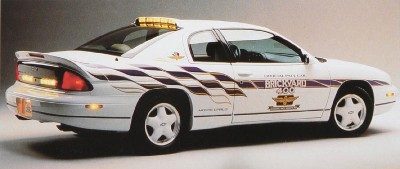

The polished hood of a 1995 Chevrolet Monte Carlo gleamed under the Indiana sun. It wasn’t there for a leisurely cruise. It paced the inaugural Brickyard 500 stock car race. A massive crowd watched as this symbol of American cruising stood guard over NASCAR’s most prestigious event. The car looked sharp. It looked ready. But inside, it was just another day for a machine that had seen better days.
The 1995 model year marked a turning point. This was the last year for the old body style before the facelift arrived. Enthusiasts still crave the clean lines of the pre-update design. Those sharp creases along the fenders. The upright grille. It’s a look that defined the early nineties.
Let’s look at the hard numbers. They tell the story of where this car sat in the market.
1995 Chevrolet Monte Carlo Facts
| Model | Weight range (lbs.) | Price range (new) | Number built |
|---|---|---|---|
| Monte Carlo | 3,306-3,436 | $16,770-$18,970 | NA |
Weight matters. A curb weight of 3,306 pounds isn’t heavy for a coupe, but it’s not featherweight either. The price tag varied by trim. A base model started around $16,770. A well-equipped version could push past $18,970. That’s significant buying power in 1995. For that money, you got a V6 or a V8. Usually the 3.4-liter OHV V6 came standard. It wasn’t a rocket. But it was reliable. If you wanted speed, you opted for the 5.7-liter LT1. That was a small-block worth 260 horsepower.
“The 1995 Monte Carlo represented the peak of the old guard before GM shifted its focus to the SS revival.”
The car paced the race because it had the right image. It wasn’t a race car. It was a show car. It was the bridge between the muscle car era and the modern performance coupe.
Production numbers aren’t publicly listed in a single consolidated figure for all trims. But we know the vibe. The 1995 model year was the swan song for this generation. By 1996, everything would change. The body would get a fresh face. The interior would get updated materials. The engine lineup would stay similar, but the character of the car would shift.
We are looking at the end of an era. The Monte Carlo continued to be built. It wouldn’t disappear until 2007. But the 1995 version holds a special place. It paced the first Brickyard 500. It carried the weight of history on its shoulders. And it did so with a straight face and a polished bumper.
What happens when the race ends? The pace car returns to the pits. The crowd goes home. The car sits there. Waiting for the next year. The next update. The next chapter.
For those digging deeper into
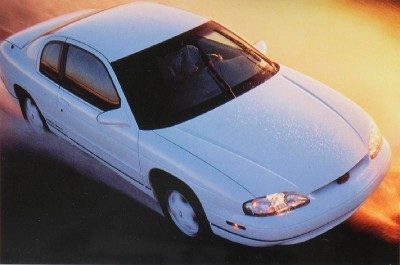

The 1996 Monte Carlo: Quiet Updates for a Personal Luxury Staple
If you thought the 1996 Chevrolet Monte Carlo arrived with a bang, you’d be wrong. It was essentially unchanged from its predecessor. This was its second year on the market, and like its sedan-based sibling, the Chevrolet Lumina, the 1996 model year brought few structural changes. Instead of a redesign, Chevy offered a handful of new options.
For buyers looking at the top-tier 1996 Monte Carlo Z34, the updates were mostly hardware-focused. Both the LS and Z34 trims continued to offer dual front airbags and anti-lock brakes. The Z34, however, gained a significant braking upgrade: four-wheel disc brakes.
Engine options remained distinct between the trims, with one key tweak for performance enthusiasts.
- LS Model: Powered by the 3.1-liter V-6, rated at 160 horsepower.
- Z34 Model: Equipped with the 3.4-liter Twin Dual Cam V-6, pushing 215 horsepower. That is an increase of five horses over the 1995 version.
Service intervals got a serious boost across the board. These engines introduced new five-year/100,000-mile coolant and 100,000-mile platinum-tipped spark plugs. The goal was simple: extend service intervals and reduce maintenance frequency. The standard four-speed automatic transmission also switched to Dexron III fluid. This formulation was designed to never need replacement under normal driving conditions.
Interior and Convenience Features
Chevy used the 1996 model year to tighten up comfort and convenience features. For the first time, power mirrors became standard on 1996 Monte Carlo LS models.
The Z34 trim felt a bit more premium out of the box. It came with a leather-wrapped steering wheel that included radio controls. That wheel was also a new option for LS buyers. Other additions included:
- Dual-zone temperature controls
- Cargo-area convenience net
- Leather interior with bucket seats (available as an option)
There was also a power sunroof scheduled for a midyear introduction, though availability varied by build date.
Racing Heritage and Legacy
While the showroom models were playing it safe, the Monte Carlo-bodied racers were not. Stock-car tracks saw the Monte Carlo take numerous victories. The Daytona 500 is just one example of where this machine excelled.
“Though the racing machines shared little in common with their showroom brethren, the victories cast a halo not only over the Monte Carlo, but over Chevrolet as well.”
These wins reinforced the car’s reputation. They provided a halo effect that benefited the entire brand.
The 1996 model was part of a long-running lineage. It served as a bridge between the rear-wheel-drive classics and the front-wheel-drive future. The Monte Carlo would continue as a front-drive two-door for another decade. The 1997-2007 models became the fitting heirs to Chevy’s personal-coupe legacy.
This shift marked the end of an era for the body style, but the 1996 version held the line. It kept the nameplate relevant while waiting for the next generation to arrive
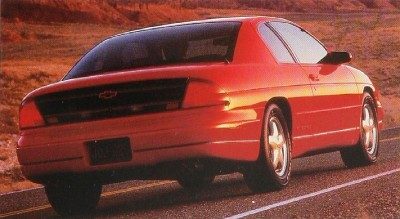

The Z34 Package: Why the 3.4L Twin Cam Matters
If you were hunting for a low-mileage 1996 Monte Carlo, you likely had your eyes on the Z34. Standard equipment wasn’t just a badge; it was a specific mechanical recipe centered on the 3.4-liter Twin Dual Cam V-6. This engine replaced the older 3800 in top-tier trims, offering a different character than the standard V-6s found in lower trims.
For enthusiasts tracking down these coupes, the specs from 1996 are concrete. The Z34 package didn’t drastically change the footprint, but it shifted the performance profile.
1996 Chevrolet Monte Carlo Specifications
| Metric | Details |
|---|---|
| Model | Monte Carlo Z34 |
| Weight Range | 3,306 – 3,436 lbs |
| New Price Range | $17,255 – $19,455 |
| Production Numbers | 80,717 units |
The weight range is telling. Sitting between 3,306 and 3,436 pounds, the Z34 was on the lighter end of the scale compared to some heavier luxury cruisers of the era. That lighter curb weight, combined with the Twin Cam engine’s revving nature, made it one of the more capable street performers in the lineup.
You didn’t pay a premium for this. At launch, prices ranged from $17,255 to $19,455. That’s a tight spread, suggesting the Z34 was positioned as a high-value sport coupe rather than a luxury indulgence. With 80,717 built, they aren’t rare in the sense of a limited-run exotic, but finding one with a clean history and no accident damage is the real challenge today.
Market Context and Legacy
The 1996 model year was part of the fifth generation run. While the Monte Carlo continued until 2007, the mid-90s represented a peak for the body-on-frame era before the switch to unibody platforms. For buyers looking at used cars now, the Z34 remains a specific entry point.
It’s not about being a track car. It’s about a specific driving feel. The Twin Cam V-6 was smoother and higher-revving than the torque-heavy 3800 series. If you want to know which engine is better for fuel economy, the standard V-6 usually wins. But if you’re asking which offers better throttle response, the 3.4L Twin Cam takes the lead.
For those digging deeper, the Z34 package included specific suspension tuning and styling cues that set it apart visually. It’s a car that appeals to those who want a daily driver with a bit of bite.
The broader Chevrolet lineage continues to draw interest. From the classic muscle cars of the golden age to modern sport coupes, the Monte Carlo has always occupied a unique niche. It’s a personal luxury coupe that never quite became a full-blown luxury car, staying grounded in performance and style.
Used car searches for these models often highlight specific trouble spots. Common issues


