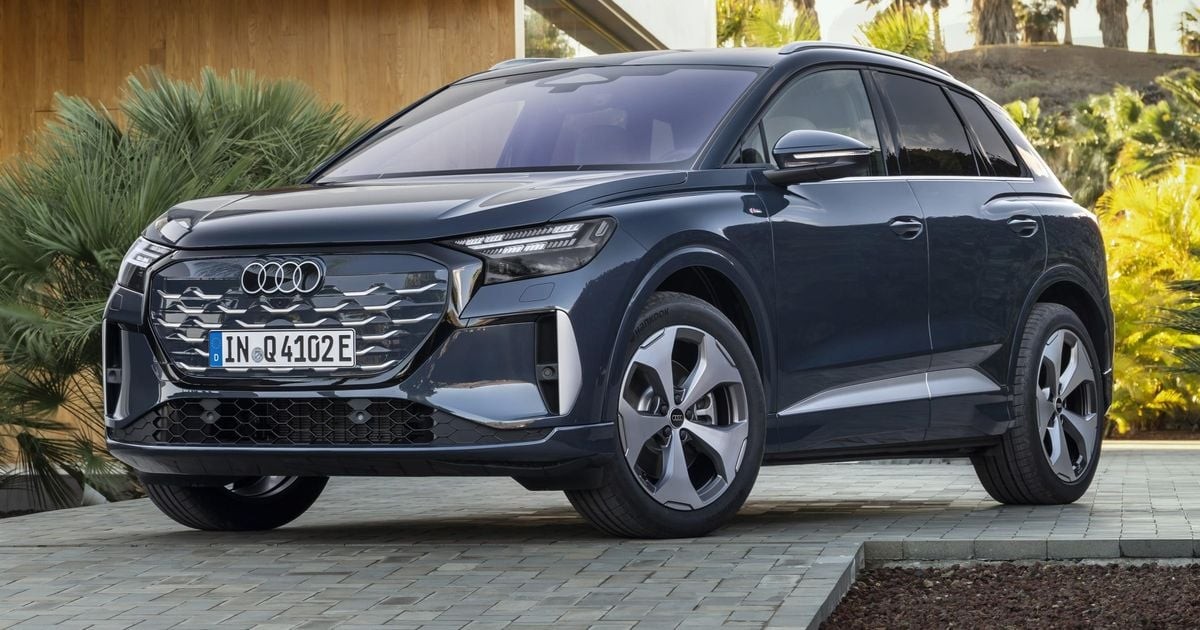
Audi has unveiled a significant facelift for its Q4 e-tron, focusing on interior sophistication, improved driving range, and advanced energy management. While the exterior receives subtle refinements, the most substantial upgrades are found within the cabin and under the hood, signaling Audi’s push to stay competitive in an increasingly crowded electric vehicle (EV) market.
The Q4 e-tron remains available in two distinct silhouettes: the traditional, upright SUV for maximum utility, and the more aerodynamic, sloping Sportback “coupe” for those prioritizing style.
A Modernized Digital Cabin
The most noticeable departure from the previous model is the complete overhaul of the dashboard. Audi has moved away from the previous “edgy” design characterized by heavy horizontal lines and complex vent structures. Instead, the new interior adopts a cleaner, more minimalist aesthetic inspired by the latest A5 and A6 models.
Key interior updates include:
* Enhanced Displays: A curved black panel now houses a larger 11.9-inch digital instrument cluster (up 1.65 inches) and a 12.8-inch infotainment touchscreen (up 1.2 inches).
* Passenger Connectivity: An optional 12.0-inch touchscreen is now available for the front passenger.
* Consolidated Controls: In a move toward digital minimalism, Audi has removed physical buttons and dials for climate control. These functions are now integrated directly into the touchscreen, which features a dedicated section for air-conditioning settings.
* Redesigned Center Console: The old “floating” console has been replaced by a more traditional layout, housing wireless charging pads, cupholders, the gear selector, and dedicated shortcuts for drive modes and audio.
Performance and Efficiency Upgrades
Audi is also simplifying its naming convention. The previous numerical designations (35, 40, 45, and 50) are being replaced by more descriptive titles: e-tron, e-tron performance, e-tron quattro, and e-tron quattro performance.
Beyond the names, the mechanical bones of the car have been improved:
– New Motor Technology: All models benefit from the more powerful APP350 rear-axle motor.
– Increased Range: Thanks to a 7kWh increase in the base battery pack and more efficient electronics, the WLTP range has improved by 16 to 32km across the lineup.
– Optimized Drivetrains: The update includes a more efficient transmission, ensuring that the power increase doesn’t come at the cost of battery longevity.
Bidirectional Charging: The Car as a Power Plant
Perhaps the most significant technological leap is the integration of bidirectional charging, made possible by updates to the MEB architecture. This transforms the Q4 e-tron from a mere transport tool into an active participant in the home energy ecosystem.
Through Vehicle-to-Load (V2L), the car can power external appliances, making it ideal for camping or emergencies. More importantly, Vehicle-to-Home (V2H) functionality allows the car to act as a massive mobile battery. It can store excess energy generated by solar panels during the day and feed that electricity back into the house during peak hours or at night, potentially lowering household energy costs.
Technology and Availability
For those seeking premium features, Audi offers several high-tech options:
– Lighting: Matrix LED headlights and OLED tail-lights with customizable signatures.
– Driver Assistance: An Adaptive Driving Assistant capable of highway lane changes and navigating unmarked rural roads.
– Premium Audio: An optional Sonos sound system and an augmented reality head-up display.
Market Timeline:
The facelifted Q4 e-tron is scheduled to go on sale in Europe in May, with deliveries expected by mid-year. Availability for other markets, including Australia, has not yet been confirmed.
The 2027 Q4 e-tron facelift represents a strategic shift toward “smart” electrification, combining a more user-friendly digital interface with the ability to integrate the vehicle directly into the user’s home energy grid.