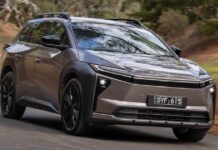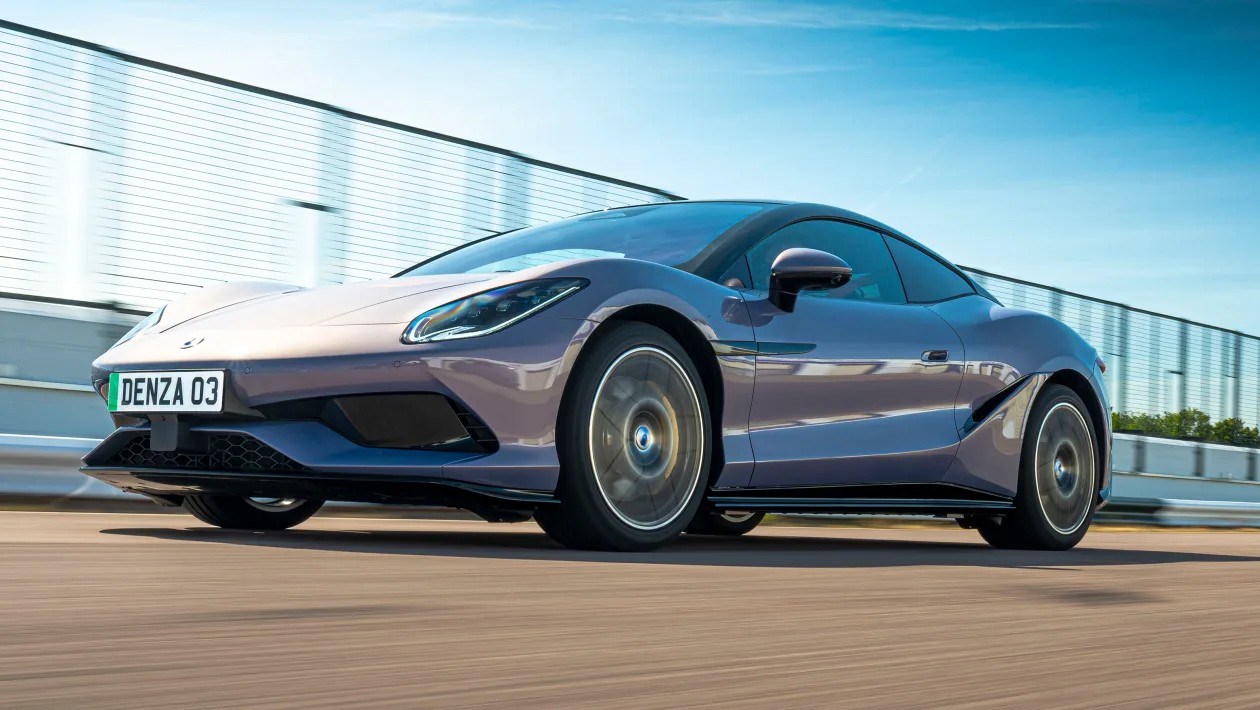
China is throwing down the gauntlet. The Denza Z aims for the jugular of the Porsche 91, the AMG GT, the GranTurismo. It’s electric, obviously, and fast. Devastatingly fast.
Auto Express says the UK is next on the target list. This isn’t a solo stunt either, BYD is pushing this premium sibling hard against the German triumvirate of Mercedes, BMW, and Porsche. We drove it at Goodwood 2026, a brief flirtation with speed on tarmac that left a few questions, mostly about the brakes and the steering, but undeniably impressed.
Horsepower is no joke here
One thousand five hundred and eighty-eight bhp. Let that number sink in. A tri-motor setup does the heavy lifting, one front, two back. That is Bugatti Chiron territory, technically, though the soul feels different. 0 to 62 mph hits in 2.25s, 124 mph by 6.3s, topped out at 186 mph for the coupe.
The convertible Spider is almost as quick. The Racing spec gets trickier. Add those semi-slicks and you are looking at 0 to 62 in 1.9s. Top speed creeps up to 217 mph. Want more madness? Denza is brewing a special edition for the Nürburgring this year. Over 2,000 bhp, 0-60 in under 1.7s. They aren’t joking about the lap record ambitions.
Charging speed, battery life
76kWh is the pack. It gives you about 254 miles on a good day. Not vast. But the charge speed makes up for the deficit if the infrastructure exists. Ten to ninety-seven percent in nine minutes, provided you can find one of BYD’s 1,500 kW flash chargers. Do you find one? That’s the real test.
Under the skin it is clever stuff, Daniel Cabanillas tells us. Tuned for Europe. The DiSus-M magnetic dampers run like those in the Chevy Corvette. Air suspension for the street versions, coils for the racing one. Carbon ceramic brakes stop the madness, six pistons front, big rotors everywhere.
Looks and feels European-ish?
The face says supercar. The back seats are a lie. It has them, yes, but don’t bother looking. Wolfgang Egger drew the lines. He worked for SEAT, Audi, Lamborghini, Alfa, so the styling isn’t surprising. Lotus vibes. A dash of Maserati, maybe even a bit of Lambo attitude.
Aerodynamics work overtime here. An ‘S-Duct’ feeds air over the hood, creating downforce. We’re talking 1,060 kg at top speed for the standard models. That special Nordschleife beast? 2,000 kg of downforce using carbon fiber. That’s immense.
The interior, or lack thereof
Inside feels less posh than the Germans would want. But there are screens, two big ones. An 8.8-inch digital cluster for the driver, 12.8-inch central display for everything else including Google Maps. The speakers come from Devialet. It plays virtual engine noises since the thing is silent otherwise.
Storage? A massive 250 litre boot, twice what a 911 gets. Fold the fake back seats down and it expands to 550. The Spider loses space to the folding mechanism but still beats the Maserati GranCabio. For the Racing variant you ditch the back row for a roll cage entirely.
Prices start at £142,950 for the coupe, £159,00 for the spider, and £179,99 for the full track-focused racer. Cheaper than a Porsche Turbo S and with more than twice its power. The math looks right at first glance.
What actually happens on the track?
Sitting low inside the cabin doesn’t happen here because of the floor battery. You sit high up. The wheel is thin, the view forward is actually quite good, aided by the height.
We only got one lap at Goodwood, no time to tweak all the software. Boost mode adds throttle response for twenty seconds. Track mode opens up settings for regen, braking, vectoring. The traction control clamps down initially, maybe a bit too hard, until you learn the car. When it lets go, it flies. The speed is relentless and strangely silent, sucking up the straight sections of Goodwood with ease.
The brakes felt strange though. Pedal feel isn’t exactly confidence building. The weight shows through bumps. Steering is heavy, responsive but a bit numb near straight ahead, disconnected from what the front wheels actually feel like doing at high speeds.
Torque vectoring works when cornering exits come up. It keeps the car pointed straight but the intervention can feel blunt, not seamless. Drifting into the next apex generates yaw, useful for tight corners, but frighteningly loose when carrying momentum on fast sections.
Is it natural? Probably not, right now. It’s a powerful brute needing better tuning, sharper software logic. Maybe the Racing edition helps. Or the 2000-bhp record breaker. Still some distance to cover before it truly feels like the best European cars we know today, but hardware alone gets attention.