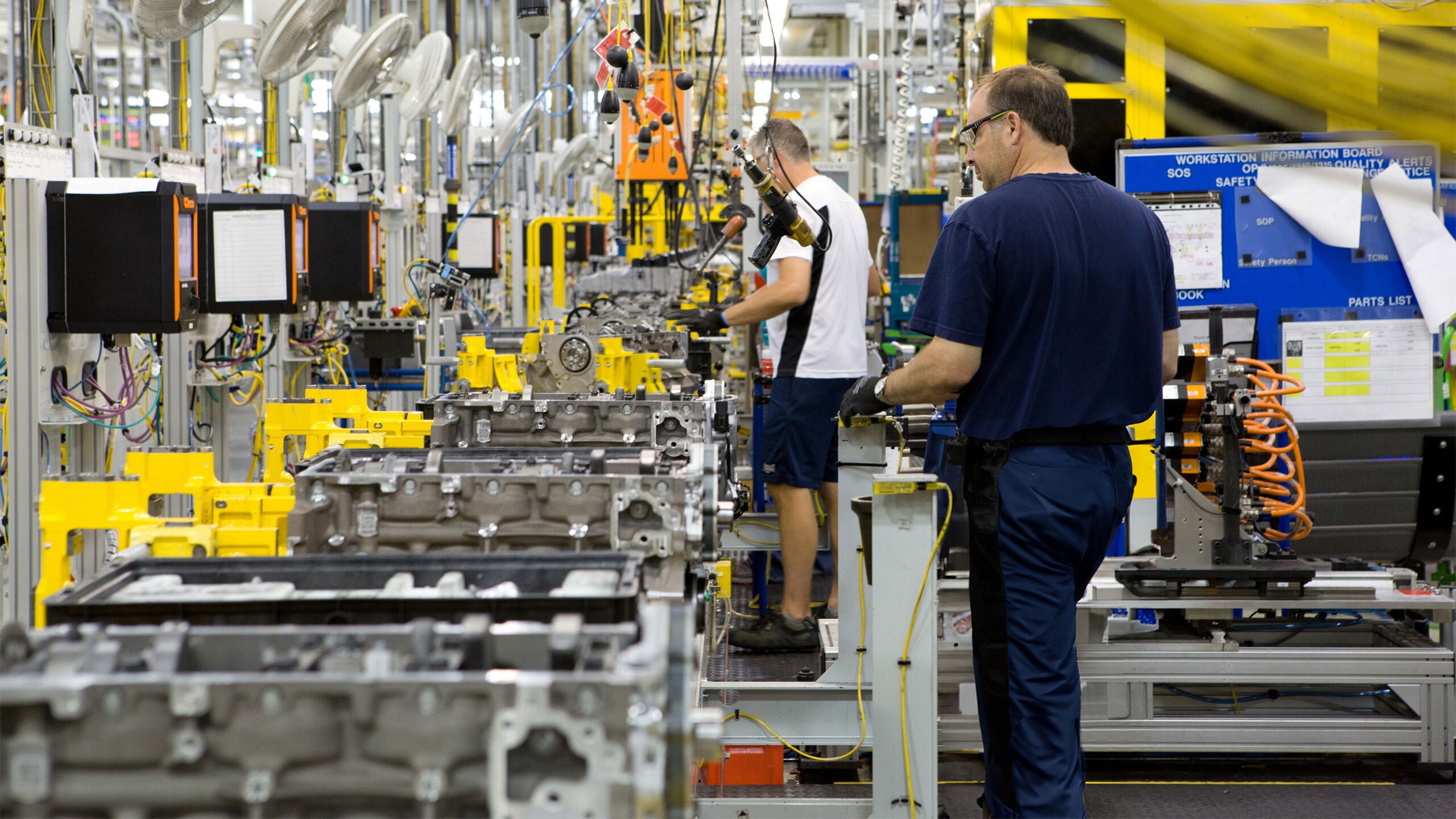
It’s a choice, they say.
A voluntary survey. A maturity index.
GM’s new policy demands suppliers grade themselves on how robotic they’ve become. Fail to keep up, lose the contract. That is the quiet implication hanging over every manufacturing floor.
The OAMI Pressure Cooker
In March the survey dropped. The Overall Automation Maturity Index (or OAMI) forces suppliers to audit themselves.
From buying raw steel to handing over a finished part, GM wants data. Scores based on specific criteria. Some plants are being audited in person, too.
The scale has five tiers:
- Manual labor
- Basic mechanization
- Semiautomation
- Integrated automation
- Smart factory adaptive systems
The bar is absurdly high. GM targets a score of 4.5 out of 5.
No strict deadline attached? Fine.
But industry insiders tell Crain’s Detroit the message is clear. Reach 4.5. Or don’t expect to do business with General Motors in five years.
Humans Out, Cobots In
The stakes aren’t theoretical.
Factory Zero in Detroit recently installed around 50 Fanuc collaborative robots. “Cobots,” in the tech-friendly gloss.
While those machines whir, more than 1,001 human workers sit at home. Laid off. Waiting.
United Auto Workers president Shawn Fain calls it a fight for the soul of humanity. He sees AI and automation not as upgrades, but as erasers.
GM insists the OAMI is a partnership.
“We are here to partner with and help… suppliers determine how best to run operations,” spokesman Patrick Sullivan says.
Help.
A word that costs nothing.
Who Pays The Tab?
Suppliers are worried. Not about the ideology, necessarily. But the money.
Who pays for the robots? Who funds the installation? If efficiency saves millions, how does that cash flow? Does it stick to the supplier’s ledger or roll up into GM’s bottom line?
And then there’s the friction.
You can’t force intelligence onto a workflow that isn’t ready for it. Some suppliers suspect the policy demands automation where it simply doesn’t fit. A sledgehammer used to thread a needle.
The perfect score is a fantasy for most. A benchmark designed by the buyer, demanded of the supplier, enforced by the threat of silence.
We will see how many factories decide it is better to build fewer cars for fewer people, rather than surrender their workforce to the machine.