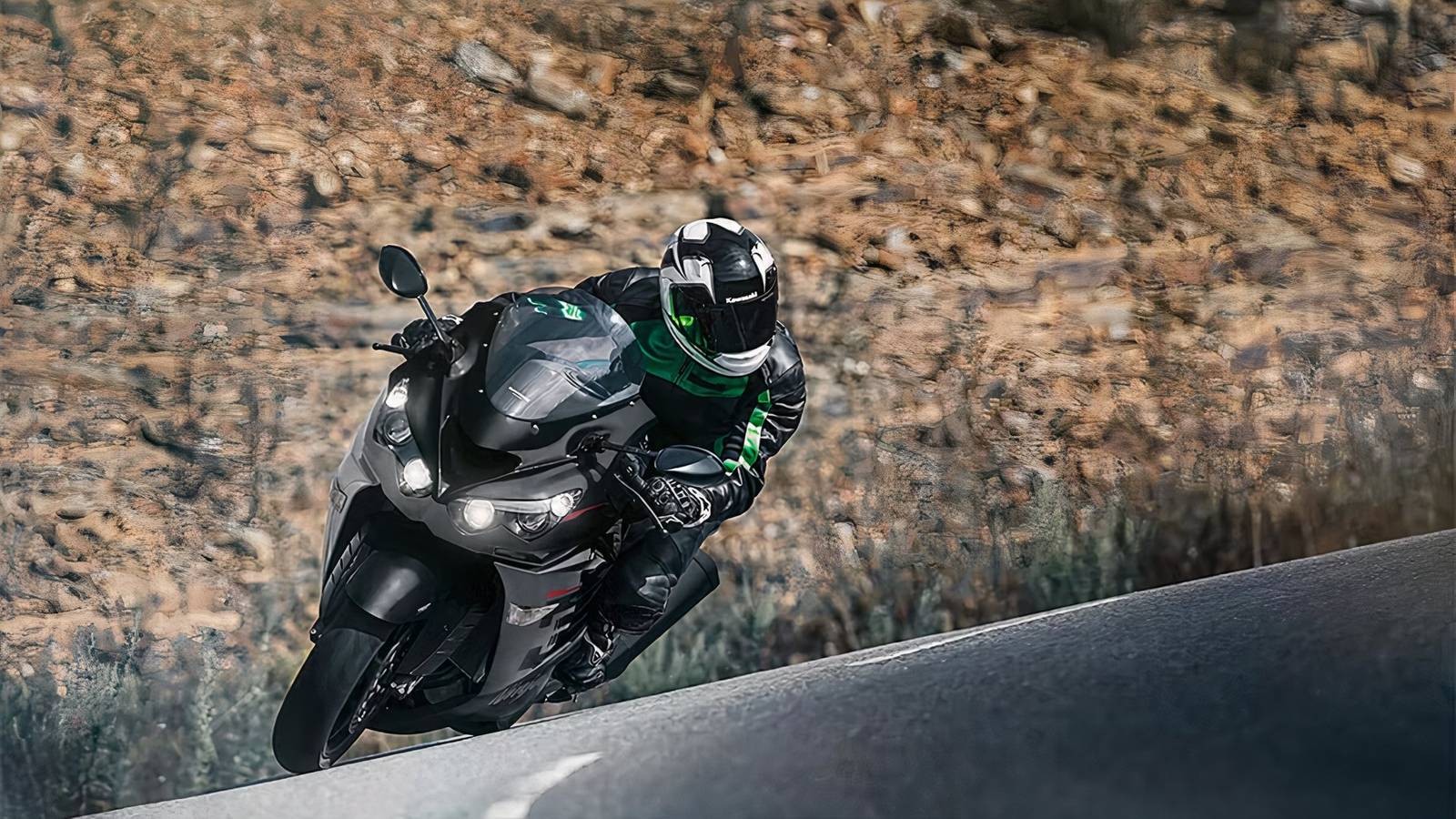
Most motorcycles don’t vanish without a trace. Usually, there is a sendoff. A special paint scheme. A plaque. Maybe a press release thanking the loyal few. It is a ritual. But some bikes just… stop. One year they exist. The next year the brochure forgets them. No farewell. No explanation. And years later, people are buying them for more than they paid new. The Kawasaki ZX-14R might be doing this right now.
Kawasaki Built For Speed, Not Sentiment
Kawasaki didn’t start as a polite company. They had one philosophy. If it goes faster, make it faster. The GPZ900R proved this in 1984. The first Ninja. It starred in Top Gun and embarrassed everything else on the road. Then came the ZX-11. Held the fastest production bike title for six years starting in 1992. Radical? The ZX-12R debuted the first mass-produced aluminum monocoq frame in 2003.
They learned this the hard way. Sharpening the smaller ZX-6 and ZX-10 for track fights gave them data they couldn’t buy. Now that data is locking down their biggest bike too.
The Disappearing Act
Big natural aspiration is dying. Euro 5 emissions rules forced Kawasaki to drop the ZX-14 in Europe by late 2020. Everywhere else, brands want lightweight electronics. Turbos. Batteries. A cable-throttle inline-four with over a liter of displacement is no longer profitable.
This makes the ZX-14 a trap for collectors. Not because it is rare today. Because it won’t be made again.
September 2025 brought the US lineup for 2026. The Ninja 500? Yes. Ninja 650? Yes. ZX-4R and ZX-6R? Included. The ZX-14? Absent. No confirmation. No denial. Dealers are selling 2025 stock for $17,599. It sits on the lot. Kawasaki says nothing. You can still buy it. Probably. For now.
Stuck In Time
The current generation began in 2006. Replaced the 12R. 1,352cc. Then in 2012 it got the ‘R’ badge and a bump to 1,441 cc. That’s it. The skeleton is old. Colors changed. Traction control added. But mechanically? It is the same engine that debuted when some current riders were toddlers.
The ZX-14 survives only because the US interstate system is still built for loud, fast machines that Europe outlawed.
Aluminum Bones And Analog Soul
Look at the frame. It is not a tube cage around the motor. It is an aluminum arch. A monocoque. The bike hugs your knees. Narrow. Tight. This setup gives triple-digit stability that a boxy steel frame cannot match.
No ride-by-wire here. No digital screens screaming data at your retinas. Just Kawasaki Traction Control and two power modes. Minimalist. It keeps you safe without killing the soul. You do the work. The bike does the pulling. It is a balance few manufacturers would risk today.
The Biggest Engine Kawasaki Ever Built
1,441 cc. Four cylinders. 84.0 mm bore. 65.0 mm stroke. Digital fuel injection hits four Mikuni carbs. 197 horsepower. 116 pound-feet of torque.
Peaky? No. This engine wants to move heavy things slowly then never let up. It pulls from idle. It keeps pulling. Kawasaki calls it the King of the Quarter Mile for a reason. Factory claims say 9.77 seconds to 60 feet. Liter bikes feel nervous next to it.
Built For Highways, Not Tracks
Sit on one. It feels like a sofa on rails. Long wheelbase. Plush seat. Upright hands. Nickname? The “intercontinental ballistic missile.” Why? Because it eats interstates for breakfast.
Race replicas are exhausting. The 14R is relaxing. At 120 mph.
That mix is ending. A comfortable tourer with the biggest, nastiest inline-four in history. There will be no announcement when the 14R finally disappears from the US list. It will just be gone. Like so many before it.
Buy it while it’s still just a motorcycle. Before it becomes history.