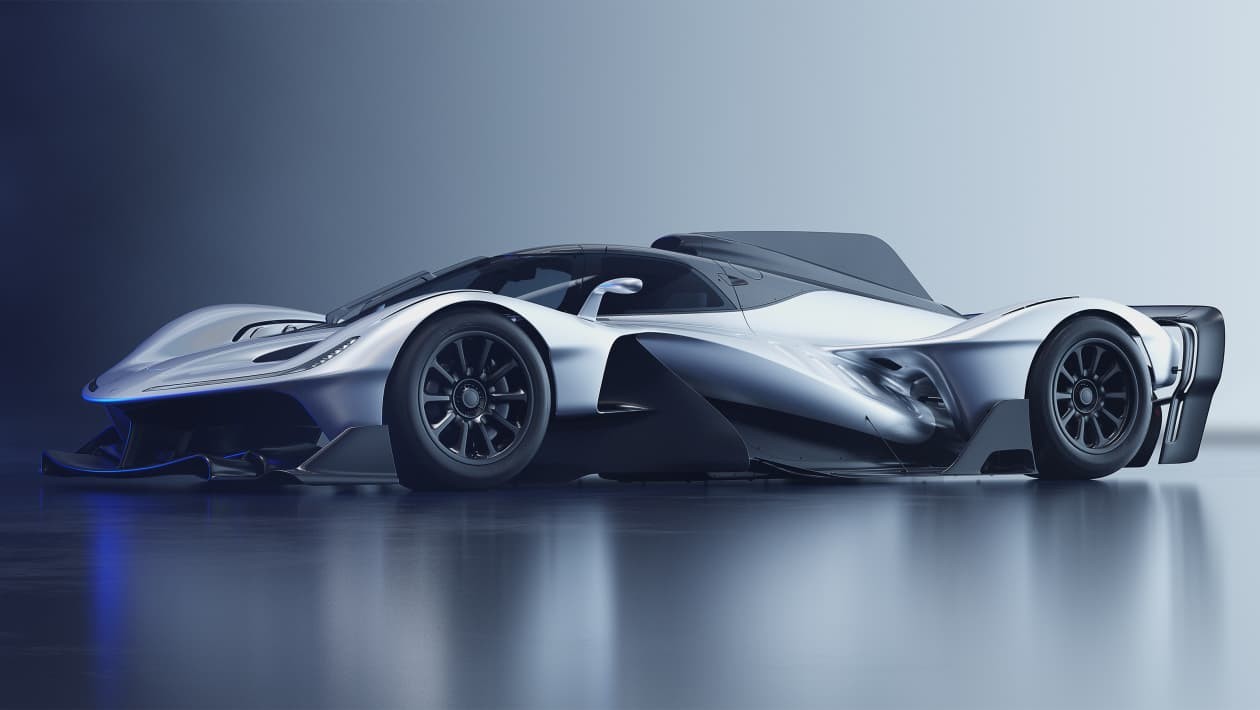
It has been two years since the Red Bull RB17 made its world debut at the Goodwood Festival of Speed. Back in 2024 it was a promise. Now it is flesh and carbon fibre.
This year showgoers will hear what that 4.5-litre naturally aspirated V10 actually sounds like. The engine is built to drown out everything else. F1 cars included.
Isack Hadjar and reserve driver Yukii Tsunoda are the ones behind the wheel. Do not expect them to attack the hillclimb clock though. Red Bull has stated that the “full performance envelope” will only be tested in dedicated track environments later in the year. Safety first? Maybe. Boring? Possibly.
Then there is the guest who does not belong.
Adrian Newey will be present. He is the legendary F1 engineer who left Red Bull Racing for Aston Martin. This is the first time he has appeared with the team’s hardware since his departure. Strange optics. Interesting spectacle.
Laurent Mekies took over from Christian Horner last year. He serves now as CEO and Team Principal. He called Goodwood the right place to show off Red Bull Engineering. He spoke about years of dedication and creativity.
Standard PR fluff.
Let’s look at the metal instead. Or rather the lack of it.
Engineering excess
The car weighs less than 900 kg.
Yes. Lighter than a Suzuki Swift.
A carbon-fibre monocoque handles the rigidity. That leaves room for the powerplant. A Cosworth-developed 90-degree V10 generates more than 1,001 bhp. It screams up to 15,000 rpm. A hybrid system adds an electric motor on top. Total output pushes past 1,200 bhp.
Top speed hits 217 mph.
All of it goes to the rear wheels. A six-speed carbon-fibre transmission does the work. There is a hydraulically locking differential too. The e-motor handles reverse because apparently someone forgot manual gears could go both ways.
Pedestrians do not matter. This thing meets Le Mans Hypercar safety regs and ignores the rest. It is track-only. Adrian Newey got to build what he really wanted. He calls it “the most advanced ground-effect package” in a series production car.
Side skirts are included. F1 bans them. Here they are free. They generate 1.7 tonnes of downForce alone. Active aerodynamics in the wings help manage it all. Pushrod suspension adjusts ride height and roll. Carbon-carbon brakes stop the madness.
The wheels are full carbon-fibre. Size 18. Michelin slicks sit on top.
We have never seen the final interior. Red Bull says it is “generous.” It sounds unlikely in a car this small but they claim drivers of various sizes will fit. Adjustable pedal boxes help. There is storage for helmets and race suits at least.
Owning the noise
Red Bull wants the car to be easy to operate. They plan to host track events globally. Full factory support is part of the package.
The claim is bold. The RB17 can complete a 24-hour race with no servicing.
Cosworth rates the engine lifespan at just under 15,0 only miles. That assumes hard track driving though. Maintenance can happen at HQ or wherever you park it. Convenient.
Production is capped at 50 units.
Each one costs £5.75 million. Plus local taxes. All of them are left-hand drive. They roll out of the 290-acre Milton Keynes campus. You can pick your paint. You can choose interior materials. But Red Bull intends the base car to offer maximum performance right from the gate.
Newey said it all in 2024 when they unveiled the concept. He had wanted to design a hypercar from start to finish for years. He called the journey magnificent. He noted the car was a two-seater so friends or partners could share the F1 speeds.
Is anyone else going to hear that V10 at Goodwood and wish they could drive it?
The sound alone might be enough. The money might not be.
Auto Express offers help with selling your current car and finding a new deal if the hypercar dream feels too far away.