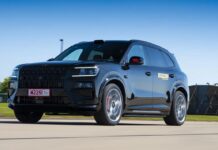
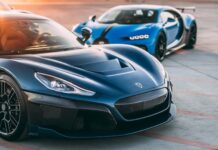
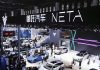
The 2026 Beijing Auto Show has once again proven its status as a global epicenter for automotive innovation. Spanning two massive exhibition centers, the event features nearly 1,500 vehicles and more than 200 debuts. While early headlines focused on the Smart #2 concept and the Nissan Terrano PHEV, the sheer scale of the show has left a trail of high-performance machines and radical design concepts that demand attention.
From ultra-luxury electric supercars to incredibly affordable commuters, the reveals in Beijing highlight a widening gap in the market: a fierce race for hyper-performance on one side, and a push for mass-market EV accessibility on the other.
High-Performance Extremes: The BYD Powerhouse
The most aggressive technological leaps are coming from the BYD ecosystem, which is using the show to showcase its ability to dominate both the luxury and performance segments.
Denza Z: The Electric Supercar
Denza has transitioned the Z concept from its Shanghai debut into a production-ready reality. This electric supercar will be available in three distinct configurations: a hardtop coupe, a softtop convertible, and a track-focused model.
– Performance: Over 1,000 horsepower with a 0–62 mph sprint in under 2.0 seconds.
– Technology: Features steer-by-wire technology, magnetorheological dampers, and a revolutionary flash-charging system capable of pulling 1,500 kW from specialized chargers.
Fangchengbao: A New Era of Speed
The Fangchengbao brand is undergoing a massive strategic shift. Previously known for rugged, boxy SUVs, the brand is pivoting toward high-end performance with its new “Formula” lineup:
– Formula X: A radical, carbon-fiber convertible that evolves from the Super 9 speedster concept. It utilizes a tri-motor setup producing 1,000 hp and 737 lb-ft of torque.
– The Formula Family: Including the Formula S sedan, the larger Formula SL, and the Formula S GT wagon. These low-slung models are designed to challenge premium benchmarks like the Porsche Panamera, utilizing an 800-volt architecture and 1,000-hp tri-motor systems.
Design Language and Grand Tourers
While BYD focuses on raw power, other manufacturers are using Beijing to redefine their visual identities.
Peugeot’s Bold New Direction
Peugeot has introduced the Concept 6 (a sleek wagon) and the Concept 8 (a tall SUV). While technical specifications remain undisclosed, these concepts signal a new design language specifically tailored for the Chinese market. Both models feature a distinctive “claw mark” aesthetic, using a trio of horizontal LED lines to reinforce the brand’s lion mascot.
Lynk & Co “Time to Shine” GT
Under the Geely umbrella, Lynk & Co has revealed a sophisticated two-door grand tourer. The “Time to Shine” GT emphasizes performance-driven aesthetics, featuring an active aero kit with a deployable front splitter and rear wing. When engaged, the suspension lowers by 0.6 inches to improve handling. While the powertrain remains unconfirmed, the brand claims a 0–62 mph time of under 2.0 seconds.
The Affordability Benchmark: Leapmotor B05 Ultra
Perhaps the most significant trend for the global consumer is the sheer affordability of electric mobility in China. The Leapmotor B05 Ultra (known in China as the Lafa5 Ultra) serves as a stark reminder of the price gap between markets.
The B05 is a compact, sporty EV roughly the size of a Mazda 3. While its European counterpart is expected to launch at approximately $31,000, the Ultra variant in China is reportedly priced at just $18,135. Despite the low cost, it offers a respectable 241-hp motor, a 0–62 mph time in the five-second range, and a range exceeding 300 miles.
The Bottom Line: The 2026 Beijing Auto Show illustrates a bifurcated industry: Chinese manufacturers are simultaneously mastering the “hyper-EV” niche through massive power and charging speeds, while also perfecting the high-volume, low-cost electric commuter that could disrupt global markets.